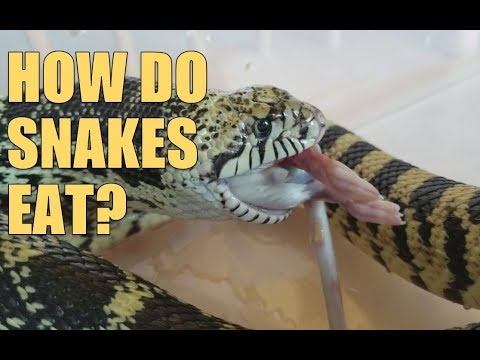
Besides mice, many snakes can eat rats, chicks, quail, quail eggs, fish, earthworms, insects, frogs and lizards, depending on the species. The right food is the one that matches what your snake eats in the wild. Rodents are best for most popular pet snakes.

Match the Food to the Snake
- Rats: the next step up for larger snakes such as boas, pythons and big rat snakes. Frozen-thawed rats are sold in many sizes.
- Chicks and quail: eaten by many larger snakes. They are often used to vary the diet.
- Quail eggs: a treat for some kingsnakes and rat snakes, offered occasionally.
- Fish: for garter, ribbon and water snakes. Use fresh or frozen fish suitable for reptiles, not as a regular food for rodent eaters.
- Earthworms and slugs: for small worm-eating snakes such as ringneck snakes and brown snakes.
- Insects: for insect-eaters like rough green snakes. Crickets and roaches are common.
- Other snakes and lizards: for specialist species such as kingsnakes and milk snakes. Most pet keepers feed these species rodents instead.
Foods to Avoid
- Cooked or seasoned meat, hot dogs and processed foods
- Fruit, vegetables and dairy. Snakes are strict carnivores.
- Wild-caught animals, which can carry parasites or poisons
- Prey that is too large, which can cause regurgitation
How to Offer a New Food
- Check that the new food suits your species and is a good size.
- Use frozen-thawed prey when possible. Thaw it fully and warm it, as in our guide to feeding snakes frozen mice.
- Scent the new prey with the old if the snake is hesitant (for example, rub it against a thawed mouse).
- Remove uneaten food within a couple of hours.
Introduce one change at a time so you can tell what works.
Why Change the Diet at All?
Most snakes do very well on one type of prey. Changes are most useful for picky eaters, for species with special needs, or when you cannot get the usual prey. Don’t feel you need to add variety for its own sake.
Bottom Line
Rats, chicks, quail, fish, worms and insects can all be fed, but only to snakes that eat them naturally. Check your species first, and ask a reptile vet if you are unsure. For specific species, see what hognose snakes eat and what ball pythons eat.
This is general information. If your snake is not eating or seems sick, see an experienced reptile veterinarian.