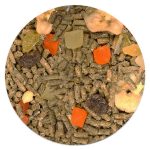
Sugar gliders can eat a variety of fresh fruits and vegetables, but they should be a supporting part of the diet, not the main course. Offer a small portion of fruit daily, add vegetables, wash everything, and pair it with a balanced glider kibble and a calcium-based multivitamin.

How Much Produce Should a Glider Get?
Vets commonly describe the daily diet as roughly thirds: kibble, a nectar or sap-style mix, and a final third made up of a few insects, fresh vegetables, a little fruit, and a calcium supplement. That means produce is only part of one-third of the day’s food. Gliders love sweets, so too much fruit can lead to obesity, dental problems, and a calcium imbalance. The full picture is in our guide to what to feed sugar gliders.
Fruits Commonly Offered
- Apple: remove the seeds and core first.
- Melon and cantaloupe: juicy and popular, offer small pieces.
- Kiwi, mango, and papaya: small bites as an occasional variety.
- Banana: a tiny piece now and then, since it is very sweet.
- Grapes (seedless) and blueberries: small amounts, cut into manageable pieces.
Vegetables Commonly Offered
- Green beans and sugar snap peas
- Bell pepper
- Squash and cooked sweet potato
- Cucumber and zucchini
- Raw corn: very sweet, so keep it occasional.
Produce to Limit: High-Oxalate Foods
Some produce binds calcium and makes it harder for your glider to absorb. Veterinary guidance generally lists these as foods to avoid or keep rare: spinach, carrots, beets, lettuce, collard greens, pears, figs, raspberries, strawberries, and blackberries. If your glider has had calcium problems, ask your vet which produce is best.
Prep and Safety Tips
- Wash all produce thoroughly, and buy organic when possible because gliders are sensitive to pesticides.
- Choose fresh over canned. Canned fruit often has extra sodium and preservatives.
- Cut food into small pieces and remove seeds, pits, and tough skins.
- Remove uneaten fresh food by morning so it does not spoil.
- Introduce new foods one at a time and watch for loose stools.
Related Reading
For protein, see whether sugar gliders can eat mealworms, and for snack ideas browse our notes on sugar glider treats.
Bottom Line
Give your glider a small daily portion of fruit and a larger variety of vegetables, favor low-oxalate choices, and keep sweets modest. Produce should complement a glider-specific kibble and a calcium supplement, not replace them.
This article is for general information and is not veterinary advice. Consult an exotic-animal vet about your glider’s diet and supplements.