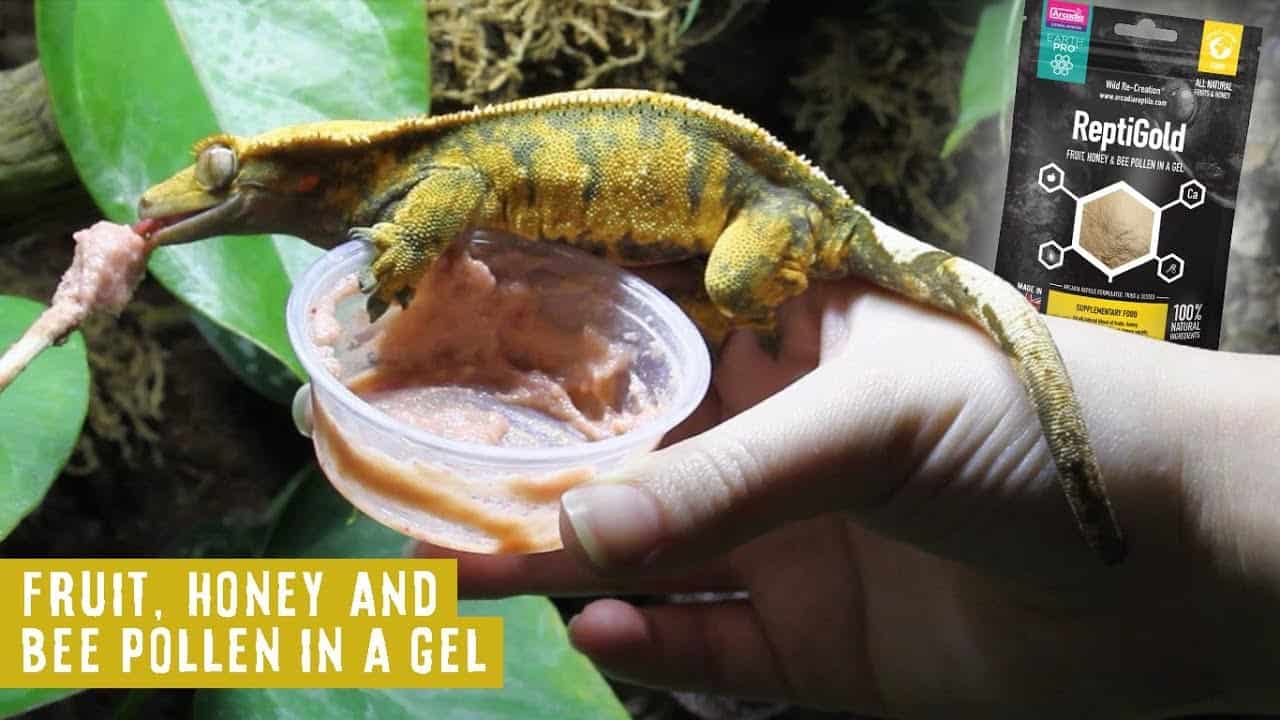
Jelly pots are small cups of sweet gel that are mostly used to feed and hydrate feeder insects, and some keepers offer them as an occasional treat to fruit-eating geckos. They are not a complete diet for any reptile.

What jelly pots are
A jelly pot is a small plastic cup filled with a firm gel, usually sweetened and flavored with fruit. Many are made to sit in a pot holder inside a cricket, roach, or mealworm container. The gel gives insects both food and moisture without the drowning risk of an open water dish.
Who they are for
- Feeder insects: The most common use. Well-fed insects pass more nutrition to your pet, an approach called gut-loading.
- Fruit-eating geckos: Crested geckos, gargoyle geckos, and day geckos may lick fruity gels as a treat.
- Not for most other reptiles: Bearded dragons, leopard geckos, and snakes do not need them.
For crested geckos, a complete powdered gecko diet mixed with water should be the staple. See our guides on homemade crested gecko food, jelly pots for crested geckos, and leopard gecko gel food.
How to use jelly pots safely
- Peel off the foil or film lid completely before offering the cup.
- Place the cup in a holder so it stays upright and does not tip into the substrate.
- Check the label. Pick a product made for insects or reptiles, not for other animals.
- Replace pots every few days, or sooner if you see mold, fruit flies, or dried-out gel.
- Offer them as a treat. Keep them out of the staple diet because they are high in sugar.
Things to watch for
- Mold and spoilage in warm, humid enclosures.
- Sticky messes that attract flies and ants.
- Pets that fill up on sweet treats and ignore balanced food.
- Always provide fresh water, since jelly is not a water source for your pet.
Bottom Line
Jelly pots are a handy way to feed feeder insects and an occasional treat for a few fruit-eating geckos. Build your reptile’s diet around a complete food, insects, and fresh water. Ask a reptile veterinarian if your pet is not eating or is losing weight.
This article is general information, not veterinary advice.