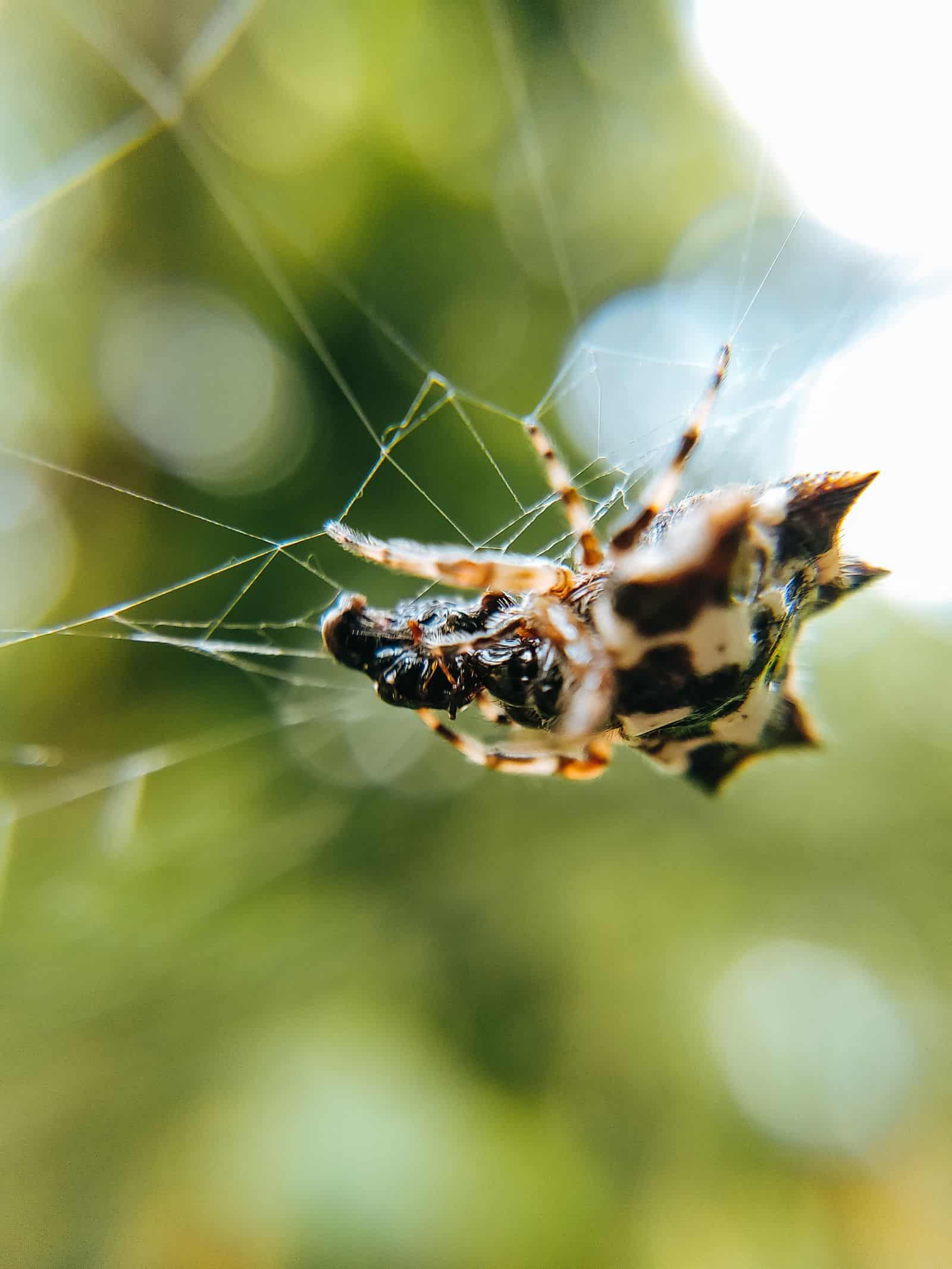
Most tiny spiders in your home need no food from you at all. They hunt on their own, and a house spider can go weeks between meals. If you are keeping a baby (spiderling) of a pet species such as a jumping spider or a tarantula, the right first foods are fruit flies or pinhead crickets, offered every few days.

Wild house spiders: leave the feeding to them
The small spiders you find in corners and window frames eat the tiny insects that wander through your house: gnats, fruit flies, ants, mosquitoes and small flies. Many species can survive a month or more without a meal, so a spider that looks “hungry” is usually fine. If you want to help, a small water droplet on a leaf or in a dish lid is enough. Do not try to hand-feed a wild spider; stress hurts it more than a missed meal.
Feeding baby pet spiders
Spiderlings of pet species are small, so the food must be smaller than the spider’s own body. Good choices include:
- Flightless fruit flies (Drosophila). The standard first food for baby jumping spiders and many other spiderlings.
- Pinhead crickets or small springtails for spiderlings that are a little bigger.
- Small roach nymphs such as lateralis nymphs for fast-growing young tarantulas.
- Tiny pieces of mealworm for larger juveniles. Crush the head first so the prey cannot bite back.
Offer one or two prey items every two to four days, and remove any live prey the spider ignores for a day so it does not stress the spider, especially around a molt.
How to tell a spider is well fed
A healthy spider has a plump, rounded abdomen. A shrunken, wrinkled abdomen usually means dehydration, so offer a droplet of water before more food. A spider that refuses food and hides is often getting ready to molt. Leave it alone for a week or two and try again afterward.
What not to feed
- Never offer sugar water, fruit, bread or table scraps. Spiders are carnivores.
- Do not feed wild-caught insects from lawns or gardens that may have been sprayed with pesticide.
- Avoid prey bigger than the spider; large prey can injure it.
Want fewer spiders instead?
Spiders follow food. Reducing the small insects in your home, sealing gaps and keeping lights off at night cuts the number of spiders more kindly than any trap. For more detail on feeding specific kinds, see our guides on what to feed a jumping spider, what to feed a pet spider, and what tarantula hawks eat.
Bottom Line
Wild tiny spiders feed themselves. For pet spiderlings, offer fruit flies or pinhead crickets every few days, keep a little water available, and let a plump abdomen tell you that you are doing it right.