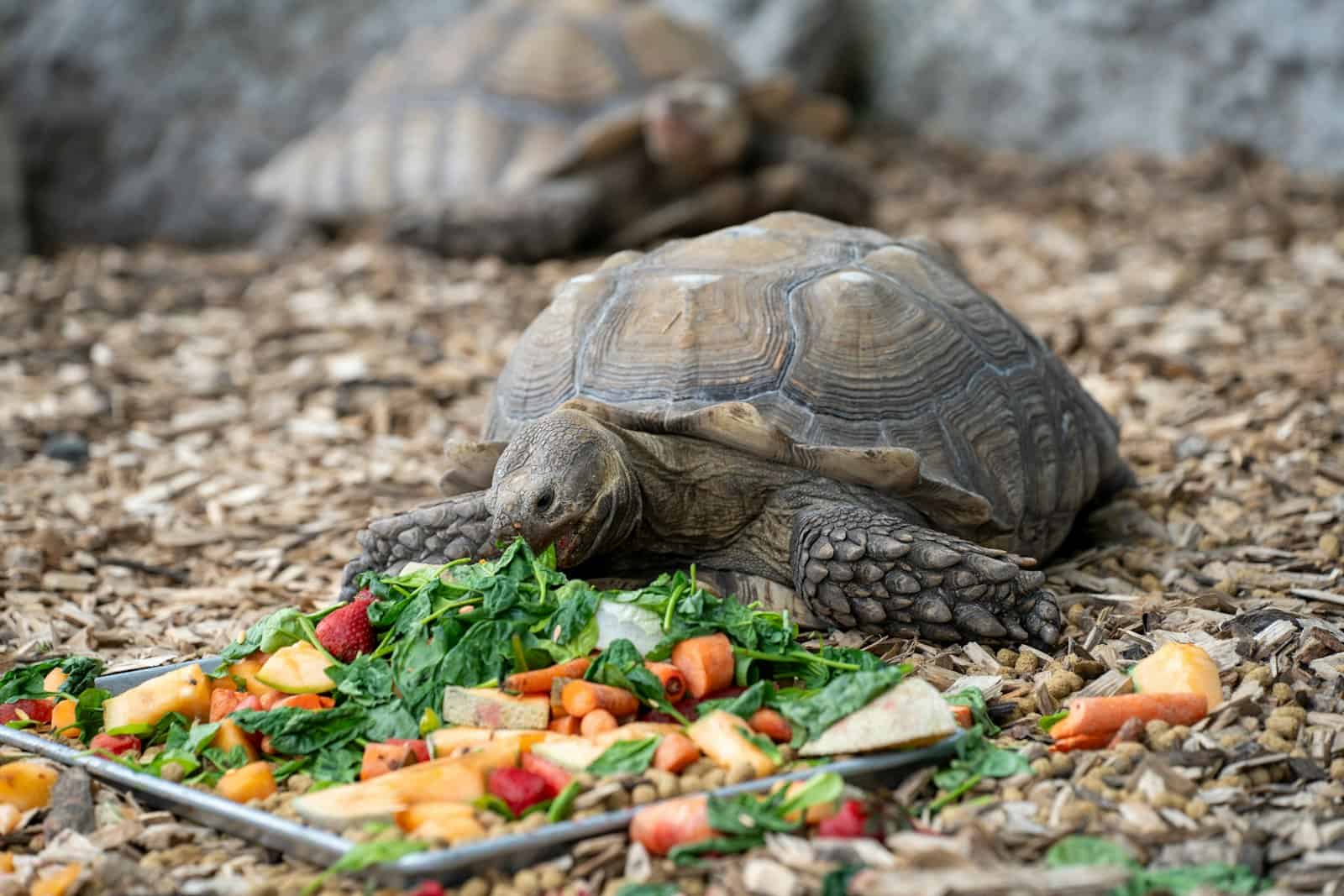
The tortoise most people mean by “Malaysian tortoise” is the Asian forest tortoise (Manouria emys), also sold as the Burmese mountain tortoise or Burmese brown tortoise. It does best on a varied diet of broadleaf greens and vegetables, with some fruit and a small amount of animal protein.

That makes it different from dry-climate tortoises such as sulcatas, which live mostly on grass and hay. Feeding a forest tortoise like a desert tortoise is one of the most common mistakes new keepers make.
Meet the Asian Forest Tortoise
This species comes from humid forests in Malaysia, Myanmar, Thailand, Sumatra, and Borneo. It is the largest tortoise in mainland Asia. Adults can reach about two feet long and may weigh 70 to 100 pounds.
In the wild it eats very little grass. It browses on broadleaf plants on the forest floor and will also eat invertebrates and carrion when it finds them. A good captive diet copies that pattern.
Other tortoises from Malaysia, such as the elongated tortoise and the impressed tortoise, have their own needs. If you are not sure which species you have, ask a reptile vet to identify it before you settle on a diet.
What to Feed a Malaysian Tortoise
Leafy greens: the base of the diet
- Collard greens
- Mustard greens
- Turnip greens
- Dandelion greens
- Kale and leaf lettuce, as part of a mix
- Safe, unsprayed weeds such as clover and plantain
Rotate several greens rather than feeding the same one every day. See our list of tortoise food plants for more ideas, and read whether tortoises can eat spinach before adding high-oxalate greens.
Vegetables
- Squash and pumpkin
- Yams and sweet potato
- Spineless cactus pads (opuntia)
- Cauliflower, in small amounts
Fruit
Forest tortoises handle fruit better than grassland species, but it should still be a small part of the menu. Berries and melon are good choices. Skip citrus.
Animal protein, in moderation
Asian forest tortoises eat more protein than strict grazing tortoises do. Earthworms are a natural choice, and mealworms or crickets also work. Keep protein to a small, occasional part of the diet. Too much can contribute to shell and growth problems.
Commercial tortoise pellets
A quality tortoise pellet can round out the diet and is handy when fresh greens are short. Moisten the pellets and mix them with greens. Use them as a supplement, not the whole diet.
How Often to Feed
- Hatchlings and juveniles: offer fresh food daily.
- Adults: feed at least three times a week, and more often if needed to hold a healthy weight.
Offer food on a flat dish or tile rather than directly on the substrate. Remove leftovers the same day, because food spoils quickly in a warm, humid enclosure.
These tortoises often get more active and hungry after rain or a heavy misting. If yours is a reluctant eater, try feeding right after you mist the enclosure.
Calcium and Supplements
Most keepers dust food with a calcium supplement and use a reptile multivitamin from time to time. How much and how often depends on your tortoise’s age, diet, and access to natural sunlight or UVB lighting. Ask your reptile vet for a schedule that fits your setup.
Water and Humidity Matter Too
Diet only works when the environment is right. This is a forest species that needs:
- High humidity, around 80%, with good airflow
- Moderate warmth: a basking area near 85°F and a cooler end near 70°F
- A shallow water dish large enough to soak in, cleaned daily
A tortoise kept too hot and dry may stop eating, no matter how good the food is.
Foods to Avoid
- Citrus fruit
- Bread, pasta, dairy, and other human food
- Dog or cat food as a regular protein source
- Plants treated with pesticides or fertilizer
- Large amounts of grass hay, which suits grazing species better than this one
- Too much fruit, which can upset digestion
Bottom Line
Feed a Malaysian (Asian forest) tortoise a rotating mix of leafy greens and vegetables, with a little fruit and occasional animal protein such as earthworms. Offer food at least three times a week for adults and daily for young tortoises, add calcium as your vet advises, and keep the enclosure humid. Our guide to forest tortoise food covers related species.
This article is general information, not veterinary advice. If your tortoise stops eating, has swollen eyes, or develops a soft or misshapen shell, contact a reptile vet.