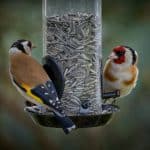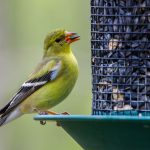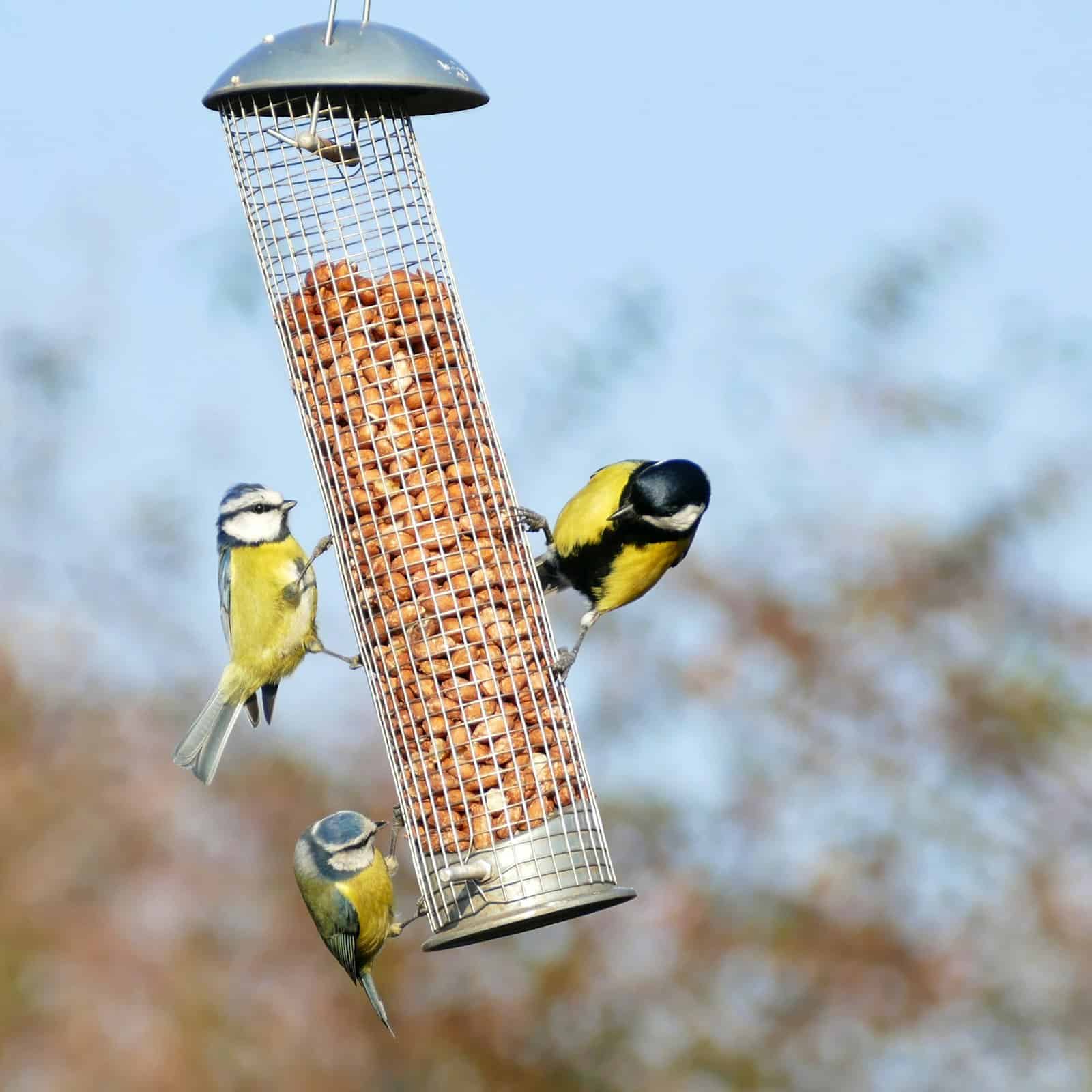
Short answer: The best feeder depends on the birds you want. Tube feeders suit small finches and chickadees, hopper feeders handle mixed seed for the widest variety, platform feeders welcome ground-feeding birds, and suet cages bring in woodpeckers and nuthatches. Chewy carries all of these types, so here is how to pick.

Wild Bird Feeder Types Compared
| Feeder type | Best seed | Birds it attracts |
|---|---|---|
| Tube feeder | Black oil sunflower, nyjer (with tiny ports) | Chickadees, finches, titmice, siskins |
| Hopper feeder | Sunflower or a mix of sunflower, safflower and peanuts | Cardinals, jays, grosbeaks, many songbirds |
| Platform / tray feeder | Sunflower, cracked corn, millet | Juncos, doves, sparrows, cardinals |
| Suet cage | Suet cakes | Woodpeckers, nuthatches, chickadees |
| Nyjer (thistle) feeder | Nyjer seed | Goldfinches, house finches, redpolls |
| Hummingbird feeder | Sugar water (one part white sugar to four parts water) | Hummingbirds |
How to Choose
Start with the birds you want
Black oil sunflower seed is the single most popular seed with the widest range of birds, according to long-running citizen-science groups such as Project FeederWatch at Cornell. If you are not sure where to start, a hopper or tube feeder with black oil sunflower is a safe first setup.
Think about squirrels and mess
Squirrels can empty a feeder in an afternoon. Weight-activated or cage-style feeders slow them down. Safflower seed is a good seed choice here, since many squirrels do not like it. To cut down on mess under the feeder, try hulled sunflower seed, which leaves no shells.
Match the size to your refilling habits
Big feeders save trips, but seed can go stale or moldy if it sits too long. It is better to fill a smaller feeder more often than to leave a large one half full for weeks.
Check the material
Metal and hard plastic are easy to clean and last longer. Wood looks nice but takes more care to keep dry and clean.
Keep Feeders Clean
- Clean feeders about every two weeks, or more often in wet or hot weather, by scrubbing with a solution of one part household bleach to nine parts water, then rinsing well and drying completely.
- Throw out wet, clumped, or moldy seed.
- Rake or sweep up spilled seed and hulls to avoid attracting rodents.
- If you see sick or lethargic birds at your feeder, take feeders down for a couple of weeks and clean them thoroughly.
Where to Hang or Place Feeders
Place feeders within about three feet of a window or more than thirty feet away. Close placement reduces the chance of fatal window strikes, because birds do not get up to full speed. Keep feeders near shrubs or trees so birds have cover, but not so close that cats or squirrels can easily jump to them.
Bottom Line
For most yards, a hopper or tube feeder filled with black oil sunflower seed, plus a suet cage in cold months, will draw the most birds with the least fuss. Add a platform feeder if you want ground-feeding birds, and keep everything clean. For help picking seed, see our guides to Chewy wild bird seed, the cheapest way to feed wild birds, and wild bird seed at Walmart.