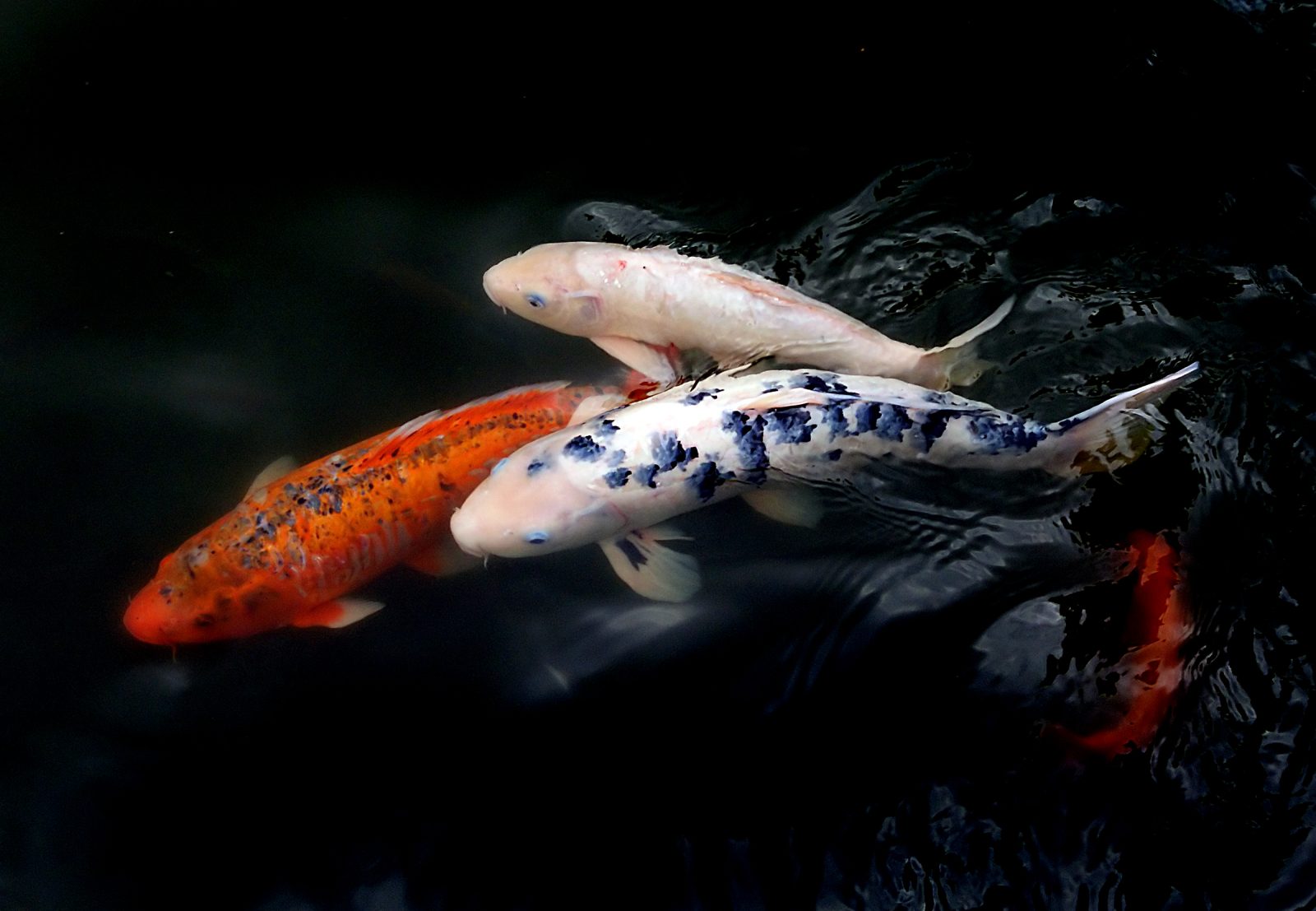
In winter, koi mostly eat nothing at all. Once pond water drops below about 45 to 50°F, koi stop feeding and live off the fat they stored in fall, so you should stop feeding too. As the water cools toward that point, switch to small amounts of an easy-to-digest, lower-protein food (often a wheat germ formula) and feed less often.

Why Koi Stop Eating When the Water Gets Cold
Koi are cold-blooded. Their body temperature, and with it how fast they digest food, follows the water. The Southern Regional Aquaculture Center (SRAC) notes that feeding activity drops as water cools because fish metabolism slows down, and that fish do not feed at all below 45°F.
Michigan State University Extension puts it plainly: even when koi still look active in cold water, they are entering a dormant state and cannot properly process food. Food they can’t digest, or don’t eat, breaks down in the pond and adds waste at a time of year when the filter and the helpful bacteria in it are working slowly too.
Koi do best at roughly 65 to 75°F, according to SRAC’s species profile. Outside that range their immune systems can be suppressed, which is one more reason not to stress them with food they can’t use.
Koi Feeding by Water Temperature
Go by water temperature, not the calendar. A floating pond thermometer, read in the afternoon, is the easiest way to know where you are. The table below combines guidance from SRAC, Kansas State, Michigan State and PetMD. Sources differ by a few degrees on the exact cutoff, so the safer choice is to stop on the early side.
| Water temperature | What to feed | How much and how often |
|---|---|---|
| Above 60°F | Regular koi pellets | Daily, only what they finish in a few minutes |
| 55 to 60°F | Easy-to-digest food, such as a wheat germ formula | About once a day, smaller portions |
| 50 to 55°F | Wheat germ or another cool-water food | A small amount every few days, and only if they come up and eat right away |
| 45 to 50°F | Little or nothing | Kansas State says stop below 50°F; SRAC allows only a tiny maintenance ration for larger fish |
| Below 45°F | Nothing | Stop feeding until spring |
For a sense of how small the cool-water portions are, SRAC’s water garden feeding table drops a maintenance ration from about 1% of body weight a day in warm water to 0.2 to 0.5% at 50 to 59°F, and to zero below 45°F. In practice, that means a pinch where you used to give a handful.
What Koi Eat as Fall Turns to Winter
Fall: build reserves
Iowa State University Extension suggests feeding pond fish a bit more as temperatures start to cool, and continuing until the water falls below 45°F. The goal is to help them build the fat stores that carry them through winter. This only applies while the water is still warm enough for them to eat eagerly and clean up every bite.
Cool water: switch to easy-to-digest food
Koi food makers sell “wheat germ” or “cold-weather” formulas for this stage. They are lower in protein and are designed to be easier to digest than summer growth foods. Hikari, for example, recommends only easily digested foods like its wheat germ diet once the water is in the 50s. Whatever you use, the amount matters more than the brand. A small portion of any good food is better than a full scoop of the “right” one.
Cold water: nothing
Below 45 to 50°F, koi rest near the bottom of the pond, where the water stays warmest. A veterinary paper presented at the World Small Animal Veterinary Association congress describes koi overwintering at the bottom at around 39°F. They won’t starve. They are living on stored energy and need very little while their body is slowed down.
What not to feed in cold weather
- High-protein growth or color foods. Save these for summer when koi can digest them.
- Treats, bread or table scraps. These add waste and nothing koi need in winter.
- Any food that sits uneaten. Scoop it out. SRAC calls overfeeding one of the most common problems in water gardens because leftover food fouls the water.
- Food on a warm afternoon in midwinter. One sunny day doesn’t warm the whole pond. Wait for steady temperatures above 50°F.
Pond goldfish follow the same rules. See our guides to when to stop feeding goldfish in outdoor ponds and what to feed goldfish in outdoor ponds.
Winter Pond Care Matters More Than Food
Once feeding stops, your job is to keep the water livable for the months the fish spend resting.
- Keep a hole in the ice. Decaying leaves and waste give off gases that are toxic to fish, and they need a way out. Iowa State suggests a one-foot opening for every 100 square feet of pond. Michigan State recommends keeping at least 10% of the surface open.
- Use a de-icer or bubbler. Kansas State suggests installing one for winter and turning off waterfalls and fountains. Michigan State suggests setting heaters, aerators and pumps up off the bottom so the warmer bottom layer stays undisturbed.
- Never smash the ice. Kansas State warns that hitting the ice sends a shock wave through the water that can kill fish.
- Have enough depth. SRAC notes that many year-round ponds have an area at least 3 to 4 feet deep that does not freeze.
- Clean out debris before winter. Rotting leaves and plants use up oxygen. The veterinary paper mentioned above notes that winter oxygen shortages can happen when ice blocks gas exchange.
When to Start Feeding Koi Again in Spring
Kansas State’s guideline is to begin feeding when the water is back above 50°F. Start with small amounts of an easy-to-digest food every day or two, watch that the fish eat it all, and increase slowly over a few weeks as the water warms toward 60°F. Their filter bacteria are waking up at the same time, so a slow start protects water quality too.
Keep an eye on their health as they wake up. SRAC notes that temperatures outside the comfortable range can weaken their immune systems, and some infections are more common in cool water. If a koi hangs alone, has red streaks, sores or clamped fins, or still won’t eat once the water is well above 50°F, test the water and call an aquatic veterinarian. Our guide to why pond goldfish stop eating covers the usual causes.
Bottom Line
Koi eat less and less as the water cools, then stop completely below about 45 to 50°F. In fall, feed well while they are still eager. In the 50s, switch to small portions of a wheat germ or other easy-to-digest food every day or every few days. In cold water, feed nothing and focus on keeping a hole in the ice and the water clean. Start again slowly once the pond stays above 50°F.
FAQ
Can koi go all winter without food?
Yes. In cold water their metabolism slows so much that they live on fat stored in fall. In cold climates, healthy koi that were well fed in fall can go for months without eating.
What temperature should I stop feeding koi?
Sources put the cutoff between 45 and 50°F. Kansas State says to stop below 50°F, while SRAC and Michigan State say fish don’t feed below 45°F. Stopping at 50°F is the cautious choice.
Is wheat germ koi food necessary?
It isn’t required, but it is a common choice for cool water because it is lower in protein and easier to digest. The bigger rule is to feed small amounts and only what the fish eat right away.
Should I feed koi on a warm winter day?
Usually not. A single warm afternoon rarely warms the whole pond. Wait until the water stays above 50°F for several days.
Do koi in indoor or heated ponds need winter feeding?
Koi kept in water held in their comfortable range keep eating normally. Feed by the actual water temperature, wherever they live.
Sources
- Southern Regional Aquaculture Center: Water Gardens (SRAC Publication 435)
- Southern Regional Aquaculture Center: Species Profile: Koi and Goldfish (SRAC Publication 7201)
- Michigan State University Extension: Winter Visits Your Backyard Pond
- Kansas State University Research and Extension: Water Gardening: Maintenance (MF2913)
- Iowa State University Extension: Fall and Winter Care of Watergardens
- VIN / WSAVA 2015: Cold Weather Health Maintenance in Koi Ponds
- PetMD: Koi Fish Care Sheet
- Hikari: Feeding Koi (manufacturer guide)
This article is general information, not veterinary advice. If your koi look sick or stop eating in warm water, test your water and contact a veterinarian who treats fish.