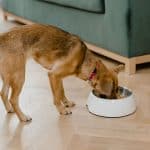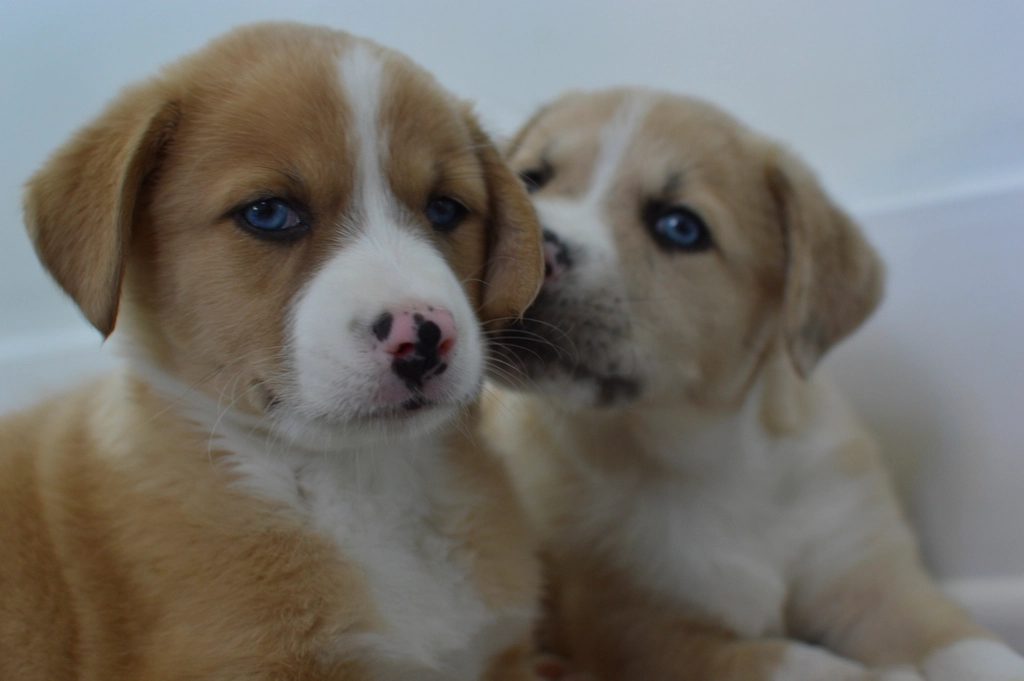
A 5-week-old puppy should still be nursing from its mother while eating a soft gruel of puppy food soaked in warm water (or puppy milk replacer) three to four times a day. By this age most puppies are eating semi-solid food every day, and over the next one to three weeks you thicken the mush until they are fully weaned at about 6 to 8 weeks.

General information, not veterinary advice. If a 5-week-old puppy is orphaned, underweight, weak or not eating, call your veterinarian today. Puppies this young can go downhill fast.
Where a 5-Week-Old Puppy Is in Weaning
Week 5 sits in the middle of the weaning window. The Purina Institute notes that a mother’s milk alone supports normal growth only until about 3 to 4 weeks of age, and that puppies should be eating semi-solid food by 5 weeks. Around 5 to 6 weeks, many mothers start weaning their litters on their own as their milk supply drops.
| Age | Main food | Texture of solid food |
|---|---|---|
| Birth to 3 weeks | Mother’s milk (or puppy milk replacer for orphans) | None yet |
| 3 to 4 weeks | Mother’s milk plus first tastes of gruel | Thin, about 1 part dry food to 2 parts warm water |
| 5 weeks | Nursing plus gruel at several meals a day | Thicker, moving toward 2 parts food to 1 part water |
| 6 to 8 weeks | Solid puppy food; weaning finished | Moistened, then little or no added water |
The ratios above come from Purdue University’s Center for Animal Welfare Science and the Purina Institute. Treat them as a guide. Some litters move faster and some slower.
What to Feed a 5-Week-Old Puppy
- Mother’s milk. If mom is with the litter and healthy, let the puppies keep nursing. It still supplies a big share of their calories this week.
- A complete puppy food. Pick a food labeled for puppies, growth or all life stages, with a statement that it is complete and balanced. Purdue’s guide recommends this for every puppy, and a large-breed puppy formula for big breeds.
- Canned or dry, made soft. Either works. One shelter foster guide from the SPCA of Wake County notes that puppies this small tend to eat wet food better than dry, so canned puppy food mashed with water is an easy place to start.
- Puppy milk replacer to mix the gruel, if the mother has little milk or the puppies are orphaned. Use one made for puppies.
- Fresh water in a shallow, tip-proof dish.
The Purina Institute suggests making the gruel from the same food the mother is eating. That keeps the diet consistent, which is easier on young stomachs.
How to Make Puppy Mush at 5 Weeks
- Measure the puppy food. If using kibble, start around 1 part kibble to 1 to 2 parts warm water or milk replacer.
- Let kibble soak until soft. The SPCA of Wake County foster guide soaks it for about 15 minutes, then mashes it.
- Mash or blend it smooth. VCA Animal Hospitals describes early gruel as having a thick milkshake consistency. At 5 weeks it can be thicker, closer to oatmeal.
- Serve it slightly warm, in a wide, flat dish so every puppy can reach.
- Each few days, use a little less liquid. By about 5 to 6 weeks, aim for roughly 2 parts food to 1 part water.
If puppies walk away from very thick mush, add a splash more liquid. VCA notes that gruel that is too thick can make puppies eat less.
How Often and How Much to Feed
Offer gruel three to four times a day, spaced through the day, on top of nursing. Purdue’s guide calls for three or more meals a day for puppies. Small and toy breeds may need the extra meal, because tiny puppies have small energy reserves.
How much depends on the food, the breed and how much milk the puppy still gets. As one example, the SPCA of Wake County’s foster guide offers 5-week-olds about 1/4 to 1/2 can of wet food gruel three to four times a day. Start with the puppy section of your food’s feeding chart, then let weight gain tell you whether to adjust.
- Let puppies eat for about 20 to 30 minutes, then pick up the dish.
- Throw out leftover gruel rather than saving it. Wet mush spoils quickly.
- Watch that one pushy puppy is not eating everyone else’s share. Use a second dish if needed.
Weigh Your Puppies
A kitchen or postal scale is the best tool you have at this age. VCA says healthy puppies gain roughly 5 to 10 percent of their body weight per day in the early weeks, and the SPCA of Wake County uses about 10 percent a day as its guide. Weigh each puppy at least once a week, or every day or two if a puppy seems small, and write the numbers down.
A puppy that stops gaining or loses weight needs a vet check, even if it seems bright.
Foods to Avoid
- Cow’s milk and goat’s milk. VCA notes they are too low in protein and fat for puppies, and they often cause diarrhea.
- Human baby food and table scraps. They do not meet a puppy’s needs.
- Adult dog food. It is not built for growth.
- Toxic foods such as grapes, raisins, onions, garlic, chocolate and anything with xylitol.
- Bones, rawhide and raw meat. Choking and bacteria risks are too high for a puppy this small.
Orphaned or Underweight 5-Week-Old Puppies
If there is no mother dog, or a puppy is clearly smaller than its littermates, do not try to manage it on your own. See a veterinarian first. Orphaned puppies need puppy milk replacer and gruel on a plan built for their weight, and your vet can check for parasites, low blood sugar and other problems that are common at this age.
Until you get in, keep the puppy warm, offer gruel made with puppy milk replacer, and never give cow’s milk.
When to Call the Vet
Call your vet promptly if a 5-week-old puppy:
- Refuses food or will not nurse
- Is not gaining weight, or is losing weight
- Has diarrhea, vomiting or a swollen, pot-bellied look
- Seems weak, sleepy, cold or wobbly, or is twitching
- Has sticky or dry gums, or skin that stays tented when gently pinched (signs of dehydration)
- Cries constantly during or after feeding
- Has sneezing, coughing, or eye or nose discharge
Weakness, trembling or seizures can mean low blood sugar, which is an emergency in a young puppy. This is also a good time to ask your vet about deworming and the first vaccines, which VCA says usually start at 6 to 8 weeks.
What Comes Next
If your puppies are just getting started, see what to feed a puppy at 3 weeks and what to feed puppies at 4 weeks. Next week, the plan moves to softened kibble about four times a day, covered in what to feed a 6-week-old puppy. For the mother’s side of things, read what to feed a nursing dog to gain weight.
Bottom Line
At 5 weeks, a puppy should keep nursing while eating a soft gruel of complete puppy food and warm water or puppy milk replacer three to four times a day. Make the mush a little thicker every few days, weigh puppies at least weekly, skip cow’s milk, and call your vet for any puppy that is orphaned, underweight or not eating well.
FAQ
Can a 5-week-old puppy eat dry food?
Not on its own yet. Soak kibble in warm water until soft and mash it. Most puppies are ready for moistened, then dry, kibble between 6 and 8 weeks.
Can a 5-week-old puppy be away from its mother?
It is too early. Puppies are usually not fully weaned until 6 to 8 weeks, and they still get food and comfort from nursing. If a puppy this age is already on its own, ask a vet for a feeding plan.
Do 5-week-old puppies need water?
Yes. Offer fresh water in a shallow dish that a puppy cannot fall into or tip over. Gruel also adds a lot of moisture.
Can I give a 5-week-old puppy cow’s milk?
No. Cow’s milk is too low in protein and fat for puppies and often causes diarrhea. Use a puppy milk replacer if you need milk.
How many times a day should a 5-week-old puppy eat?
Offer gruel three to four times a day, plus nursing. Small breeds may do better with four meals.
Sources
- Purina Institute: Nutrition for Pregnant and Lactating Dogs and Their Nursing Puppies
- Purdue University Center for Animal Welfare Science: Puppy Nutrition
- VCA Animal Hospitals: Raising Puppies
- VCA Animal Hospitals: Caring for Orphaned Puppies
- SPCA of Wake County: Foster Mom and Puppies Feeding Guidelines
This article is general information, not veterinary advice. Ask your veterinarian about feeding plans for your puppies, especially if they are orphaned, underweight or unwell.