No, guinea pigs should not eat potato peelings. Potatoes are a nightshade, and the skin, especially if it is green or sprouting, contains solanine, a natural toxin. Even clean peelings are starchy and low in the fiber and vitamin C guinea pigs need, so it is best to leave them out entirely.

Why potato peelings are a problem
- Solanine. Green patches, sprouts and “eyes” concentrate this toxin, which can cause stomach upset and worse.
- Starch. Guinea pigs are built for fibrous plants. A starchy food can upset the balance of gut bacteria and lead to gas, bloating or diarrhea.
- Leftover coatings. Peelings from cooked, fried or seasoned potatoes can carry salt, oil, butter or spices.
- Little nutrition. Peelings give almost no vitamin C, which guinea pigs must get from food daily.
What if my guinea pig already ate some?
A small bite of plain, clean peeling is unlikely to cause lasting harm. Remove the rest, give plenty of hay and fresh water, and watch for soft droppings, bloating, lethargy or refusing food. If you see any of these, or if the peel was green or sprouted, call an exotics vet right away.
Safer peelings and scraps
If you want to share kitchen scraps, these are better options when washed and served fresh:
- Pieces of red, yellow or orange bell pepper.
- Romaine, red leaf or green leaf lettuce leaves.
- Cucumber slices, with or without skin.
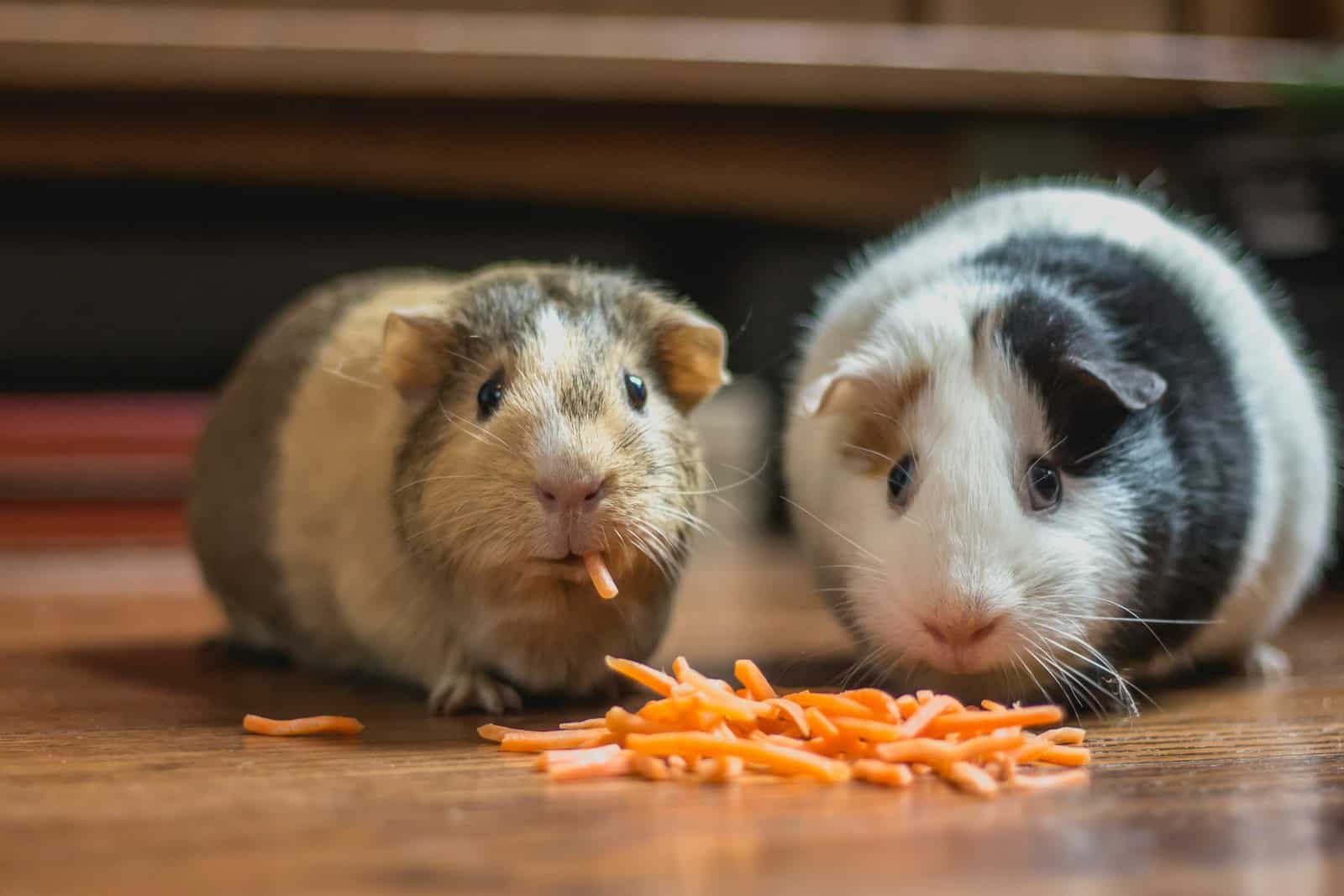
- Small amounts of carrot top or a thin slice of carrot.
See our list of healthy vegetables for guinea pigs for more ideas.
Bottom Line
Keep potato peelings, potato skins and sprouted potatoes away from your guinea pig. Feed unlimited hay, a small portion of plain pellets and fresh safe vegetables instead. For other foods to avoid, read what foods are toxic to guinea pigs.
General information, not veterinary advice. Call your vet if you suspect poisoning.