Flowerhorn cichlids need a high-protein diet built around a quality cichlid pellet, with shrimp, krill, and insects as treats. Feed adults a small amount once or twice a day, and juveniles two to three small meals a day.

What Flowerhorns Eat
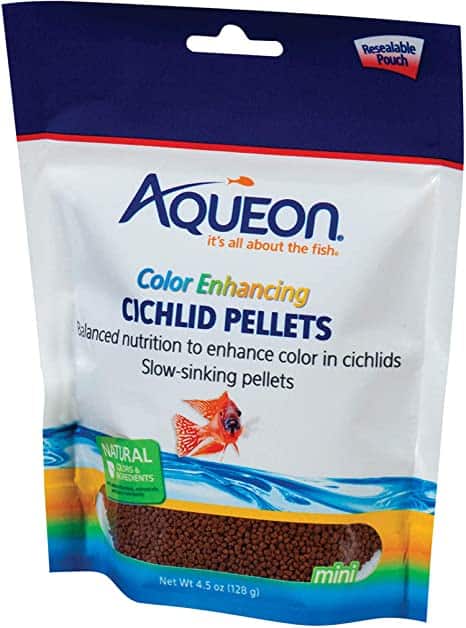
Flowerhorns are hybrid cichlids first bred in Taiwan in the late 1990s and early 2000s. They are meat-leaning omnivores and eat both animal food and some plant matter in captivity. Their staple should be a pellet made for large cichlids, ideally one with whole fish or shrimp meal near the top of the ingredient list and no heavy filler.
Good Foods
- Cichlid pellets: the daily staple. Floating or slow-sinking pellets sized to your fish.
- Shrimp, krill, and brine shrimp: frozen or freeze-dried treats rich in protein.
- Black soldier fly larvae and other insects: a healthy variety food.
- Bloodworms: a favorite treat, but only occasionally.
- Peas and spirulina-based foods: small amounts of plant matter help digestion.
Foods to Skip
- Beef heart and other mammal meat: hard to digest and fatty, which can harm the fish.
- Feeder fish: a common way to introduce disease and parasites.
- Too many treats: a diet of treats alone leaves out key nutrients.
How Much and How Often
- Offer only what your fish eats in about one to two minutes.
- Skip one day each week to help digestion.
- Remove uneaten food so ammonia does not spike.
- Watch for bloating or stringy white waste, and change the diet if you see it.
Color and the Head Bump
Carotenoid-rich foods, such as krill and shrimp, can support bright color. Diet will not create the head bump (called the kok), which is mostly genetic, though good health helps the fish look its best.
Related Reading
For more big-cichlid feeding advice, see Red Devil cichlid food and the best African cichlid food for color.
Bottom Line
Build the diet on a good cichlid pellet, add shrimp or insects a few times a week, and keep portions small. If your fish stops eating or looks bloated, test the water and consult an aquatic vet.