Yes, Rural King stocks a wide range of chicken feed, from national brands such as Nutrena to its own Country Road label. The right bag depends on your birds’ age, not the brand on the front. Stock varies by store, so check the shelf tag and the feed tag on the bag before you buy.

Which feed goes with which age
- Chick starter (hatch to about 8 weeks): roughly 18 to 20 percent protein, in fine crumble form.
- Grower or developer (about 8 to 18 weeks): slightly lower protein, with no extra calcium.
- Layer feed (from about 18 weeks, or when the first egg appears): roughly 16 percent protein plus added calcium for strong shells.
- All-flock or flock raiser (about 16 to 20 percent protein): one feed for mixed ages, with oyster shell offered in a separate dish for the hens.
Do not feed layer feed to young chicks or roosters as their main diet. The extra calcium is hard on growing birds’ kidneys.
Brands you may see on the shelf
Nutrena NatureWise
A national brand with layer, starter and all-flock formulas. The layer pellet is a common choice for hens in lay. Compare the guaranteed analysis on the tag (protein, fat, calcium) rather than relying on the marketing copy.
Country Road (Rural King’s own label)
Country Road feeds are usually the budget option. Rural King sells layer pellets, all-flock pellets and chick starter crumbles under this name. Medicated starters contain a coccidiosis preventive. Skip them if your chicks were vaccinated for coccidiosis, because the medication can cancel out the vaccine.
Pellets, crumbles or mash?
- Crumbles suit chicks and small breeds.
- Pellets reduce waste because hens cannot pick out only their favorite bits.
- Mash is loose and dusty and tends to get scattered, but some flocks prefer it, especially when it is lightly dampened.
How much to feed
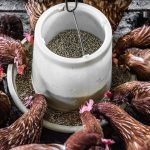
A full-size laying hen eats about a quarter pound (around 4 ounces) of feed a day. Fill the feeder to match what the flock clears in a day, then adjust. Always keep fresh water available, and give grit if the birds eat anything other than complete feed, such as scratch grains or kitchen scraps.
Storing feed
Keep bags in a metal or heavy plastic bin with a tight lid, off the floor and away from damp. Pelleted feed is best used within a few weeks of the milling date printed on the tag. Throw out anything that smells musty or has clumped.
Bottom Line
Match the feed to your birds’ age first, then choose a brand that fits your budget. Nutrena and Country Road both work for most backyard flocks when you pick the right formula. For more help, see our guides to chicken feed at Tractor Supply, Agway chicken feed and feed for 3-month-old chicks.
If your birds seem sick or stop eating, call a poultry-savvy vet or your county extension office.