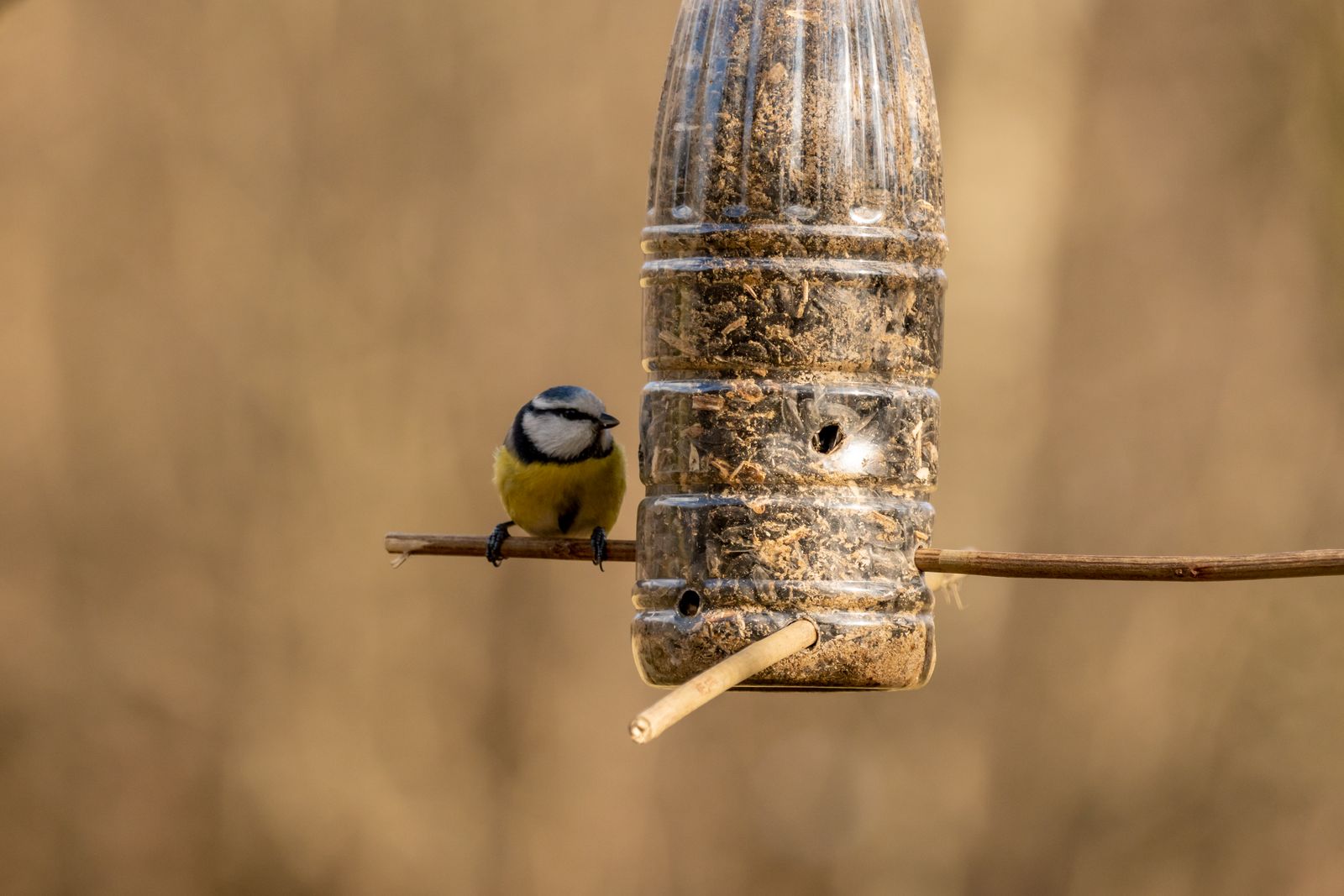
A 40 lb bag of wild bird seed from Walmart is a good value for a busy backyard feeder, as long as the mix is mostly black oil sunflower seed and you store it dry. Brands and blends change by store, so read the ingredient list on the bag rather than relying on the product name.

What to Look for on the Label
- Black oil sunflower seed: the most popular seed for cardinals, chickadees, finches, titmice and nuthatches. Mixes high in sunflower attract the widest range of birds.
- White proso millet: good for sparrows, juncos and doves that feed on or near the ground.
- Cracked corn: attracts doves, jays and blackbirds. Useful in small amounts, but it can draw squirrels and larger birds.
- Milo (sorghum) and red millet: cheap filler that many songbirds pick out and leave on the ground. A mix heavy in milo may waste seed.
- Weed seed and “filler”: a sign of a lower-quality blend.
Is a 40 lb Bag Worth It?
A large bag lowers the price per pound if you feed regularly. It makes less sense if you only have one small feeder, because seed can go stale before you finish it. Check the weight, the price per pound and the best-by date, and compare against smaller bags at Ace Hardware and Tractor Supply if you have time.
Storing Bird Seed
- Keep it in a metal or heavy plastic bin with a tight lid, in a cool, dry spot.
- Throw out any seed that is damp, clumped, moldy or smells sour. Moldy seed can sicken birds.
- Seed that is kept dry usually stays good for several months. Use older seed first.
- Store away from rodents; a sealed container also keeps out pantry moths.
Feeder Tips
- Fill tube or hopper feeders with the sunflower-heavy mix, and use a tray for ground feeders.
- Clean feeders every couple of weeks with a mild soap solution and let them dry fully to limit disease spread.
- Put out only what birds will eat in a few days, especially in wet weather.
Bottom Line
A 40 lb Walmart bag is a sensible buy for an active feeder if the first ingredients are sunflower seed and millet, and you can keep it dry. For a single-seed option, see our guide to wild bird sunflower seeds.