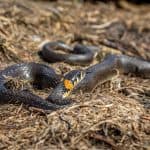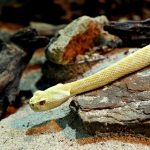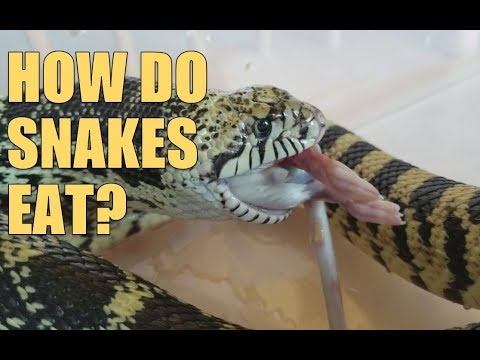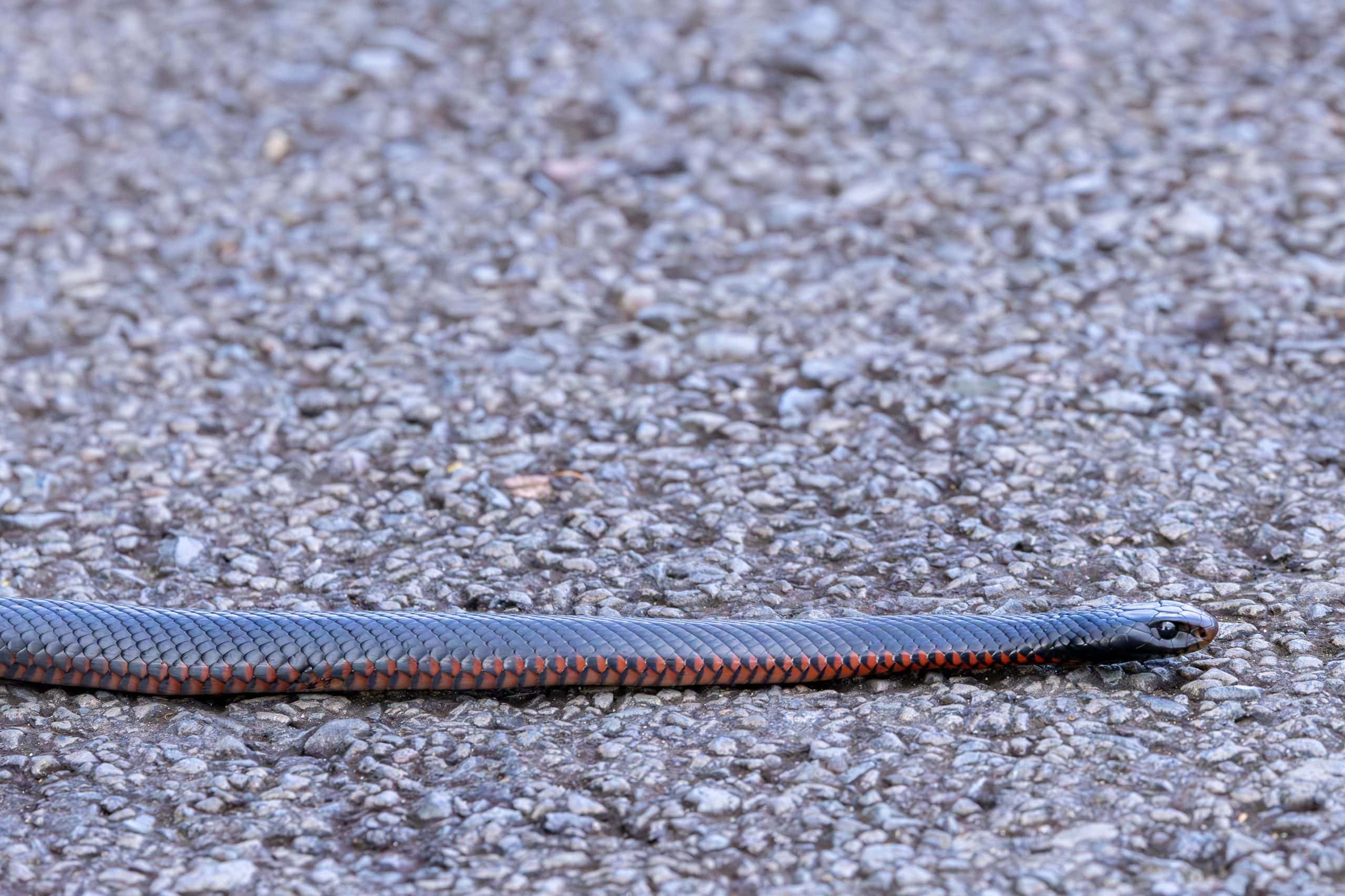
Baby black snakes eat small prey such as insects, worms, slugs, frogs, lizards, and tiny rodents, depending on the species. “Black snake” is a common name for several species, so the best diet depends on which one you have.

Which Black Snake Is It?
In North America, young “black snakes” are usually black rat snakes or black racers. Baby black rat snakes are gray with dark blotches and darken as they grow. Baby racers are patterned too and turn solid black in adulthood. Knowing the species matters for feeding, and for knowing whether you should be feeding at all.
What Baby Black Snakes Eat in the Wild
- Baby rat snakes: frogs, lizards, and tiny mice, plus insects.
- Baby racers: insects such as crickets and grasshoppers, plus lizards and frogs.
As they grow, both switch to rodents, birds, and eggs.
If You Find a Wild Baby Snake
Do not try to feed or keep it. Wild hatchlings often refuse captive food and rarely do well. Leave it where it is, or gently move it out of harm’s way with a broom or container. Keep pets away.
Feeding a Captive Baby Rat Snake
For a captive-bred baby black rat snake, offer a frozen-thawed pinky mouse every 5 to 7 days, warmed in a sealed bag in warm water. Keep the warm side of the enclosure around 85°F. If it refuses food, check temperatures, make sure it has hides, and give it some time after a shed.
Bottom Line
Baby black snakes eat small, soft prey and grow into excellent rodent hunters. Learn more in our guides to what rat snakes eat, whether snakes eat crickets, and feeding snakes frozen mice.