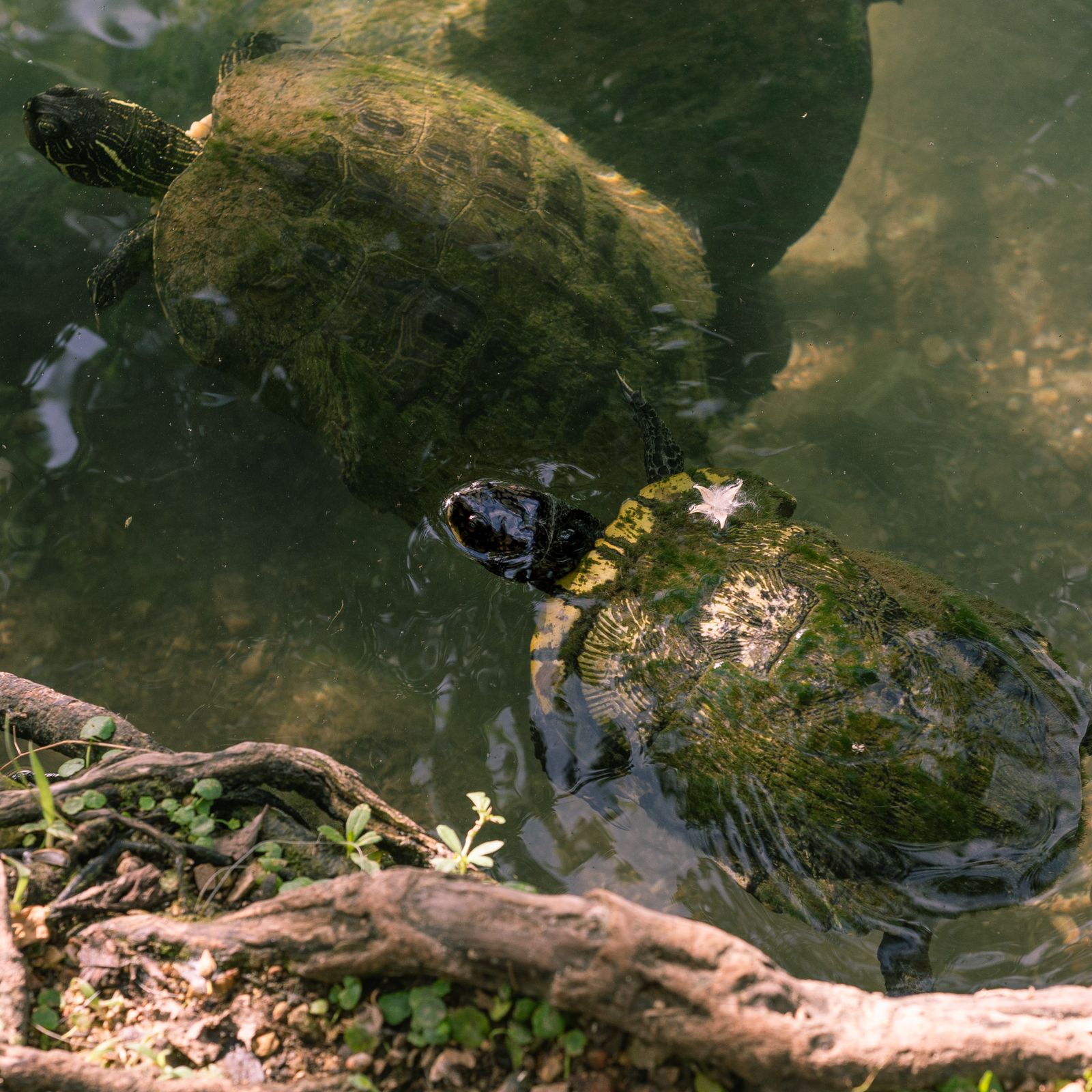
Snake-necked turtles are carnivores that eat small fish, tadpoles, frogs, insects, worms, snails and crustaceans. In captivity, a good diet is a quality turtle pellet plus a mix of whole prey such as feeder fish, earthworms and shrimp.

What They Eat in the Wild
Snake-necked (long-necked) turtles are ambush predators. They sit still and strike with a quick sideways flick of the neck, sucking prey into the mouth with a rush of water. Their wild diet includes:
- Small fish and tadpoles
- Frogs
- Aquatic insects and their larvae
- Freshwater shrimp and yabbies
- Snails, worms and carrion
What to Feed a Pet Snake-Necked Turtle
- Commercial turtle pellets as the base, labeled for aquatic carnivorous turtles
- Whole prey: earthworms, crickets, mealworms, ghost shrimp and small feeder fish
- Occasional treats: small pieces of frozen-thawed fish or krill
- Calcium source: a cuttlebone in the tank or a calcium supplement on prey a few times a week
How Much and How Often
- Hatchlings and juveniles: feed daily
- Adults: feed two to three times a week
Offer only what the turtle finishes in 10 to 15 minutes. These turtles eat in the water, so feeding in a separate tub keeps the main tank cleaner.
What to Avoid
- Bread, dairy, processed meats and table scraps
- Fatty meats like beef or chicken as a regular food
- Wild-caught fish or insects, which may carry parasites or pesticides
- Pebbles and small decorations they could swallow
Habitat Notes That Affect Feeding
Turtles digest food best when warm. Keep water around 75 to 80 F with a dry basking area and UVB light, which helps them use calcium. Poor lighting and low calcium can cause soft shells.
When to Call a Vet
See a reptile vet if your turtle refuses food for more than a week, has swollen eyes, a soft shell or breathing trouble. This article is general information, not veterinary advice.
Bottom Line
Feed a snake-necked turtle mostly pellets, plus whole prey such as worms, shrimp and small fish, with calcium and proper lighting. Young turtles eat daily, adults a few times a week.
Related reading: Brazilian turtle food, vitamin A-rich foods for turtles and what crested newts eat.


