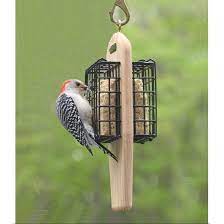
Suet is a high-fat cake that gives woodpeckers, chickadees, nuthatches and other birds a lot of energy, especially in cold weather. Golden Oaks is one of the brands sold in stores and online, but whatever brand you choose, look at the ingredients and serve it in a suet cage feeder. Product details change, so check the package for the current ingredient list.

Which Birds Eat Suet
Suet attracts woodpeckers, nuthatches, chickadees, titmice, wrens and jays. Starlings like it too, which is why many people use a cage feeder that makes it harder for large birds to hang on.
What to Look For in a Suet Cake
- Rendered fat: Rendered (melted and reset) suet stays firmer and lasts longer than raw suet.
- Added seeds, nuts or fruit: Common mix-ins that appeal to more species.
- No unnecessary additives: Plain or nut and seed varieties are fine. Skip anything with salt or artificial sweeteners.
- Packaging: Many cakes come in plastic trays that may be recyclable, so check the packaging.
How to Serve Suet
- Place the cake in a suet cage feeder hung from a tree branch or hook.
- Put the feeder in a spot that gets some shade.
- Replace the cake when it gets low, moldy or smelly.
- Wash the cage every few weeks with hot, soapy water.
Hot Weather Warning
Suet softens and can go rancid in heat. In hot weather, switch to no-melt suet products or take suet feeders down. Melted fat can coat feathers, which is harmful to birds.
More Ways to Feed Birds
Mix suet with other foods, such as sunflower seed, mealworms and unsalted nuts. For more ideas, read what to feed wild birds besides seed, walnuts for wild birds and our guide to wild bird feeder types.
Bottom Line
Suet is a valuable winter food. Buy a rendered cake with simple ingredients, serve it in a cage feeder and keep it clean and cool. If you see birds with matted feathers or sick birds at the feeder, remove the food and clean the feeder.