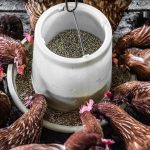
You can build a simple automatic duck feeder from a food-safe bucket and a few cheap parts in under an hour. A DIY feeder holds several days of feed, keeps it off the ground, and costs much less than a store-bought hopper. Here is how to make one and what to avoid.

Why build your own?
- It costs a fraction of a commercial feeder.
- You can size it to your flock.
- It keeps feed cleaner and drier than an open pan.
The trade-offs are the same as for any automatic feeder: pests and wet feed. Read the advantages and disadvantages of automatic duck feeders before you start.
Materials
- A food-grade plastic bucket with a lid, 3 to 5 gallons
- A shallow plastic or metal tray, or the bottom half of a second bucket
- Screws or bolts with washers, and a drill
- A utility knife or hole saw
- Optional: a rain cover made from a plastic lid or scrap of sheet metal
Use food-grade containers only. Do not use buckets that once held chemicals, paint or cleaning products.
Steps
- Cut two or three openings near the bottom of the bucket, about 2 to 3 inches wide and tall enough for a duck’s bill. Sand or tape the edges so they are smooth.
- Drill a few small holes in the bottom of the tray so rain can drain.
- Attach the bucket to the tray with bolts, so feed spills into the tray instead of the ground.
- Fill the bucket with pellets and snap on the lid.
- Add a rain cover or place the feeder under a shelter.
- Set it on a flat, raised surface so it cannot tip.
Tips for success
- Keep the feeder away from water, because ducks splash.
- Only fill it with what the flock eats in a few days, so feed stays fresh.
- Check daily for wet or moldy feed, and clean it often.
- Bring it in at night if you have rodent problems.
- Make sure ducklings can reach the openings, and give them about 4 inches of feeding space each.
What to feed
Use a complete duck or waterfowl feed with enough niacin. Add treats separately, as in these homemade duck food recipes.
Bottom Line
A bucket-and-tray feeder is an easy weekend project that saves money and time. Build it with food-safe parts, keep feed dry, and check it daily.