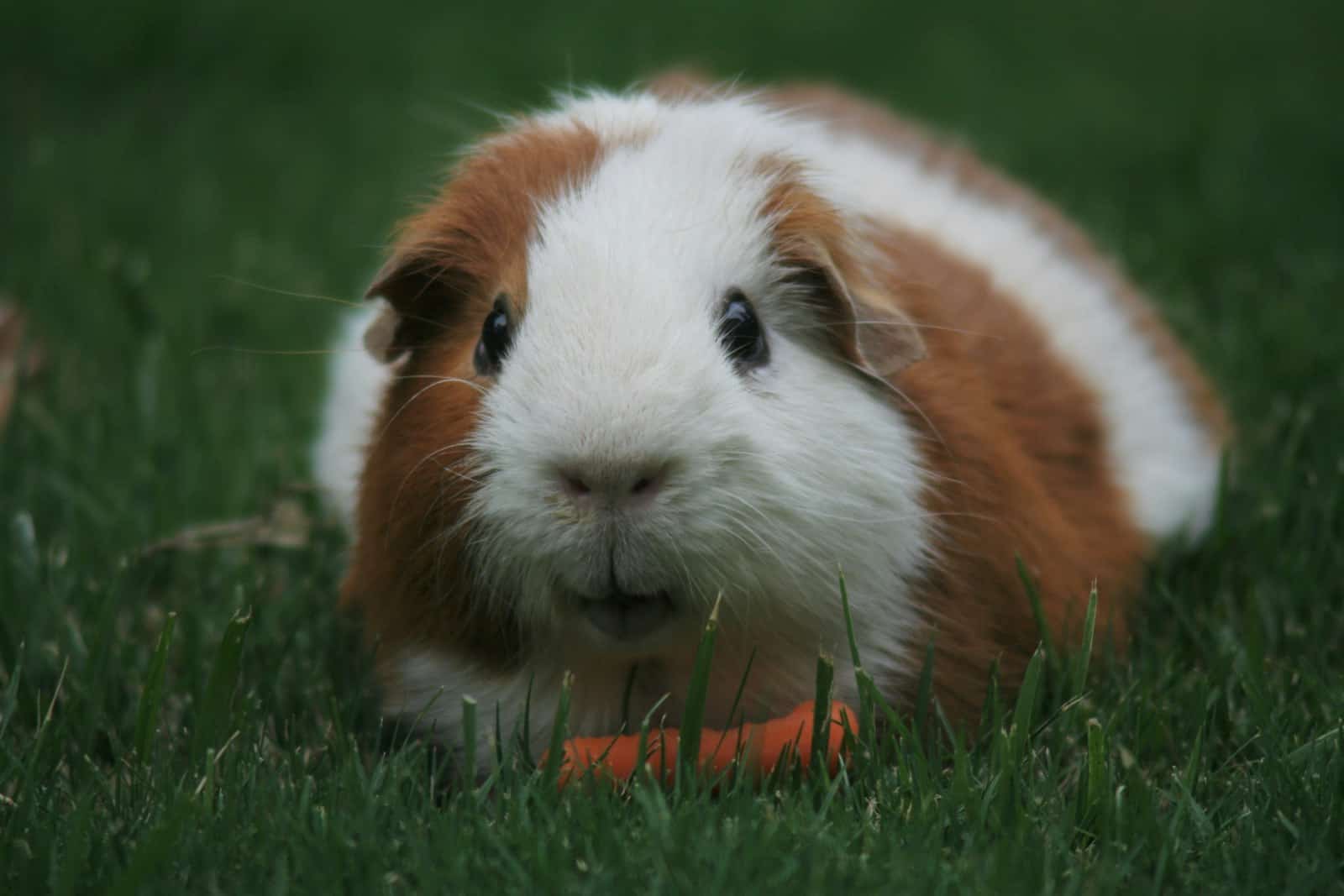
Guinea pigs eat mostly hay. A healthy adult guinea pig should have unlimited grass hay (like timothy) every day, plus about a cup of fresh vegetables, a small portion of plain guinea pig pellets, and a steady source of vitamin C. Fruit is an occasional treat, not a staple.

That simple formula covers most of what your guinea pig needs. Below, we break down each part of the diet, what to avoid, and how to spot common feeding mistakes.
The Ideal Guinea Pig Diet at a Glance
- Grass hay: Unlimited, available 24/7. This should make up the large majority of what they eat.
- Fresh vegetables: Roughly 1 cup per guinea pig per day, mostly leafy greens.
- Pellets: A small daily portion of plain, vitamin C–fortified guinea pig pellets.
- Fruit: Small pieces, once or twice a week at most.
- Water: Fresh, clean water at all times, changed daily.
Hay: The Foundation of the Diet
Guinea pigs are grazers, and their teeth never stop growing. Chewing coarse hay all day wears those teeth down and keeps their digestive system moving. Without enough hay, guinea pigs are at higher risk for overgrown teeth and gut problems.
Best hay for adult guinea pigs
- Timothy hay – the most popular choice and widely available.
- Orchard grass – softer and a good option for picky eaters.
- Meadow or brome hay – good for variety.
Mixing a couple of grass hays keeps meals interesting. Good hay should smell fresh and sweet, look greenish, and be free of dust, mold, and musty odors.
What about alfalfa hay?
Alfalfa is a legume hay that’s much higher in calcium and protein than grass hay. It’s useful for young, growing guinea pigs and for pregnant or nursing sows, but it isn’t a good everyday hay for healthy adults. Too much calcium can contribute to bladder stones. For more detail, see our guide on what type of hay guinea pigs eat.
Vitamin C: The Nutrient Guinea Pigs Can’t Make
Like people, guinea pigs can’t produce their own vitamin C. They need it from food every single day. A lack of vitamin C leads to scurvy, which can cause a rough coat, swollen or painful joints, reluctance to move, poor appetite, and slow wound healing.
Good everyday sources of vitamin C include:
- Bell peppers (red, yellow, or green)
- Parsley
- Kale (in moderation)
- Broccoli (small amounts, since it can cause gas)
- Cilantro
Fortified pellets help too, but vitamin C breaks down over time. Check the date on the bag and store pellets in a cool, dry place. Adding vitamin C drops to the water bottle isn’t recommended, since it degrades quickly and can make guinea pigs drink less. If you think your guinea pig isn’t getting enough, ask your vet whether a supplement is needed.
Red bell pepper is one of the best choices. Read more in Can Guinea Pigs Eat Red Peppers?
Fresh Vegetables
Plan on about one cup of fresh vegetables per guinea pig each day. Focus on leafy greens and rotate a few different options so they get a wider range of nutrients.
Great daily choices
- Romaine lettuce
- Green or red leaf lettuce
- Cilantro
- Bell peppers
- Cucumber (small amounts – it’s mostly water)
- Carrot tops
Feed in moderation
Some vegetables are healthy but high in calcium, oxalates, or sugar, so they’re best offered a few times a week rather than daily:
- Spinach, kale, and parsley (higher in calcium or oxalates)
- Carrots (higher in sugar)
- Broccoli and cabbage (can cause gas)
- Ripe tomato flesh (never the leaves or stems)
Iceberg lettuce isn’t toxic, but it’s mostly water with little nutrition, so choose darker lettuces instead. Always wash produce well, and introduce new foods one at a time and in small amounts to avoid an upset stomach.
Pellets
Pellets fill in nutritional gaps, but they shouldn’t replace hay. Choose plain, timothy-based guinea pig pellets with added vitamin C. Avoid “fiesta” style mixes with seeds, nuts, dried fruit, or colorful pieces. Guinea pigs tend to pick out the sugary bits, and those mixes can lead to weight gain and dental issues.
Most adult guinea pigs need only a small amount of pellets each day. Follow the feeding guide on your pellet bag and ask your vet what’s right for your pet’s age and weight. Young guinea pigs and pregnant sows may need alfalfa-based pellets.
Fruit and Treats
Fruit is tasty, and many fruits contain vitamin C, but they’re also high in sugar. Offer a small piece (about the size of a grape or a thin slice) once or twice a week. Safe options include:
- Strawberries
- Blueberries
- Apple (no seeds or core)
- Kiwi
- Pear (no seeds)
- Orange (an occasional small segment – citrus is acidic and can cause mouth sores if overfed)
Skip store-bought yogurt drops, seed sticks, and other sugary treats. A favorite leafy green or a fresh handful of hay makes a perfectly good reward.
Foods Guinea Pigs Should Never Eat
Some foods are harmful or even toxic to guinea pigs. Never feed:
- Chocolate, candy, or sugary snacks
- Onions, garlic, chives, and leeks
- Avocado
- Potatoes and potato plants
- Rhubarb
- Tomato leaves and stems
- Dairy products and meat
- Nuts, seeds, and fruit pits
- Bread, crackers, chips, and other processed human food
- Houseplants or garden plants you can’t identify
See our full list of foods that are toxic to guinea pigs for more.
Signs Your Guinea Pig’s Diet Needs Attention
Call your vet if you notice any of the following:
- Not eating or eating much less than usual
- Fewer, smaller, or no droppings
- Diarrhea or very soft stools
- Drooling, dropping food, or trouble chewing
- Weight loss or a hunched posture
- Rough coat, limping, or reluctance to move
Guinea pigs hide illness well, and a guinea pig that stops eating can get sick quickly. Don’t wait to see if it passes.
Bottom Line
Guinea pigs eat mostly grass hay, with about a cup of fresh vegetables a day, a small portion of plain vitamin C–fortified pellets, and fruit only as an occasional treat. Make sure they get vitamin C daily, always have fresh water, and avoid sugary, processed, and toxic foods. Keep it simple, keep the hay coming, and your guinea pig will be well set up for a long, healthy life.
This article is for general information only and isn’t a substitute for professional veterinary advice. If you have questions about your guinea pig’s diet or health, talk to a vet who treats exotic pets.
