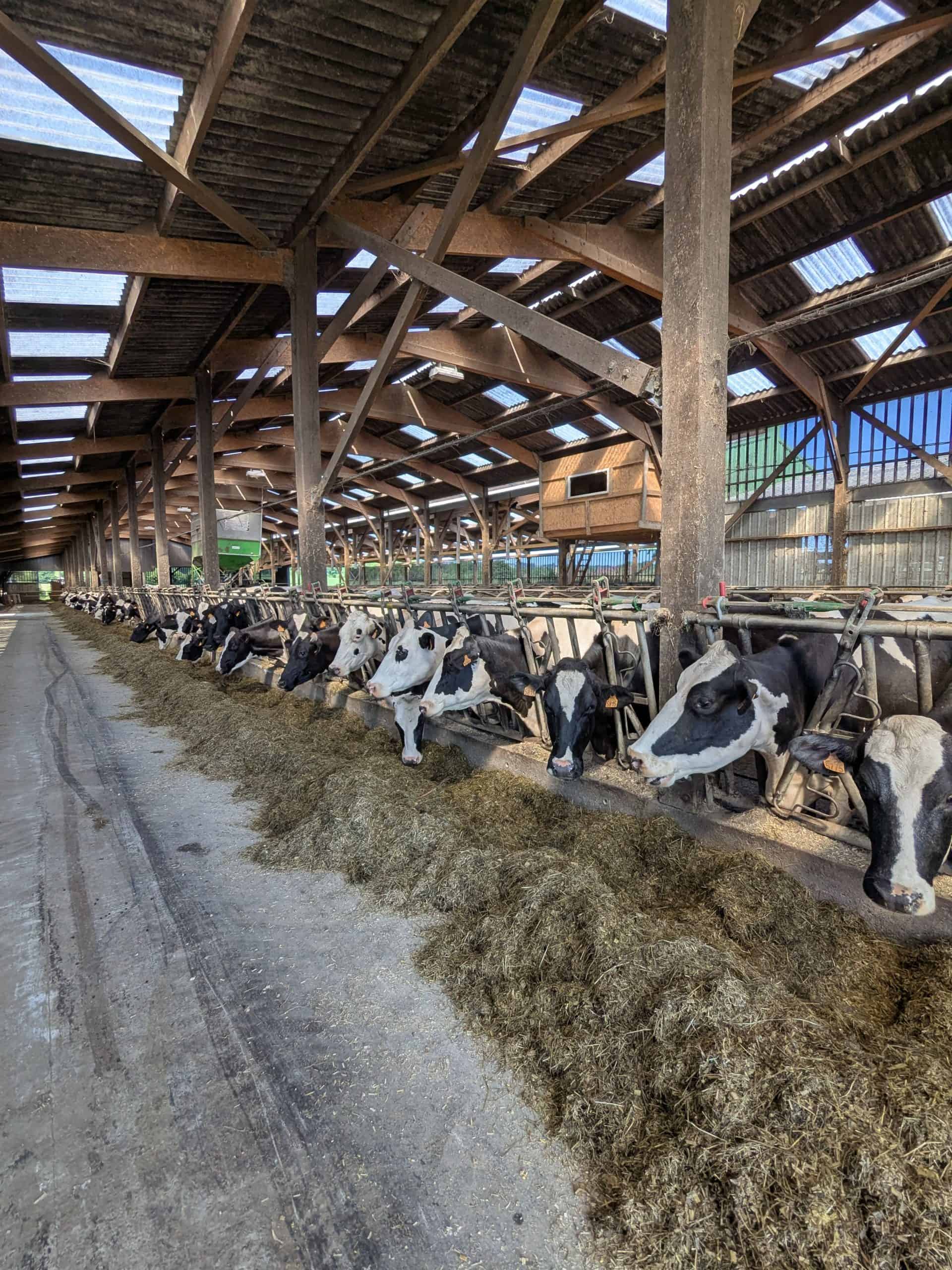
Yes, cows eat straw, and many beef producers feed it on purpose. But straw is a low-quality filler, not a complete feed. It works best for mature, healthy beef cows that are not nursing, as one part of a ration that also supplies protein, energy and minerals.

Why Cows Eat Straw
Straw is the dry stalk left after grain such as wheat, barley or oats is harvested. It is very high in fiber and low in nutrients. Typical straw has only a few percent crude protein and well under half the digestible energy of good hay. That makes it cheap roughage that fills the rumen and keeps the gut working, especially in cold weather when cows burn extra energy to stay warm.
Farm extension programs, including North Dakota State University, describe straw as a low-cost residue feed that can stretch hay supplies when it is combined with better feed. In their sample winter ration for a 1,400-pound cow, straw makes up part of the diet alongside silage and alfalfa hay rather than replacing them.
Which Cows Can Eat Straw?
- Mature dry beef cows in good condition: These have the lowest nutrient needs, so they can handle the most straw in their ration.
- Cows in late pregnancy and after calving: They need more energy and protein, so straw should be a smaller share or skipped.
- Lactating dairy cows and high-producing cows: Straw is too low in energy and protein to support milk production, so it is only a small fiber source in a balanced ration.
- Calves and young heifers: They are still growing and need higher-quality feed, so straw should not be a main part of their diet.
How to Feed Straw Safely
- Test your feed. Hay, silage and straw vary a lot. A forage test tells you what your cows are really getting.
- Add protein and energy as needed. A diet of mostly straw usually needs a protein supplement, grain or other higher-quality forage to prevent weight loss.
- Offer minerals and plenty of clean water. Dry, fibrous feed increases water needs and the risk of impaction when cows drink too little.
- Use clean, dry straw. Moldy or dusty straw can make cows sick. Wheat and barley straw are the common choices. Avoid straw from fields with herbicide restrictions on the label.
- Change the ration gradually. Sudden diet changes upset the rumen.
- Watch body condition. If cows get thin, cut back the straw and add better feed.
Straw vs. Hay
Hay is cut while the plant is still green and holds far more protein and energy. Straw is the dried stalk after the seed is gone. Hay is feed. Straw is mostly filler, which is why it is also used as bedding. If your cows have the choice, they will generally eat the hay first.
Frequently Asked Questions
Can cows live on straw alone?
No. Straw alone does not meet a cow’s protein or energy needs, and cows will lose weight and can become seriously ill without other feed.
Is bedding straw safe to eat?
Clean straw is safe for cows to nibble, but straw soiled with manure or mold is not a feed. Keep feed and bedding separate when you can.
Can I feed straw to cows that are pregnant?
Many producers do in mid-pregnancy, with supplements, but late-pregnant cows need more nutrition. Ask your vet or a livestock nutritionist to balance the ration.
Bottom Line
Cows do eat straw, and it is a cheap way to fill up healthy, dry beef cows, but it must be balanced with protein, minerals and water. For your own herd’s exact ration, work with your vet or a livestock nutritionist.
Related reading: how much silage to feed cows, can cows eat only hay and how much alfalfa to feed a cow per day.