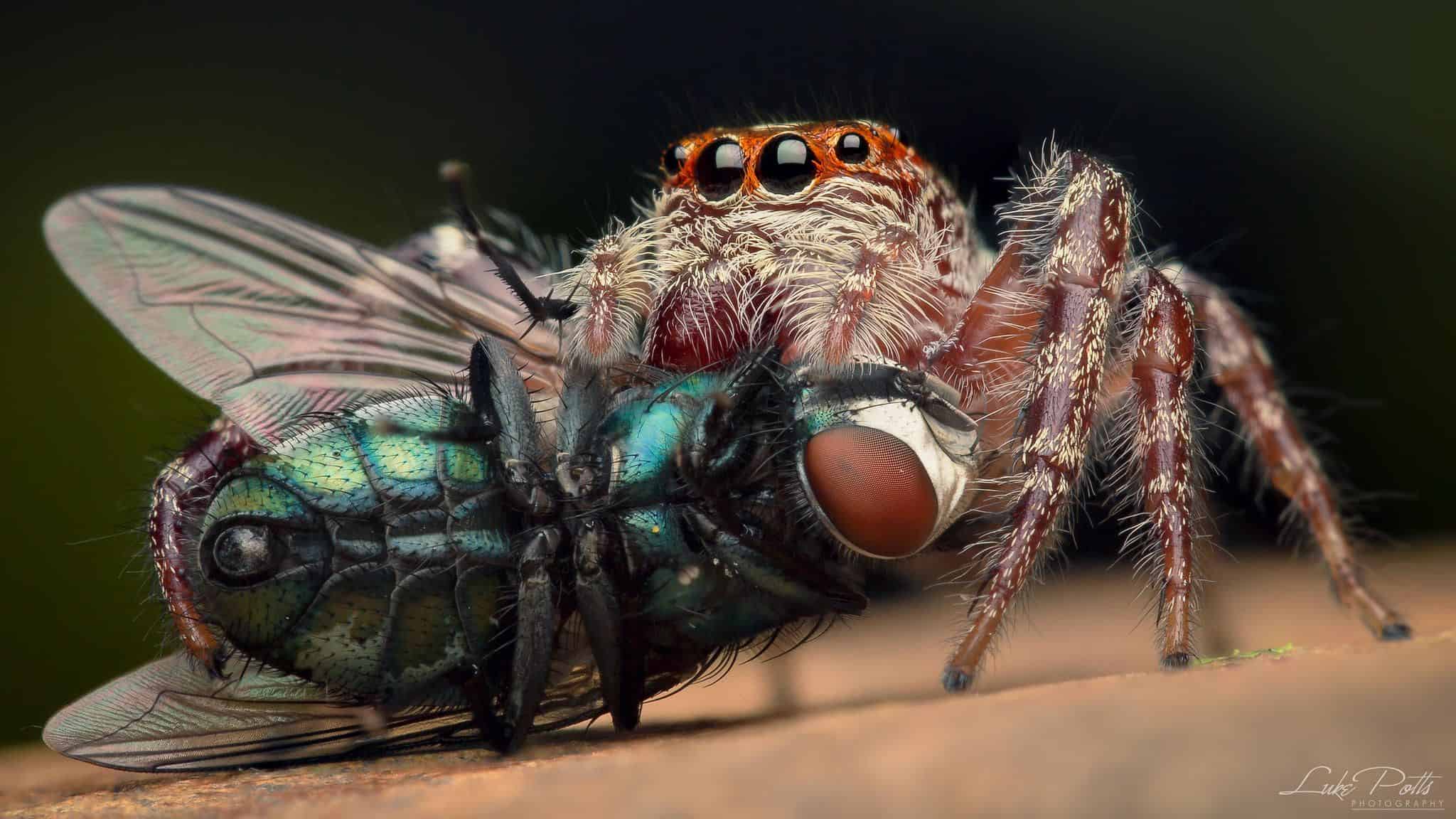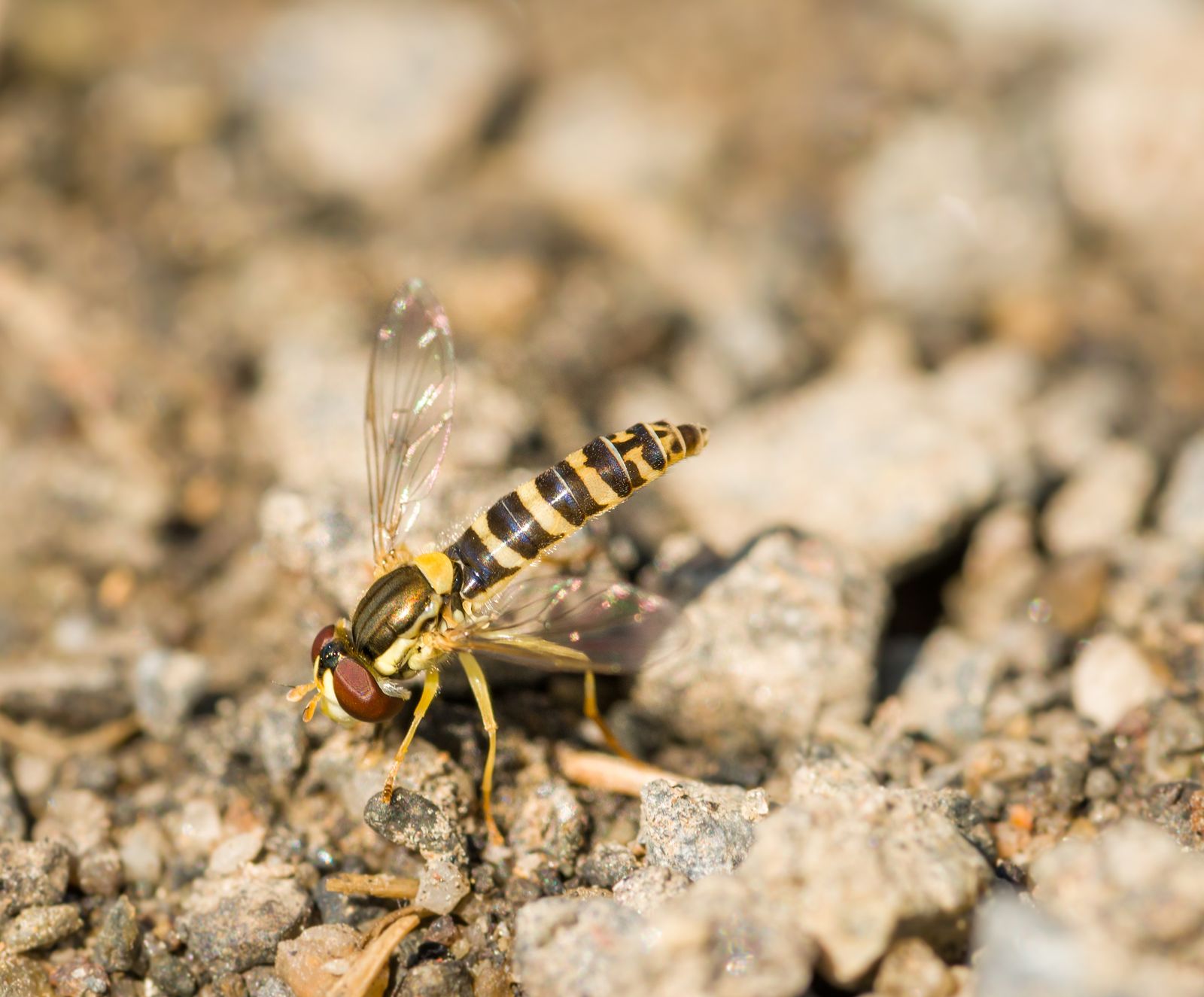
Adult tarantula hawks eat flower nectar, but females hunt tarantulas to feed their young. A tarantula hawk is a large spider wasp, not a hawk, and the spider is food for its larva rather than for the adult.

What Adult Tarantula Hawks Eat
Adults of both sexes feed on nectar from flowers. They are often seen on milkweed, mesquite and soapberry blossoms in the summer and early fall. Nectar gives the wasp the energy to fly and hunt. Fermented fallen fruit can also be a food source, although flowers are the main one.
How Females Feed Their Young
The spider part of the story is about the next generation:
- The female finds a tarantula, often by searching on the ground, and stings it. The sting paralyzes the spider but does not kill it.
- She drags the tarantula to a burrow, either the spider’s own or one she digs.
- She lays a single egg on the spider’s abdomen and seals the burrow.
- The larva hatches and eats the still-living spider over several weeks. It avoids the vital organs, so the spider stays alive until the larva is ready to pupate.
- The larva changes into a pupa and later emerges as an adult wasp.
One tarantula feeds one larva. The idea that a single wasp kills 1,000 tarantulas a year is a myth; a female may provision only a small number of nests in her lifetime.
Do Tarantula Hawks Eat Anything Else?
Adult tarantula hawks do not eat the tarantulas they hunt. Some species of tarantula hawk prey on other large spiders, but tarantulas are the best known prey. They do not eat ants, baboon spiders or roadrunners. Roadrunners are among the few animals that will eat a tarantula hawk, which gets the story backward: the roadrunner is the predator here.
Where They Live
Tarantula hawks belong to the spider wasp group and live in warm regions, including the southwestern United States, where there are several species. They are active in daylight, especially in hot weather, and often rest in shade.
Are They Dangerous?
Only females can sting, and they sting if handled or threatened. The park service describes the sting as one of the most painful of any insect, though the pain usually passes within minutes. They are not aggressive and generally ignore people. Leave one alone and it will leave you alone. If you are stung and have trouble breathing or develop swelling beyond the sting site, seek medical care right away.
Related Reading
Curious about other spiders and what they eat? See our posts on cobalt blue tarantulas, trapdoor spiders and pets that eat spiders.
Bottom Line
Adult tarantula hawks live on flower nectar. Females sting and paralyze a tarantula to give their single larva a living meal. They are impressive but not dangerous unless provoked.