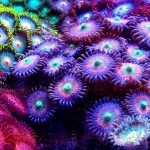
If you are wondering what to feed zoas, you’ve come to the right place. Some of these amazing aquatic creatures are easy to care for, but others are a bit tricky. Some melt at the slightest touch, while others will take months to settle down. Once they’ve settled in, however, they’ll take off like rockets.

Amino Acids
Amino acids are essential for the growth and development of all living organisms. Corals, for example, use them to synthesize proteins and organic matrix. This matrix contains proteins, polysaccharides, glycosaminoglycans and lipids and is vital for biomineralisation, the process by which calcium carbonate is deposited on corals. As such, it is important to feed corals with the right amino acid balance for growth and survival.
Adding amino acids to your corals’ food is an excellent way to improve their growth and color. They are essential in their metabolism and can help repair damaged coral tissue. A good amino acid based food supplement is Aquaforest AF Growth Boost, which can be used as a stand-alone supplement or in conjunction with other coral foods. Phol’s Xtra is another great choice, as it helps improve coral health, robustness and water clarity. Corals can also benefit from Amino Acid Concentrate, which is a highly concentrated source of amino acids.
While zoas need a variety of nutrients to stay healthy, deep-water species typically don’t need as much micro-nutrients as their shallow-water counterparts. Too much matter in the water, however, will cause zoas to grow grumpy. In addition to providing the right amino acid level, you should also increase the level of light.
Reef Roids
You can easily feed Reef-Roids to your corals by mixing the powder with the water in your tank. Then, you can either disperse the mixture into the aquarium using a syringe or by dispensing the powder directly into the tank. However, you should remember that the amount of powder you should feed depends on the size of your tank and feeding style.
Reef-Roids are a great way to give your filter-feeding corals a healthy and natural source of nutrients. These products contain particles that range in size from 150 to 200 microns, which is the perfect size for these animals. They also contain several species of zooplankton, which are great for corals that feed on them. Using Reef-Roids also helps your corals grow faster and have improved color.
Reef-Roids are easy to use and maintain. You can easily squirt the food solution directly onto the coral polyps. The food mix contains a lot of amino acids, which help your corals develop healthy tissues and vibrant colors. A 30-gram bag of Reef-Roids should last your reef tank about three months. Before feeding your corals, it is advisable to turn off all the filtration and pumps in your tank.
Reef Roids are great sources of protein. Reef Roids are made from a blend of zooplankton and high-protein plankton. The mix contains astaxanthin and other trace elements that corals need. It also helps your corals absorb nutrients and is great for filter-feeding corals.
Palythoa zoa mats
Palythoa zoas are known for their thick mats. Some of these mats are called coenchyme, while others are called mesoglea. These mats are often made from a variety of materials. Some of them even incorporate other matter into them, such as stalks or leaves.
When handling Palythoa zoas, it is important to observe a few simple guidelines: Always wash your hands after handling the polyp, avoid contact with its mouth, nose, or other exposed parts. If you do make contact with the zoa, make sure you have latex gloves and protective eyewear. Also, do not cut it, as it could release fluids.
Zoanthids can grow in groups or solitary colonies. They have different polyp sizes and can form mats that look like a half moon. They also have different oral disc sizes in the same colony. Their mouths are also separated by an encrusting disc.
The Palythoa genus is similar to the Protopalythoa genus, but the polyps are smaller and have fewer tentacles around the oral disc. However, these polyps are less poisonous than their Protopalythoa cousins.
Zoanthids are among the fastest growing corals in the hobby. They can multiply from two to fifty polyps in a few months. It is important to keep the tank environment stable so that the polyps extend fully and continue to grow. The growth rate of Zoas depends on the tank’s pH and other factors.