Feeding bees during a dearth means giving a hive light sugar syrup when there is little or no nectar coming in, so the colony does not use up its stores or start starving. Feed only when the hive is short on honey, keep the entrance reduced, and never feed while honey supers are on.

What is a nectar dearth?
A dearth is a stretch, often mid to late summer, when flowers stop producing much nectar because of heat, drought or the end of a bloom. Foragers come home with little, the queen cuts back on egg laying, and the colony begins eating its own honey. A strong hive can burn through stores quickly, and a weak one can starve in a matter of weeks.
Signs your bees are in a dearth
- Fewer foragers coming and going, and little pollen on their legs.
- Less brood, or brood that looks patchy or shrinking.
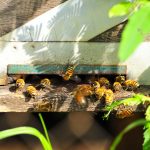
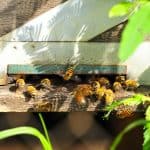
- Bees fighting at the entrance, chasing each other, or hovering around hive seams. These are signs of robbing.
- Light hive weight or very little capped and uncapped honey in the frames.
- Bees visiting hummingbird feeders, trash cans or soda cans.
When to feed and when not to
Check stores before you feed. If the colony has plenty of capped honey, leave it alone. If it is light, or you are building up a new colony or a split, feed.
Never feed syrup while honey supers are on the hive. The bees will store it and it will end up mixed into the honey you plan to harvest. Take supers off first, or wait until after harvest.
What to feed
- Light syrup (1:1): Equal parts white cane sugar and water, by volume or weight, mimics a natural nectar flow and encourages the colony to keep brooding. Our guide to the right way to make sugar water for bees walks through mixing it.
- Pollen substitute: If there is no pollen coming in, a patty can help support brood rearing. See Nutra Bee pollen patties for how they are used.
- Specialty syrups: Some beekeepers use additives. Read about Ambrosia syrup for bees before trying one.
Use plain white sugar. Do not feed brown sugar, raw sugar, molasses or honey from unknown sources. They can upset bees’ digestion, and store-bought honey may carry disease spores.
How to feed without causing robbing
Feeding in a dearth can draw in robbers from other colonies, so how you feed matters. University of Florida beekeeping specialists recommend these steps during a dearth:
- Use an entrance reducer on every colony.
- Keep the outside of feeders clean and wipe up any spilled syrup.
- Use an in-hive feeder, such as a frame or top feeder, rather than a jar or open container that robbers can reach.
- Avoid dripping syrup around the hive or on the ground nearby.
- Work the hive carefully and quickly, preferably later in the day, so the colony is not left open for long.
If robbing starts, close the hive up, cover any exposed syrup and shrink the entrance of the robbed colony. In serious cases, moving the victim colony to another location until it is strong enough to defend itself can help.
Helping bees through the next season
A colony that stays strong through the dearth is better placed to take advantage of a late flow, such as goldenrod in many areas, and to build the winter bees it will need. Keep checking stores every one to two weeks and stop feeding once natural nectar returns or the hive is heavy again.
Bottom Line
Feed light 1:1 syrup in a dearth only if stores are low and no honey supers are on, use an in-hive feeder, and reduce the entrance to prevent robbing. Check your local beekeeping association for what your region’s dearth looks like and when it ends.