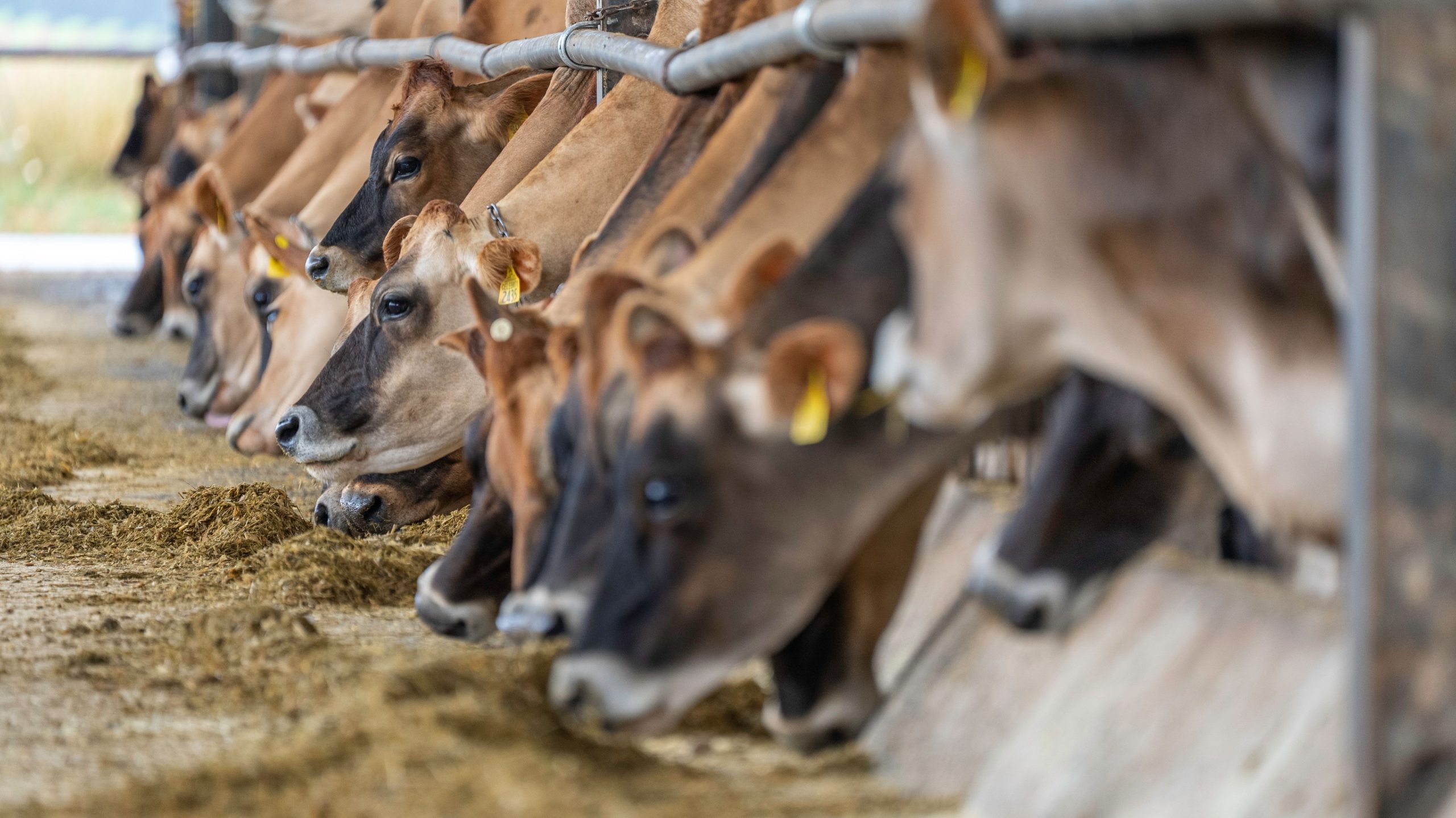
Cattle can be fed starch-rich feeds such as corn, barley, wheat and corn silage to add energy, but starch must be balanced with plenty of fiber and introduced gradually. Too much starch too fast lowers rumen pH and can cause acidosis, bloat and founder. Forage should remain the foundation of the diet.

Why starch matters
Starch is a major energy source for growing, finishing and lactating cattle. Rumen microbes ferment it into volatile fatty acids that the animal uses for energy and, in dairy cows, milk production. Cows that burn a lot of energy, such as high-producing dairy cows and finishing steers, need more of it than cows on maintenance.
Common starch sources
| Feed | Approximate starch (dry matter) | Notes |
|---|---|---|
| Corn grain | About 70% | Ferments more slowly than other grains; processing affects use |
| High-moisture corn | About 70% | Rapidly fermentable |
| Barley | About 55 to 60% | Ferments faster than corn, higher risk of acidosis |
| Wheat | About 65 to 70% | Very rapidly fermentable; limit it |
| Oats | About 40 to 45% | Higher in fiber, safer |
| Corn silage | About 25 to 35% | Provides both fiber and starch |
| Alfalfa hay | Under 5 to 10% | Low starch, high protein |
Values vary by crop, maturity and processing, so test your feed.
Risks of too much starch
- Acidosis. Acid builds up faster than the rumen can handle. Signs include reduced appetite, diarrhea, off feed, and in severe cases death.
- Bloat and liver abscesses. These are more common in grain-fed cattle.
- Founder (laminitis). Lameness can follow grain overload.
- Lower fat in milk. Dairy cows can see milk fat fall if fiber is too low.
How to feed starch safely
- Keep fiber up. Make sure the ration has enough long-stem forage so cattle chew and produce saliva, which buffers the rumen.
- Adjust slowly. Increase grain in small steps over two to three weeks.
- Feed often. Smaller, more frequent meals are safer than one big grain meal.
- Process properly. Corn that is rolled or cracked is digested more completely, but very fine grinding increases the acidosis risk.
- Mix the ration. A total mixed ration prevents cattle from sorting out the grain.
- Test your feed. Send forage and grain for analysis and work with a nutritionist, extension agent or veterinarian.
Related reading: feeding sugar to beef cattle, how much silage to feed cows and what feedlot cattle eat.
Bottom Line
Starch-rich feeds like corn and barley are an efficient energy source, but they work best as part of a ration with plenty of forage and a slow transition. Test your feed, adjust gradually, and call a vet if cattle go off feed, bloat or show lameness after a diet change.
This is general information, not veterinary advice.