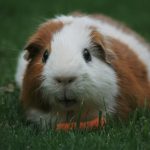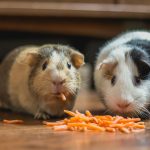
Guinea pigs should have unlimited hay available 24 hours a day, plus fresh vegetables once or twice daily and a small portion of pellets each day. They graze constantly, so food should never run out.

A Simple Daily Schedule
- Hay: unlimited, refreshed at least once a day. It should make up most of the diet.
- Pellets: about 1/8 cup per adult guinea pig per day, plain timothy-based pellets with added vitamin C.
- Fresh vegetables: about one cup per guinea pig per day, split between morning and evening.
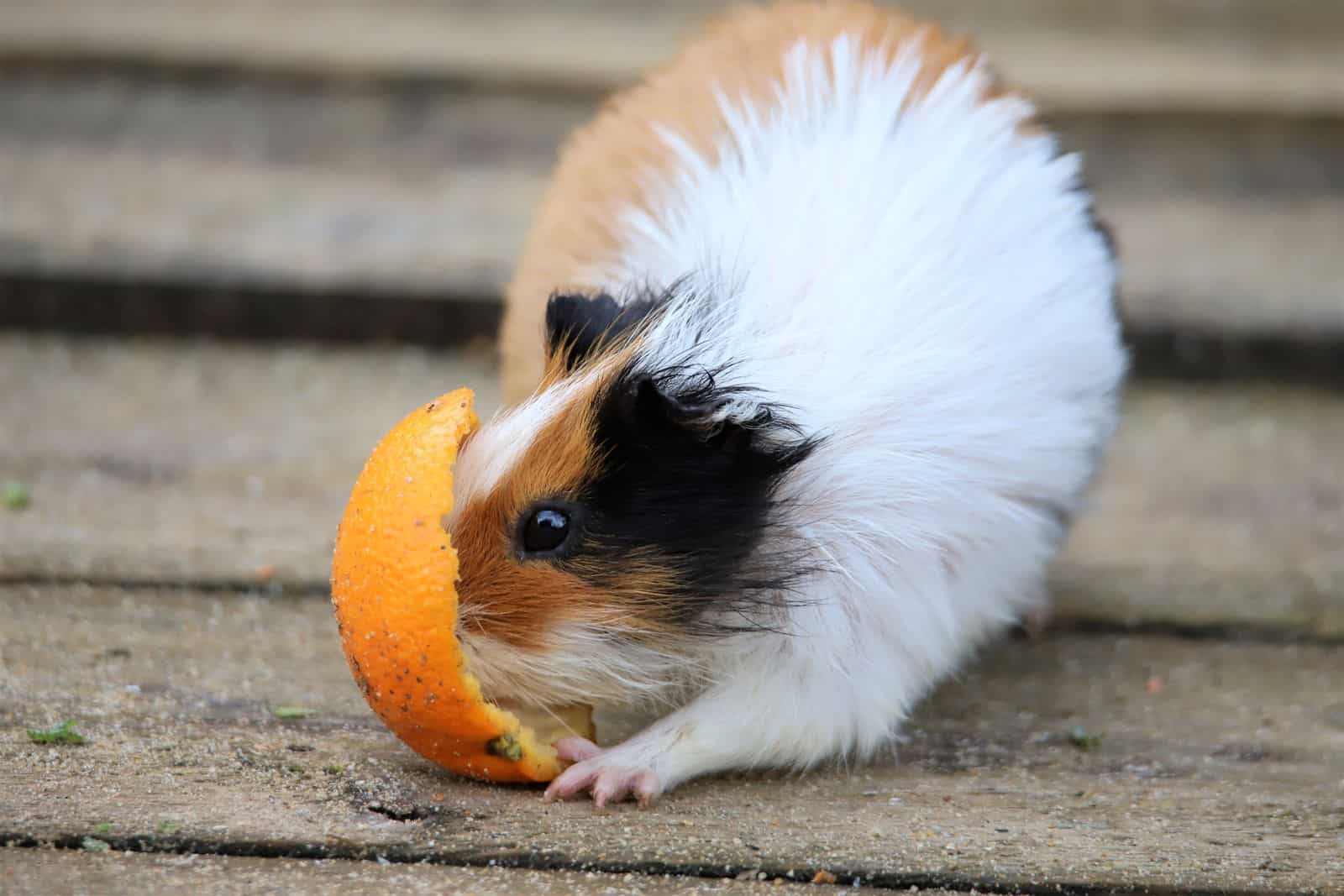
- Fruit: a tiny treat two or three times a week at most.
- Water: fresh daily, checked twice a day.
Why Hay Comes First
Their teeth never stop growing, and chewing hay keeps them worn down. Fiber also keeps the gut moving. Choose timothy or orchard hay for adults. See our guide to hay.
Vegetables and Vitamin C
Guinea pigs need vitamin C every day. Good choices include bell pepper, romaine and other leafy greens, and herbs like cilantro and parsley. Rotate vegetables for variety, and go easy on high-calcium greens. Our vegetable and fruit list shows what works.
Young, Pregnant and Senior Guinea Pigs
Young guinea pigs and pregnant or nursing sows have higher needs and may get extra pellets and alfalfa hay on a vet’s advice. See baby guinea pig food. Ask your vet before changing an older pet’s diet.
Signs You’re Feeding Correctly
- Plenty of firm, oval droppings.
- Steady weight and bright, active behavior.
- Hay eaten daily with no leftovers piling up.
When Not Eating Is an Emergency
A guinea pig that stops eating is an emergency because their gut can slow dangerously within hours. Call your vet right away. Read why guinea pigs stop eating.
Bottom Line
Hay all day, a small pellet portion, a cup of fresh vegetables and clean water is the routine that keeps most guinea pigs healthy.
This article is for general information, not veterinary advice. Your vet can tailor amounts to your pet’s age and health.