Red Ribbon No Corn Blend is a wild bird seed mix sold without cracked corn, aimed at backyard feeders. A no-corn mix is a sensible choice if you want to attract songbirds and finches without feeding house sparrows, starlings, pigeons and squirrels, which love corn. Here is what to look for in a no-corn blend and how to get the most from it.

What “no corn” means
Cracked corn is a cheap filler in many mixed seed bags. It attracts large flocks of pigeons, grackles, starlings and house sparrows, and also draws rodents and squirrels. A no-corn blend leaves it out, so more of the seed is the type small songbirds prefer.
What to check on the label
Seed content can change from one batch to the next, so check the ingredient list on your bag. A good no-corn mix usually has:
- Black oil sunflower seed, a favorite of chickadees, cardinals, finches, nuthatches and titmice
- White proso millet, popular with sparrows, juncos and doves that feed on or near the ground
- Little or no red milo, since many songbirds ignore it and it ends up wasted on the ground
- Few fillers, such as wheat or oats, which many birds skip
Which birds will come
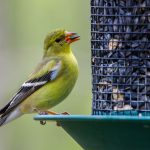
Depending on your area, no-corn seed mixes can attract chickadees, finches, sparrows, juncos, nuthatches, titmice and cardinals. Mixes with sunflower and millet appeal to the widest range of birds. Hummingbirds do not eat seed. They need sugar-water nectar, so do not expect them at a seed feeder.
How to feed it
- Use a tube feeder or hopper feeder for sunflower-heavy mixes, and a tray or platform feeder for millet.
- Offer only what the birds will eat in a day or two, especially when it is wet or humid.
- Keep seed dry. Moldy seed can make birds sick.
- Clean feeders every couple of weeks with a mild bleach solution (about 1 part bleach to 9 parts water), then rinse well and dry.
- Store bags in a sealed metal or heavy plastic bin to keep pests out.
Pros and cons of a no-corn blend
Pros: fewer messy flocks of pigeons and starlings, less waste on the ground, and a better match for small songbirds.
Cons: it usually costs a little more per pound than a basic mix with corn, and mixed seed will always leave a few unwanted seeds on the ground.
Frequently asked questions
Is corn bad for wild birds?
Corn is not harmful on its own, but moldy corn can carry aflatoxin, which is dangerous to birds. It is also a magnet for nuisance species.
Will squirrels still eat no-corn seed?
Squirrels like sunflower seed too, so use a squirrel-proof feeder or baffle if they are a problem.
What should I feed hummingbirds?
A simple nectar of 1 part white sugar to 4 parts water, replaced every few days. Do not use honey or red dye.
Bottom Line
A no-corn blend such as Red Ribbon is a good everyday mix for attracting small songbirds without the crowds that corn brings. Check the label for sunflower and millet, keep seed dry and feeders clean, and offer fresh water.
Related reading: Wild Bird Seed at Walmart and What to Feed Wild Birds When Out of Seed.