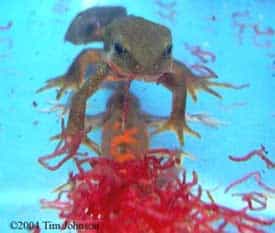
Wild newts in a garden pond do not need to be fed. They hunt for themselves, eating worms, insects, slugs, tadpoles and tiny water creatures such as water fleas and mosquito larvae. If you keep captive newts, feed small live or frozen foods like bloodworms, blackworms, earthworms and brine shrimp two or three times a week.

Wild Pond Newts: Don’t Feed Them
Newts spend part of the year in water and the rest on land under logs, stones and leaf litter. A healthy pond and garden give them all the food they need. Instead of feeding, help the natural food web:
- Add native plants for egg-laying and hiding places.
- Leave log piles, rocks and long grass near the pond.
- Skip fish in a wildlife pond, because fish eat newt eggs and larvae.
- Avoid pesticides, slug pellets and fertilizer runoff.
In some countries, including the UK, certain newt species are protected by law. Do not collect wild newts or their eggs. Check your local wildlife agency before moving or keeping any.
What Captive Newts Eat
Aquatic newts
- Bloodworms (frozen or live)
- Blackworms and tubifex from a trusted source
- Daphnia and brine shrimp
- Sinking pellets made for aquatic amphibians
Land-phase newts
- Small earthworms
- Waxworms and small crickets
- Small mealworms in moderation
Food should be small enough to swallow whole, about the width of the newt’s head or smaller. Newts have weak eyesight and find food by movement and smell, so a little patience helps when a newt is new to its tank. Tweezers or tongs can help at first.
How Often to Feed
Adults eat well on a feeding every two to three days. Juveniles need smaller meals more often. Remove uneaten food within a few hours to keep the water clean.
Supplements
Dusting insects with calcium powder a couple of times a month can help captive newts that eat mostly insects. Do not overdo vitamins and minerals. Ask an exotics vet for a schedule.
Safety Notes
- Some newts produce skin toxins. Wash your hands before and after handling, and avoid touching your eyes or mouth.
- Never keep wild-caught newts in a tank with fish that may harm them.
- Call an amphibian-savvy vet if a newt stops eating, floats oddly or develops sores.
Bottom Line
Wild newts feed themselves, so make your pond newt-friendly rather than putting out food. Captive newts do best on small worms and shrimp offered a few times a week. For more reading see what you can feed newts and whether goldfish eat newts.