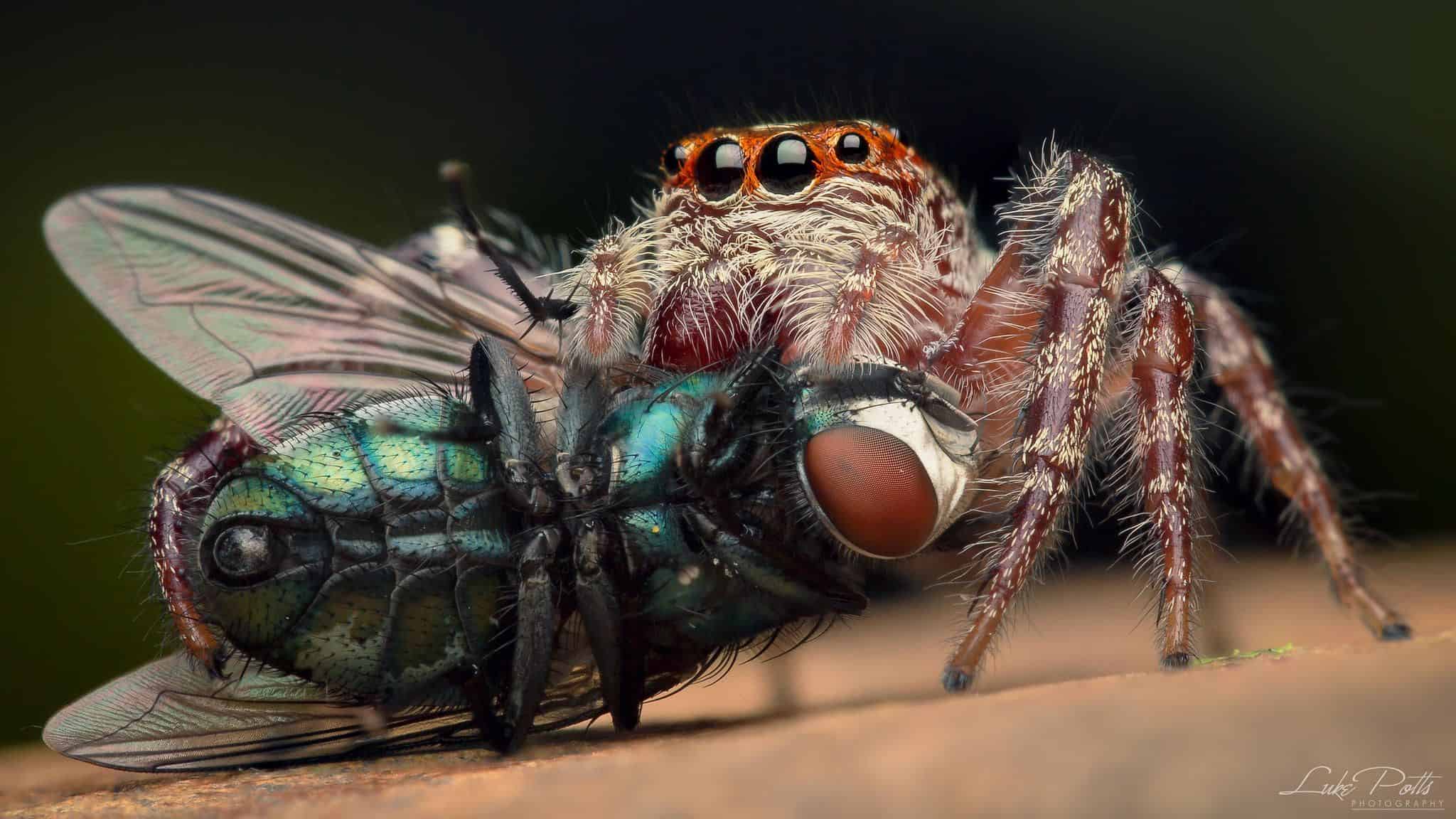
Black house spiders eat mostly flying and crawling insects that blunder into their webs: flies, moths, mosquitoes, beetles, and ants. They also eat other small spiders when the chance comes up. They are common in Australia and New Zealand, and they are one of the more useful spiders to have around a house.

What Black House Spiders Eat
Black house spiders are web-builders, so they wait for dinner rather than chase it. Their messy, lacy, funnel-shaped webs sit in window frames, brickwork, fence posts, sheds, and the rough bark of trees. A spider rests in the tube at the center of the web and rushes out when it feels a struggling insect.
- Flies and mosquitoes: the most common catch around lights and windows at night.
- Moths and beetles: bigger insects that get tangled in the web.
- Ants and small crawling insects: caught near cracks and ledges.
- Other spiders: small spiders that wander into the web are fair game.
Once prey is caught, the spider bites it, wraps it in silk, and later dissolves it with digestive fluid so it can drink the liquid. A well-fed female can sit in the same web for years.
How Often Do They Eat?
Like most spiders, they do not need to eat every day. A healthy spider can go for weeks without a meal when insects are scarce. A web near a porch light usually has plenty of food, because the light draws insects in.
Are Black House Spiders Dangerous?
They are shy and usually retreat into their tube when disturbed. A bite is uncommon and normally causes pain, redness, and swelling at the bite site. Some people also feel nauseous or unwell for a day or so. Their venom is nothing like that of a funnel-web spider. If you are bitten and feel more than a local reaction, or the person bitten is a child, older adult, or very sensitive to bites, contact a doctor or your local poison information line.
Living With Them
- Brush old webs away with a broom or vacuum. The spider will often rebuild nearby.
- Turn off outdoor lights you do not need. Fewer insects means fewer spiders.
- Seal gaps around windows and doors to keep both insects and spiders out.
- Wear gloves when you work around woodpiles, sheds, and garden furniture.
Related reading: what to feed a house spider, what giant house spiders eat, and what redback spiders eat.
Bottom Line
Black house spiders eat flies, moths, mosquitoes, beetles, ants, and the occasional small spider. They rarely bite people, and they keep nuisance insects down. If a bite causes worrying symptoms, see a doctor.
This article is general information, not medical advice.