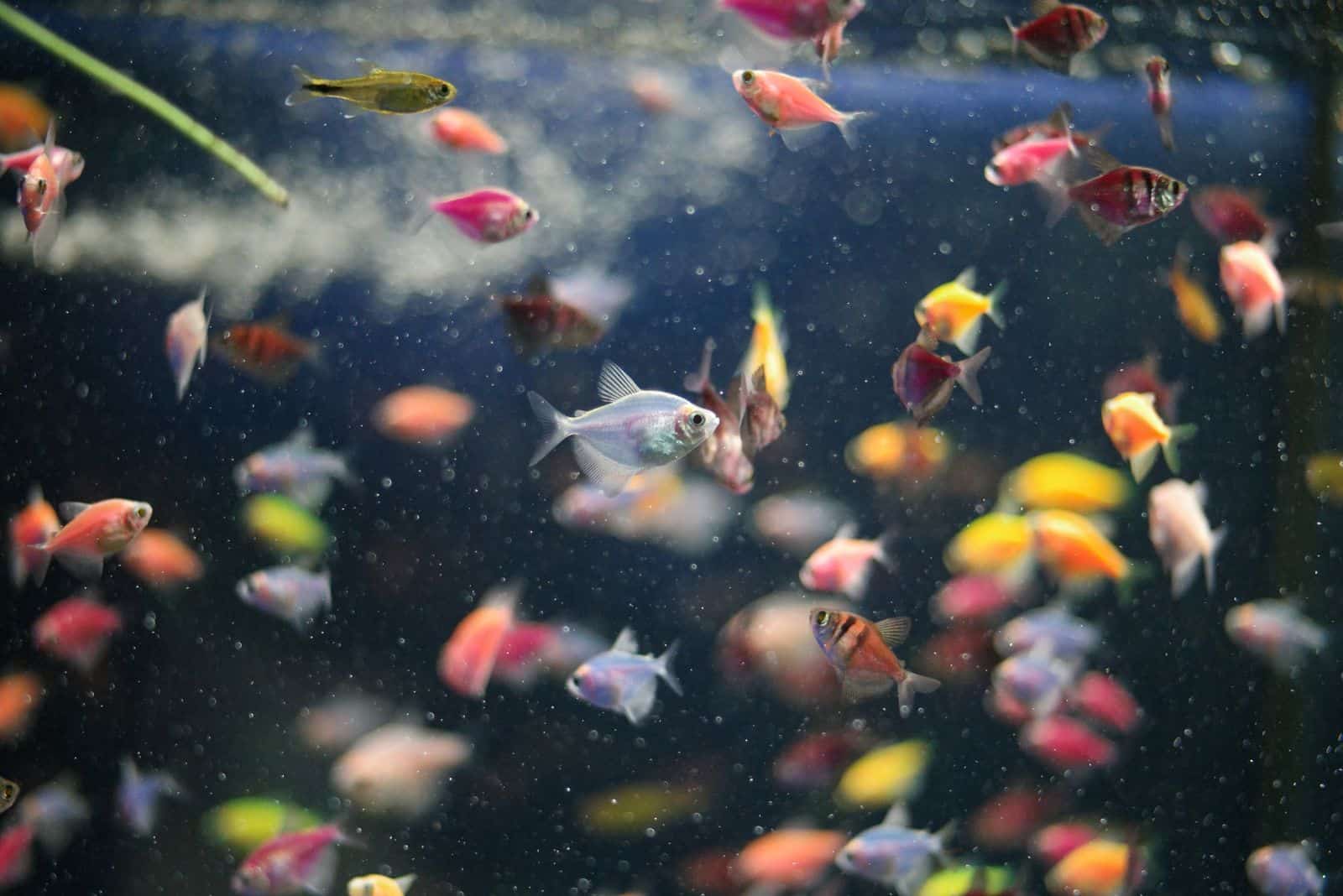
GloFish eat the same foods as other small tropical fish: a good flake or small pellet as the daily staple, with frozen or live foods like brine shrimp and bloodworms a few times a week. They do not need a special “glowing” food, because their color comes from a gene, not their diet.

What are GloFish?
GloFish are zebra danios, tetras, barbs and other common aquarium fish that carry a fluorescent protein gene. Their care needs, including diet, match the regular version of the species.
Best daily food
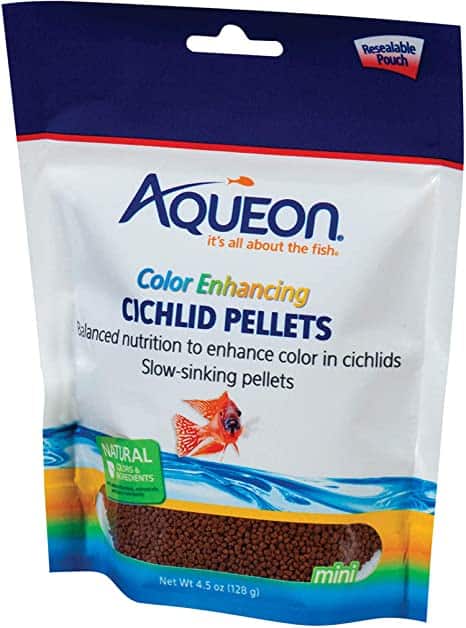
Choose a quality tropical flake or micro pellet sized for small mouths. GloFish-branded foods work fine, but any good tropical flake with fish or shrimp near the top of the ingredient list is a good choice. Color-enhancing foods may brighten natural pigments a bit, but they will not make fluorescence stronger.
Treats and variety
- Frozen or live: Brine shrimp, daphnia and mysis shrimp, thawed first.
- Bloodworms: Once or twice a week at most, because they are rich.
- Freeze-dried foods: Soak briefly before feeding so they do not swell in the gut.
- Blanched vegetables: Tiny pieces of peas or zucchini for omnivorous species.
How much and how often
- Feed small amounts once or twice a day.
- Give only what the fish finish in about two minutes.
- Skip one day a week to help prevent bloating and keep water cleaner.
- Remove uneaten food, since leftovers foul the water.
Can GloFish eat goldfish food?
For a few meals, yes, but goldfish pellets are usually too large and not formulated for tropical species. Use tropical food instead. For related guidance see homemade tropical fish food and food for tropical fish fry.
Vacations
Healthy adult fish can go a few days without food. For longer trips, ask a friend to feed small portions, or use a feeder designed for the length of your trip.
Bottom Line
Feed GloFish a quality tropical flake or pellet daily, add frozen foods for variety, and avoid overfeeding. If your fish stop eating or look bloated, check water quality first and ask a fish-savvy vet or store.