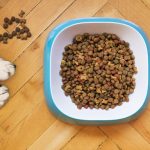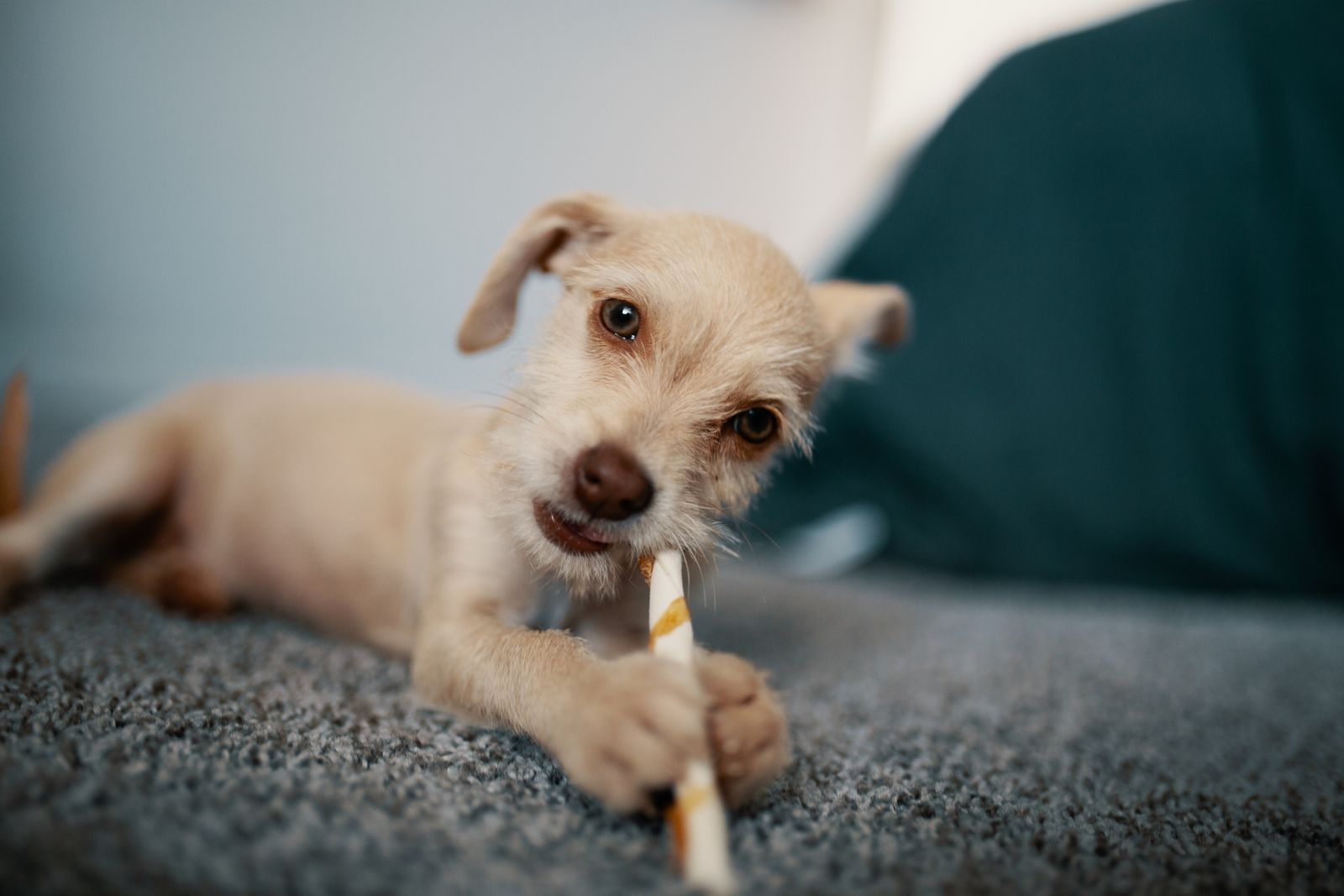
Feed a teething puppy the same complete puppy food, but make it easier on sore gums: soften the kibble with warm water, serve some meals cool, and offer safe cold chews between meals. Most puppies start losing baby teeth at about 3 to 4 months and have all 42 adult teeth by roughly 6 to 7 months. During that stretch it is normal for appetite to dip a little.

General information only. If your puppy refuses food for more than a day, has bleeding gums, or seems lethargic, call your vet.
Signs your puppy is teething
- Chewing on everything, including hands, furniture and shoes
- Drooling and red, slightly swollen gums
- Tiny blood spots on chew toys
- Small baby teeth on the floor (puppies usually swallow many, which is harmless)
- Eating more slowly or leaving some kibble behind
How to adjust mealtime
- Soften dry food. Add warm water to the kibble and let it sit for 10 to 15 minutes. Discard leftovers after a short while so it does not spoil.
- Try a little wet food. Mixing in a spoonful of canned puppy food can make eating more comfortable. Keep the total daily calories the same.
- Keep the schedule. Three or four small meals a day is typical for young puppies. Ask your vet if you are unsure about portions for your puppy’s breed and size.
- Do not switch foods mid-teething. A new food can upset the stomach, which makes a fussy eater fussier.
Safe cold treats for sore gums
Cold numbs the gums and gives your puppy something safe to gnaw on. Good options include:
- A frozen carrot. A whole, large carrot is a classic. Supervise, and take it away when it gets small enough to swallow.
- A damp washcloth. Twist it, wet it, freeze it, and let your puppy chew under supervision. Throw it away if it starts to shred.
- A frozen rubber chew toy. Stuffed rubber toys can be filled with a little plain yogurt or a bit of the puppy’s wet food and frozen. Count the filling toward the daily food amount.
- Frozen banana or seedless watermelon pieces. Offer only small amounts as occasional treats.
- Apple slices. Remove the core and seeds first. Fresh slices are fine, and frozen slices are a nice cold treat.
Keep treats to no more than about 10 percent of daily calories, and never give grapes, raisins, onions, chocolate or anything sweetened with xylitol. Our post on easy puppy teething treats has more ideas.
What to avoid
- Hard chews. Real bones, antlers, hooves and hard nylon can crack puppy teeth. A good rule of thumb: if you cannot press a thumbnail into it, it is too hard.
- Large chunks of ice. Ice can chip teeth. If you use it at all, use small crushed pieces.
- Home remedies on the gums. Do not rub human teething gels, essential oils or aloe on your puppy’s gums without asking your vet. Some are toxic if swallowed.
When to call the vet
Call if baby teeth are still there when adult teeth have come in (retained teeth), if your puppy has very bad breath, pus, heavy bleeding, or has stopped eating altogether. Small-breed puppies can drop their blood sugar if they skip meals, so do not wait a long time to check in.
Bottom Line
Keep your teething puppy on a balanced puppy food, soften it if it hurts to chew, and offer safe cold chews between meals. Avoid anything rock hard, and call your vet if your puppy stops eating. If you are moving up from smaller puppies, see what to feed a 6 week old puppy, or check out Royal Canin Large Breed Puppy for big dogs.