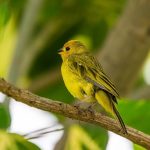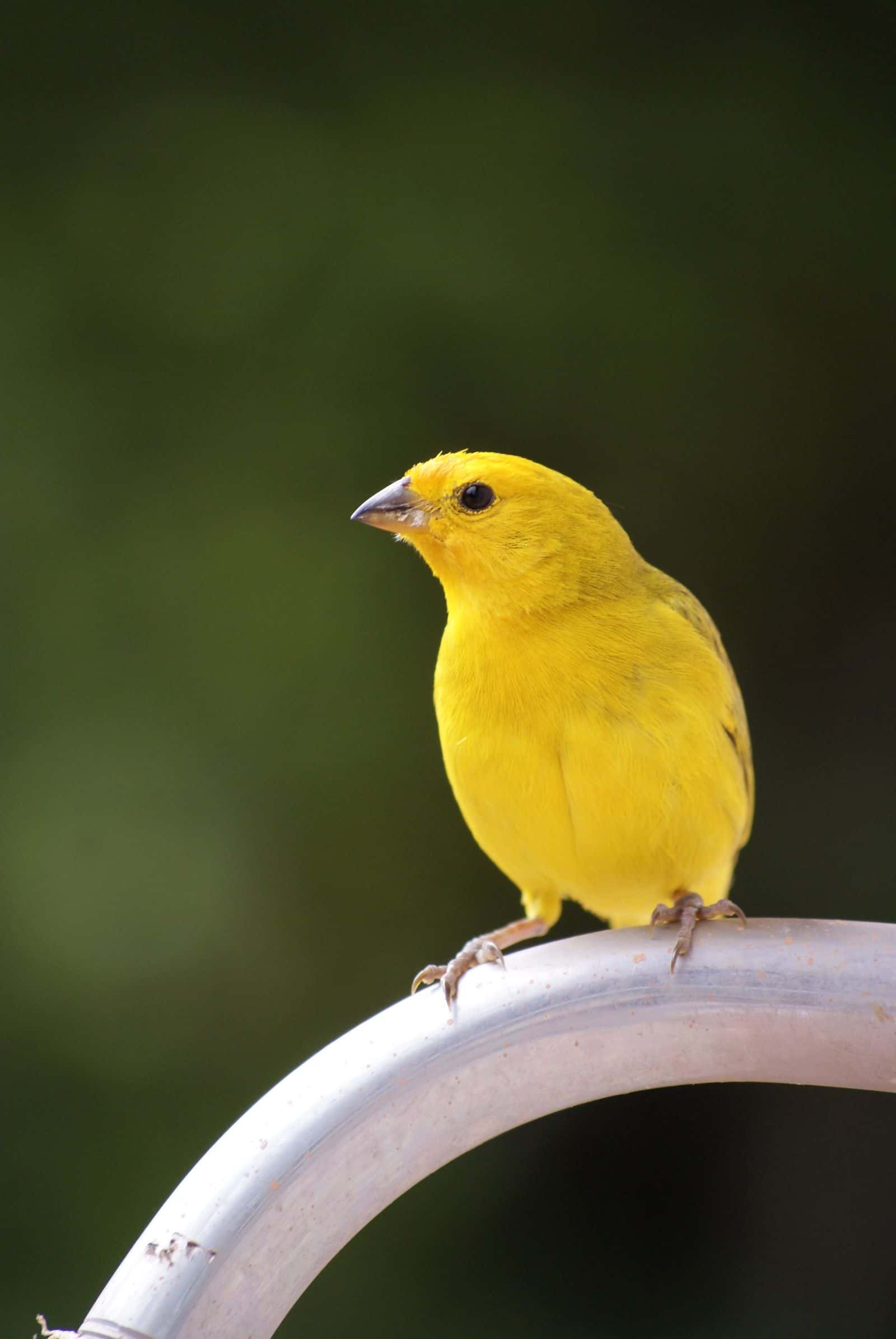
A yellow canary needs the same balanced diet as any other canary: a quality seed mix or pellets as the base, fresh leafy greens most days, a little fruit, a protein boost during breeding and molt, fresh water, and a source of calcium. Yellow canaries do not need special “color food”; that is only for red-factor birds.

The Daily Base
Many avian vets prefer a formulated pellet as the foundation of a canary’s diet because seed alone is high in fat and low in vitamins and minerals. A good canary seed mix (canary seed with small amounts of rapeseed, niger, flax and millet) can make up the rest. If your bird is seed-only now, switch slowly over several weeks by mixing in more pellets each few days; sudden changes can cause a bird to stop eating. See our canary pellet food guide.
Fresh Foods
- Leafy greens: kale, romaine, dandelion greens, chard and cilantro, washed and chopped, offered most days.
- Vegetables: grated carrot, bell pepper, broccoli florets and zucchini.
- Fruit in small bites: apple without seeds, melon, berries and orange, a few times a week.
- Sprouted seeds: a nutritious extra, rinsed well and fed fresh.
Remove uneaten fresh food after a few hours. More ideas are in fruits and vegetables for canaries.
Protein, Calcium and Water
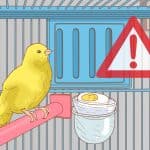
Canaries need extra protein during breeding and the annual molt. Hard-boiled egg mashed with a little grated carrot, or a commercial egg food, works well; see our homemade egg food recipe. Provide a cuttlebone for calcium and clean water every day. Wash dishes daily.
Foods to Avoid
Never feed avocado, chocolate, caffeine, alcohol, onion, garlic, salty or fried foods, or apple seeds. Avoid vitamin or medicine additives in the water unless your vet recommends them.
Bottom Line
A yellow canary thrives on pellets or a good seed mix, daily fresh greens, a little fruit, egg food when needed, a cuttlebone and clean water. Check with an avian vet if your bird stops eating, fluffs up, or sits at the bottom of the cage, because small birds can become ill quickly.