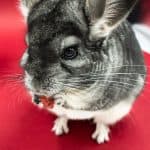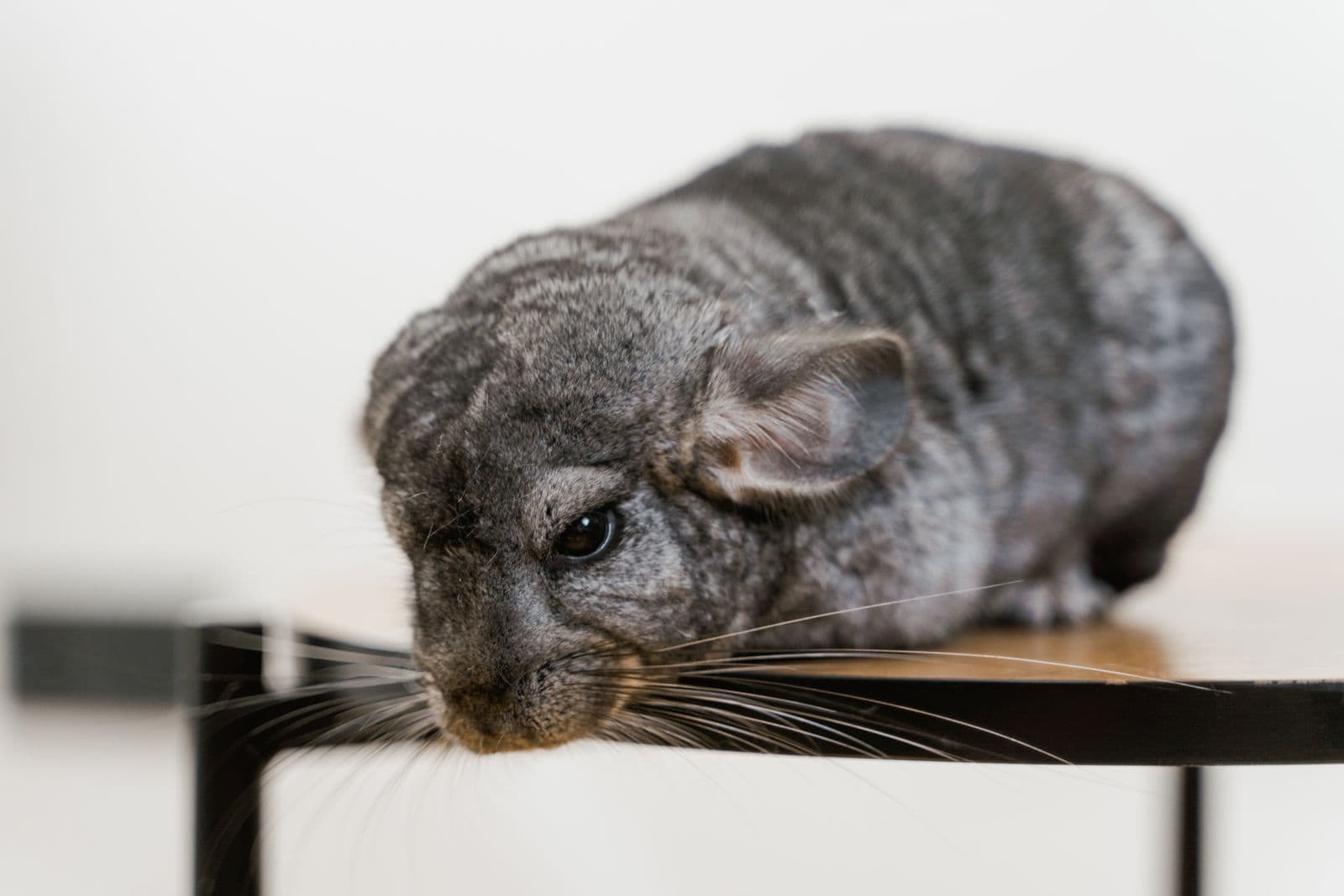
Most chinchillas do best with little to no fresh fruit or vegetables. Their digestive systems are built for dry grass hay, and sugary or watery produce can cause gas, bloat, and loose stools. If you do offer produce, it should be a rare, tiny extra, not part of the daily menu.

Why Fresh Produce Is Risky for Chinchillas
In the wild, chinchillas live in dry, rocky mountain regions and eat sparse grasses and plants. Fresh fruit and vegetables are much wetter and sweeter than anything their gut evolved to handle. Even “healthy” foods like apples and carrots can upset a chinchilla’s stomach, and very sugary fruits like grapes and bananas are best avoided.
What Chinchillas Should Eat Instead
- Unlimited grass hay such as timothy, orchard grass, or meadow hay
- Plain chinchilla pellets, about 1 to 2 tablespoons a day or as the label directs
- Fresh water at all times
Hay should make up most of what your chinchilla eats. Learn more in our guide to orchard grass hay for chinchillas.
Better Treat Choices Than Fruit
If you want to give your chinchilla something special, dry treats are much safer than fresh produce. Dried rose hips, a flake or two of plain rolled oats, and a thumbnail-sized piece of plain shredded wheat are the usual picks. See the best treats for chinchillas for the full list.
Foods That Cause the Most Trouble
- Grapes, bananas, and other sugary fruits
- Raisins and other dried fruit, which are even more concentrated in sugar (see chinchilla raisins)
- Carrots, which are high in sugar and moisture (see can chinchillas eat carrots)
- Lettuce and watery greens, which can cause loose stools
- Nuts and seeds, which are far too fatty
For a longer list, see what not to feed chinchillas.
If You Still Want to Offer a Bite
Ask your exotics vet first. If they approve, give only a pea-sized piece of one new food at a time, and offer it no more than occasionally. Watch the droppings for a day or two. Soft, small, or fewer droppings, a swollen belly, or a drop in appetite mean you should stop and call your vet.
Bottom Line
Skip the fruit bowl. A chinchilla stays healthiest on hay, plain pellets, and water, with the occasional dry treat.
This article is general information, not veterinary advice. Chinchillas hide illness well, so call an exotics vet if yours stops eating, has diarrhea, or looks bloated.