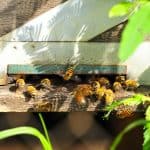
A Miller feeder is a simple inside-the-hive feeder for bees: a shallow tray that sits on top of the frames (usually under the cover), holding sugar syrup that bees reach from below. It is a good choice for feeding a lot of syrup quickly, but it has trade-offs.

How a Miller Feeder Works
The feeder is a wide pan placed on top of the hive body. Bees climb up through a slot or opening and sip syrup from the tray, often with a float or screen to keep them from drowning. Because it sits above the cluster, bees can feed without leaving the hive in cool weather. Designs vary by maker, so follow the instructions that come with yours.
Advantages
- Large capacity. Many hold a gallon or more, so you refill less often.
- Keeps feeding inside the hive. Syrup is not exposed outdoors, which lowers the risk of robbing by other bees and wasps.
- Works for fast feeding. Good for building up a new colony or preparing for winter.
- Simple to refill. You can add syrup without removing frames.
Disadvantages
- Drowning risk. Without good floats or screens, bees can fall in and drown.
- Disturbs the colony. Refilling means lifting the cover, which lets heat out in cold weather.
- Syrup can spoil or ferment. Warm weather and leftover syrup can lead to mold, so clean the tray between uses.
- Needs a deep or extra box. Many versions require extra equipment, and they add weight.
Tips for Using It
- Use a 1:1 sugar-to-water syrup in spring and 2:1 in fall, using plain white cane sugar.
- Do not feed syrup when honey supers are on the hive, or it can end up in honey.
- Check for floats, ladders and screens so bees can climb out.
- Clean the tray regularly and remove old syrup.
- Seal gaps so robbing bees cannot get in.
Compare with other feeder styles in our guide to the Ashforth bee feeder and feeding bees with ziplock bags.
Bottom Line
A Miller feeder is a strong option when you need to deliver a lot of syrup inside the hive with little robbing risk. Pick one with good drowning protection, keep it clean, and check local beekeeping guidance on feeding times.