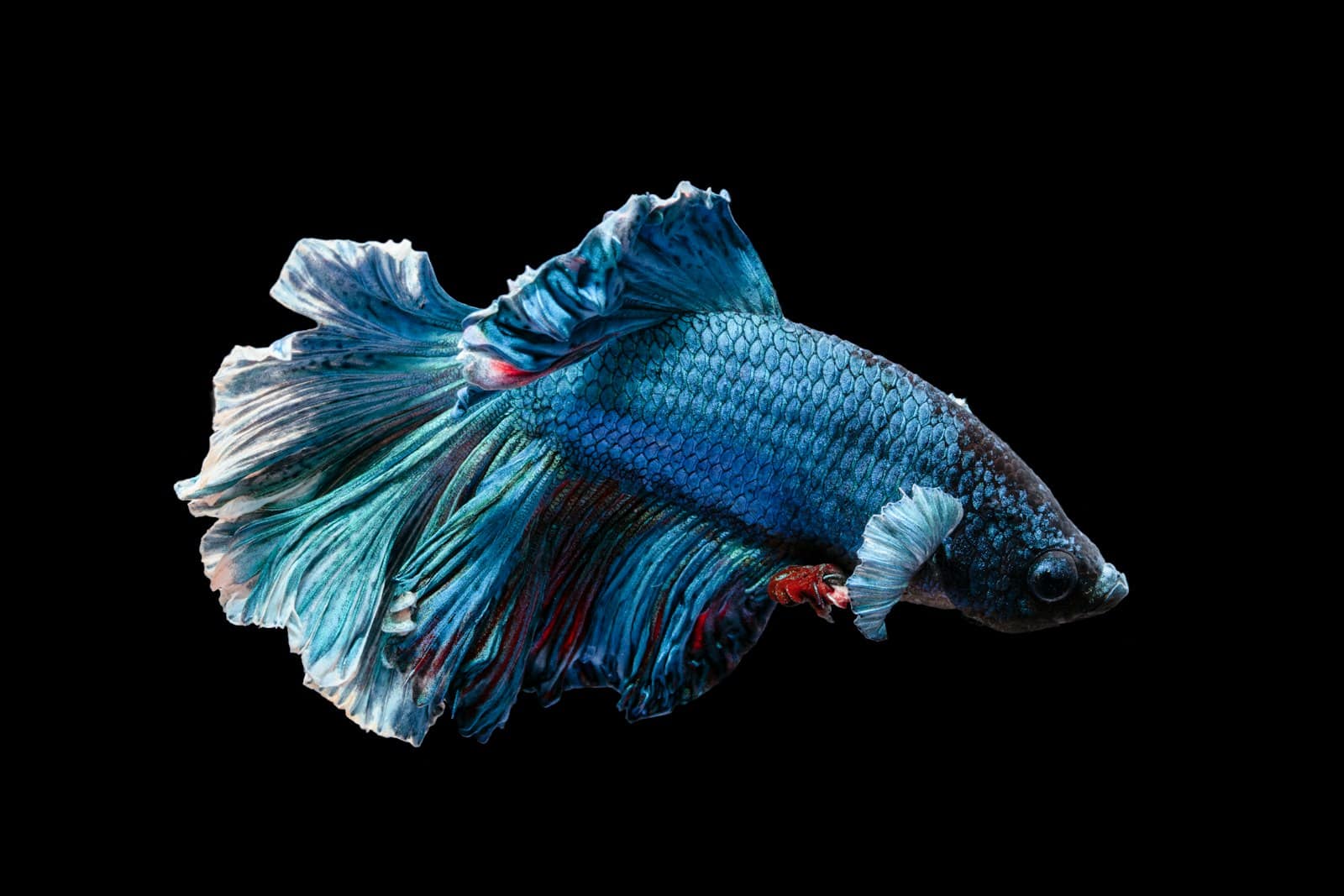
Quick answer: No, you shouldn’t give feeder fish to a betta. Bettas are small insect eaters, not fish hunters. Feeder guppies, minnows and goldfish are too big, add little that a good betta food doesn’t already provide, and often carry parasites and disease. Betta pellets plus frozen or live foods such as brine shrimp, daphnia and bloodworms are safer and healthier.

What Are Feeder Fish?
Feeder fish are cheap fish sold as live food for large predatory pets, such as oscars and other big cichlids. The usual ones are feeder guppies, rosy red minnows and small goldfish. Stores keep them crowded together in bare tanks and sell them by the dozen.
Because they are sold as food, they don’t get the same care as display fish. That is where most of the problems start.
Why Feeder Fish Are a Bad Idea for Bettas
- Bettas aren’t built to eat them. In the wild, bettas eat insects, insect larvae and tiny crustaceans at the water’s surface. A betta has a small, upturned mouth made for that job. Most feeder fish are far too big to swallow.
- Disease and parasites. Feeder tanks often hold sick and dying fish mixed in with healthy-looking ones. Adding a feeder fish can bring parasites or infections straight into your betta’s tank.
- Stress and injury. A betta that can’t eat a feeder fish may chase and nip it instead, or get nipped itself. Neither fish does well.
- Dirty water. An extra fish that isn’t eaten, or that dies out of sight, adds waste to a small tank quickly.
- No real benefit. A quality betta pellet already covers your fish’s needs. Feeder fish add risk without adding anything useful.
Will a Betta Eat Other Fish?
Sometimes. Bettas are opportunists and will swallow newborn fry or anything else small enough to fit in their mouths. That doesn’t make fish a good regular food. It only means very small tank mates and baby fish aren’t safe with a betta.
Can Feeder Fish Live With a Betta?
Some people buy feeder fish as cheap tank mates. That rarely works out.
- Goldfish are cold-water fish that grow large and produce a lot of waste. Bettas need warm water, around 76 to 81 degrees Fahrenheit, so the two don’t belong together.
- Rosy red minnows also prefer cooler water than a betta does.
- Guppies have bright, flowing tails that can trigger a betta’s aggression.
Any new fish from a feeder tank should be treated as a possible carrier of disease.
Safer Live and Frozen Foods
If you want to give your betta the fun of hunting, these foods match its natural diet far better than fish do:
- Frozen bloodworms. These are midge larvae and a favorite with most bettas. Thaw a small piece of a cube. One betta can’t finish a whole cube. See our guide to feeding bloodworms to betta fish.
- Brine shrimp. Available frozen, freeze-dried or live.
- Daphnia. Tiny crustaceans that are easy on digestion.
- Live blackworms. Nutritious, and they let a betta hunt.
- Mosquito larvae. A natural betta food, but only from a clean source that hasn’t been treated with chemicals.
Frozen foods are usually the safest choice. Live foods should come from a trusted supplier or a culture you raise at home, because wild-caught live food can also carry parasites.
What a Betta Should Eat Day to Day
- A high-protein betta pellet as the staple. Our roundup of the best betta fish food pellets has good options.
- Small meals once or twice a day, only as much as the fish finishes in a minute or two.
- Frozen or live treats two or three times a week for variety.
- No leftovers. Take out uneaten food so it doesn’t spoil the water.
Skip human food as well. Bread, meat scraps, fruit and vegetables don’t suit a betta’s digestion and foul the water.
Did You Mean a Betta Feeder Device?
If you were looking for a way to feed your betta while you are away, you want an automatic feeder, not a feeder fish. A timed feeder drops a set amount of pellets on a schedule. Our guide to choosing an automatic betta fish feeder explains what to look for.
For a weekend away, a healthy adult betta is usually better off skipping a few meals than being left with a large pile of food that fouls the tank.
If Your Betta Stops Eating
Loss of appetite is one of the first signs that something is wrong. Check the water temperature and test the water quality first, since water problems are a very common cause of stress and illness in bettas. If your fish still refuses food, looks swollen, has damaged fins or spends its time lying on the bottom, contact a vet who treats fish. Don’t try to medicate the tank on guesswork.
Bottom Line
Feeder fish are meant for large predators, and a betta isn’t one. They are the wrong size, the wrong food and a common source of disease. Feed a good betta pellet, add frozen or live bloodworms, brine shrimp or daphnia a few times a week, and your betta gets all the benefits of a varied diet without the risks.
This article is general information, not veterinary advice. If your fish seems unwell, contact an aquatic veterinarian.

