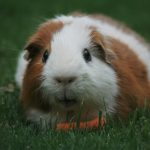
Yes, guinea pigs can eat celery. Both the crunchy stalks and the leaves are safe as an occasional part of the daily vegetable serving, as long as you chop the stalks into small pieces first. Celery is mostly water, so think of it as a hydrating extra, not a main source of nutrition.

Is celery good for guinea pigs?
Celery is low in sugar and low in calories, which makes it a decent rotation vegetable. It also gives your guinea pig a little fiber, potassium, and some vitamin C. The vitamin C is modest, though. Red bell pepper, parsley, and kale are far stronger sources, so don’t rely on celery to cover your pig’s daily needs.
Because it is so watery, celery can also loosen stools if your guinea pig eats a lot of it, especially if they aren’t used to fresh vegetables.
The string problem: how to cut celery safely
The long fibrous strings in celery stalks are the main concern. Guinea pigs have small mouths, and long strings can be awkward to chew. To keep things safe:
- Wash the celery well to remove dirt and pesticide residue.
- Cut stalks crosswise into pieces about half an inch long so the strings are short.
- Offer the leaves whole or torn. They have no strings and most guinea pigs love them.
- Remove anything wilted, slimy, or moldy.
How much celery can a guinea pig have?
A healthy adult guinea pig does well on roughly one cup of mixed fresh vegetables per day, along with unlimited hay. Celery can be one or two small pieces of that mix, offered two or three times a week. Mix it with a leafy green such as romaine or red leaf lettuce and a vitamin C vegetable like bell pepper so the bowl stays balanced.
Start with a single small piece the first time. If your guinea pig has soft stools or seems uncomfortable the next day, hold off and try again later in an even smaller amount.
Celery leaves, roots, and juice
- Leaves: safe and often a favorite. Feed them like any leafy green.
- Celery root (celeriac): safe in small amounts, but it is starchy, so keep it rare.
- Cooked or salted celery: skip it. Guinea pigs should only get raw, plain vegetables.
- Celery juice: not needed and not a good substitute for whole vegetables.
What a balanced guinea pig diet looks like
Celery is a side dish. The foundation of the diet is unlimited grass hay, such as timothy (see our guide to hay for guinea pigs), plus a small portion of plain pellets made for guinea pigs. Fresh vegetables fill in the rest, and you can read our overview of what guinea pigs eat for the full picture. Because guinea pigs can’t make their own vitamin C, also see our list of vitamin C foods for guinea pigs. If you want another easy vegetable to rotate in, zucchini is a good option.
When to skip celery
Hold off on celery and call your vet if your guinea pig has diarrhea, has stopped eating, or has a history of bladder stones and you’ve been told to limit certain vegetables. A guinea pig that suddenly stops eating needs prompt veterinary attention, since their digestive systems depend on constant eating.
Bottom Line
Celery is a safe, low-sugar treat for guinea pigs when you wash it, cut it into short pieces, and feed it a few times a week alongside other vegetables. The leaves are an easy bonus. Keep hay available at all times and don’t count on celery for vitamin C.
This article is general information, not veterinary advice. If your guinea pig seems unwell or you have questions about their diet, call your exotic-pet vet.