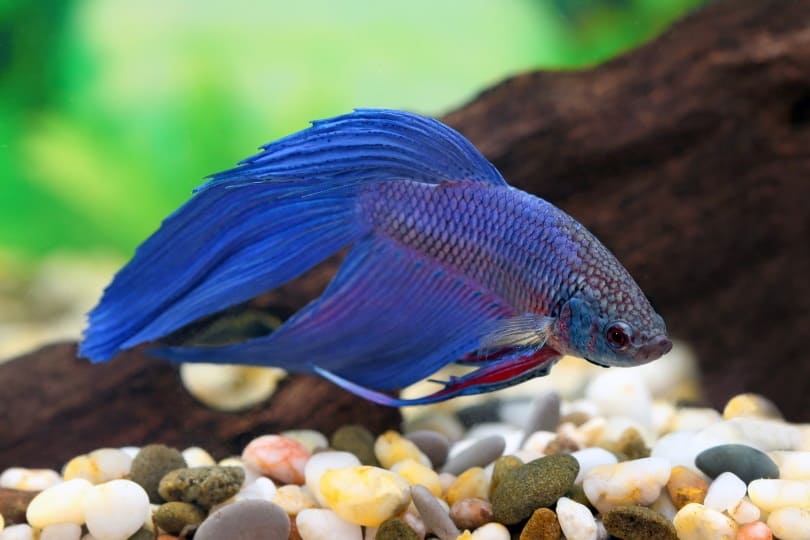
Bettas are carnivores, and they need a protein-rich diet to thrive. However, they also need a variety of foods to keep their digestive systems in tip-top shape.

They’re used to eating small marine creatures, so a diet that mimics their natural diet would be best. Whether that’s pellets, flake or frozen food, it should be rich in meat and other important nutrients.
Contents
Bloodworms
If you want to feed your betta fish bloodworms, you can either get freeze-dried ones or live ones. The latter is a bit more expensive, but it will provide your fish with more nutrients because they’re still in their natural form.
You can buy them from your local pet store or online, but you need to check their expiration dates. Also, be sure to wash them well before putting them into your tank so that they don’t introduce parasites or bacteria.
Freeze-dried bloodworms are a great alternative to live worms because they’re safe for your betta fish and don’t contain the risk of parasites. They’re also easy to prepare and can be fed one to two times a day, once or twice a week.
Mosquito Larvae
One of the best ways to give your betta fish nutritious food is to feed him mosquito larvae. These tiny larvae are a staple food for herbivorous and carnivorous fish.
They also add a healthy touch to your tank and help keep your water clean. You can grow them at home or purchase them from a reputable seller.
In the wild, mosquitoes lay their eggs in clusters called rafts. These rafts can be difficult to spot without a magnifying glass.
Brine Shrimp
Brine shrimp (Artemia) are small shrimp that live in salt water. They belong to the crustacean order Brachiopoda and are not closely related to the shrimp we eat.
They have a thorax that is shaped like a shell with a head and eyes at the sides. They also have 11 pairs of feathery legs that flap to sweep the particles in the water backwards and into their mouth.
They hatch from cyst-like eggs that can be kept in an oxygen-free environment. They will grow to one centimeter in length, and they eat micro-algae.
Flightless Fruit Flies
Fruit flies are an excellent way to add a fun and healthy element to your betta fish’s diet. They stimulate natural feeding behavior and trigger bettas’ hunting instincts.
Flightless fruit flies (Drosophila melanogaster and Drosophila hydei) are easy to culture and can be purchased online or from pet stores. They are perfect for hatchling fry, bettas, pencilfish and hatchetfish.
For best results, make sure to keep your fruit fly culture cool and dry. Ideally, set your containers in a room temperature between 68 and 86 degrees.
Beef Heart
Feeding your betta fish a good source of protein is an important part of their diet. Beef heart is a great option for this. It is also a natural choice for many other tropical fish.
Beef heart is high in protein and provides a variety of nutrients to your betta. It is a great way to boost their protein levels and provide your betta with the essential vitamins they need.
Rich Meat
One of the best ways to ensure your betta fish is getting all of its nutritional needs is to feed it a variety of meat-based foods. They are high in protein, which is important for a betta’s rapid growth period.
Frozen and freeze-dried meats are also a great option. They can be a healthy source of protein for your betta and are easy to keep alive between feeding sessions.
Live food, such as bloodworms, brine shrimp and daphnia, are also a good option for your bettas. They are a great way to stimulate their natural feeding behavior and boost their health and wellbeing.
Pellets
Betta fish are carnivorous, so they need a diet that’s high in protein. Pellets and flakes that are made specifically for Betta fish have the meaty nutrients they need to thrive.
The pellet size varies among commercial betta diets, but the general rule is to feed your betta the same amount of pellets as the size of one of its eyeballs.
This ensures that your betta will have enough food to maintain a healthy weight without overfeeding. Overfeeding can lead to constipation, bloating, swim bladder issues, and other health problems.