Native American Premium Wild Bird Food in a 50 lb bag is a general-purpose mixed seed meant for backyard feeders. The exact recipe depends on the blend you pick and can change between production runs, so read the ingredient list printed on the bag before you buy. A 50 lb bag is good value if you refill feeders often, but it only makes sense if you can keep the seed dry and use it within a few months.

What to look for on the bag
Seed is listed by weight, so the first two or three ingredients make up most of what is in the bag. The best mixes for a wide range of backyard birds lead with black oil sunflower and white proso millet. Mixes that lead with cracked corn, milo, or wheat tend to be cheaper, but many small songbirds pick through them and drop those seeds on the ground, where they get wet, spoil, and attract mice and rats.
- Black oil sunflower: thin shell, high in fat, eaten by cardinals, chickadees, titmice, nuthatches, and finches.
- White proso millet: a favorite of sparrows, juncos, and doves that feed low or on the ground.
- Safflower: liked by cardinals; squirrels and some blackbirds often like it less.
- Cracked corn, milo, wheat: fillers. A little is fine, but a mix made mostly of them wastes money.
Check the bag for any note about added preservatives or treatments, and skip any bag that smells musty or feels damp.
Which feeders work with a mixed seed
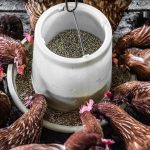
Mixed seed works best in hopper feeders, platform (tray) feeders, and tube feeders with large ports. Small-port tube feeders clog on bigger seeds. A tray with drainage holes lets rain run out so the seed does not turn to mush. Place feeders a few feet from shrubs or a tree so birds have cover, but far enough that squirrels cannot leap onto them.
How to store a 50 lb bag
- Pour it into a metal or heavy plastic bin with a tight lid. This keeps out moisture, mice, and pantry moths.
- Keep the bin in a cool, dry spot such as a garage shelf or utility room, off the floor.
- Throw out seed that is clumped, moldy, or smells sour. Moldy seed can make birds sick.
- Buy only what you will use in two to three months if you do not have a good storage spot.
Feeding and feeder care
Put out only as much seed as the birds finish in a couple of days. Clean feeders every week or two with hot, soapy water, then soak them for a few minutes in a solution of one part bleach to nine parts water, rinse well, and let them dry before refilling. Rake up shells and spilled seed under the feeder. If wild bird illness is reported in your area, local wildlife agencies sometimes ask people to take feeders down for a while, so check local guidance.
Related guides
- Wagner’s Native American Premium Wild Bird Food 50 lbs
- Wild Bird Sunflower Seeds
- Cheapest Way to Feed Wild Birds
Bottom Line
A 50 lb bag of Native American Premium Wild Bird Food can be a good-value seed mix for a busy feeder, as long as the label shows plenty of sunflower and millet and you store the bag dry. Read the ingredients on the bag you are holding rather than trusting a generic description, and keep the feeder clean.