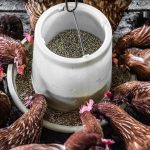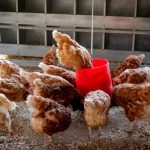
Soaking chicken feed means covering it with water for several hours so it softens. Done right, it can reduce wasted feed and make a meal easier to eat. It is optional, and it is not a cure-all. Many flocks do well on plain dry feed. The key is keeping soaked feed fresh, because wet feed spoils fast.

Soaking vs. Fermenting
- Soaking is a quick method: cover feed with plain water for about 8 to 12 hours, then feed it. It softens the feed and cuts dust.
- Fermenting leaves the soaked feed at room temperature for about 2 to 3 days, stirring once or twice a day. Natural bacteria produce a sour, slightly yeasty smell, like sourdough, and the feed gets a bubbly, porridge-like texture.
Possible Benefits
- Less waste: soft feed clumps and is harder for hens to scratch out of the feeder.
- Easier to eat: useful for older birds, sick birds, or chickens eating less in hot weather.
- Extra hydration: wet feed adds water to the diet, which helps in summer.
- Possible digestion gains: fermenting may help release some nutrients and add beneficial bacteria. Research on chickens is mixed, and claims that it dramatically improves egg quality are not well proven, so treat it as a modest, low-risk tweak.
Which Feed Works Best?
Whole grains, scratch and mash soak well. Pellets turn to mush quickly but still work if you feed them right away. Crumble falls in between. If you’re not sure which type you have, see our comparison of pellet vs crumble chicken feed and our explainer on chicken crumble feed.
How to Do It
- Use a clean glass, ceramic or food-grade plastic container. Avoid metal, which can react with the acids.
- Add feed, then cover with about 1 to 1.5 inches of water above the feed line.
- Leave it loosely covered at room temperature. Soak for 8 to 12 hours, or ferment for 2 to 3 days, stirring once or twice daily.
- Feed only what the flock will finish in a few hours. Remove leftovers so they don’t spoil in the heat.
- Strain off extra liquid or keep a bit of it as a starter for the next batch.
Warning Signs: Throw It Out
A tangy, sour smell is normal for fermented feed. Throw out the whole batch if you see fuzzy or colored mold (pink, black, green or white fuzz), or smell something rotten, rancid or like ammonia. Wipe the container clean before you start again. Moldy feed can make birds sick.
Common Mistakes
- Soaking a huge batch and letting it sit for days in hot weather.
- Using a dirty container that already has old, spoiled feed in it.
- Soaking the feed and then leaving it out in the coop in the sun.
- Skipping grit when feeding whole grains. Chickens still need grit.
- Switching the whole flock at once. Start with a small amount mixed into dry feed.
Bottom Line
Soaking or fermenting chicken feed is a cheap, low-risk way to cut waste and add moisture, but it isn’t required. Keep batches small and fresh, throw out anything moldy, and check with a poultry vet if your birds seem off their feed or have loose droppings.