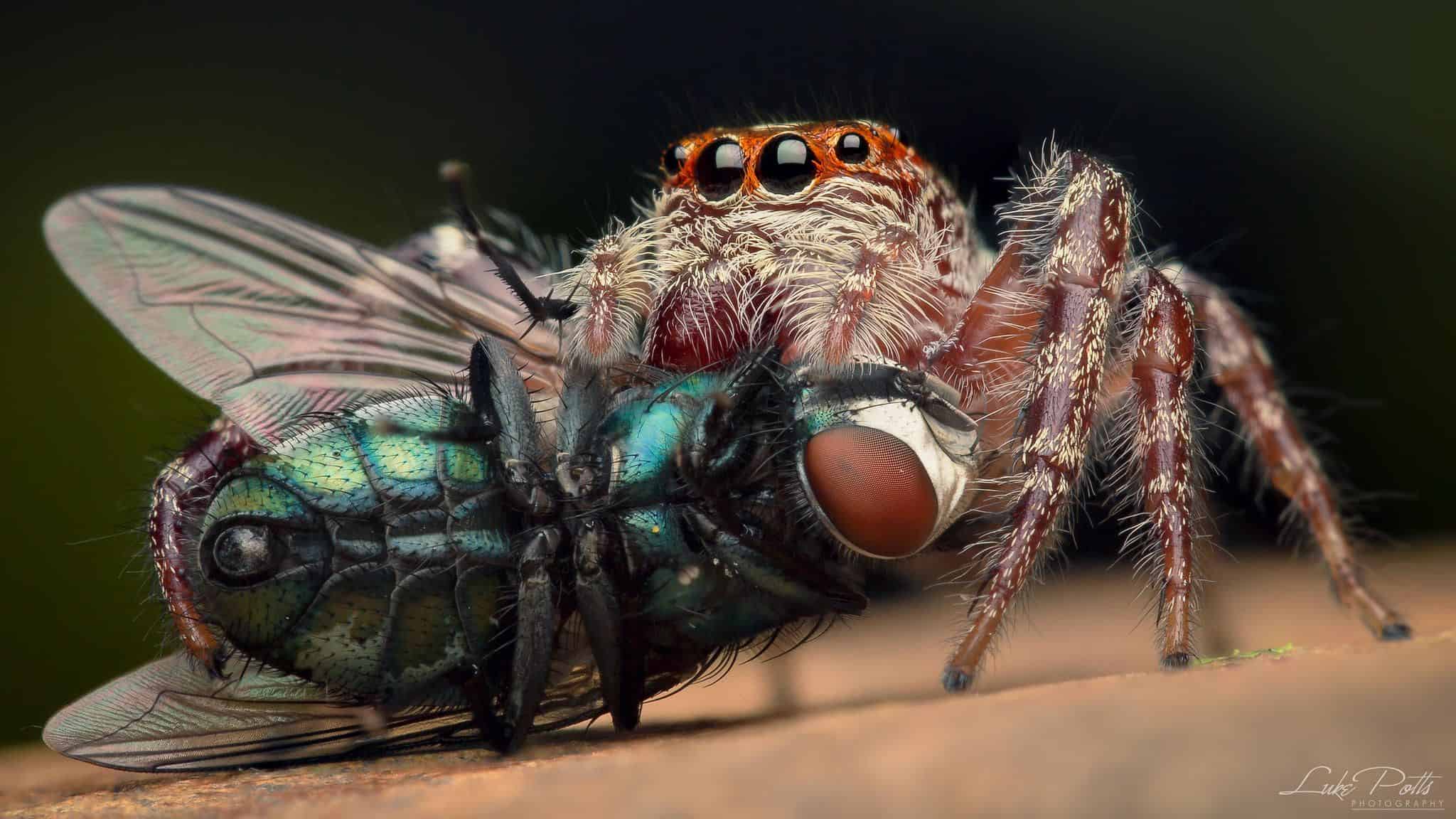
A house spider eats small live insects: flies, gnats, mosquitoes, moths, ants and small beetles. If one is living in a corner of your home, you don’t need to feed it at all. If you keep one as a pet, offer one live insect no bigger than the spider’s body every few days and give it a little moisture.

Which House Spider Do You Have?
“House spider” covers a few common species. They all eat live insects, but they catch them in different ways:
- Common house spider (Parasteatoda tepidariorum): a small, round-bodied spider that builds a messy tangle web in corners and waits for prey to blunder in.
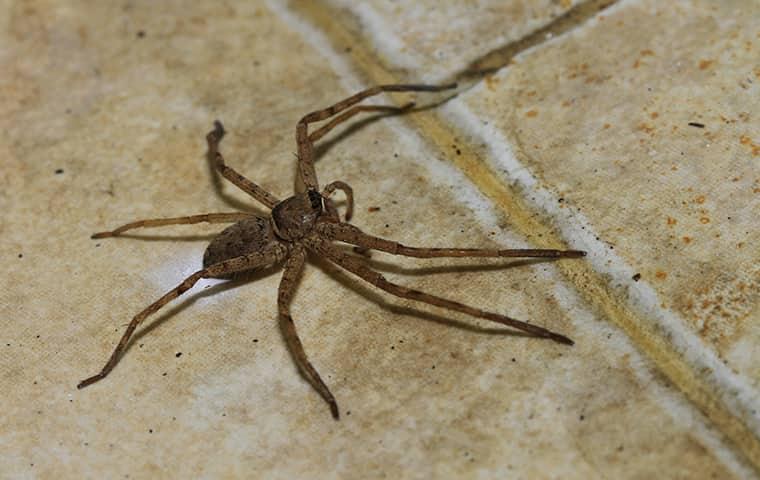
- Giant house spiders and barn funnel weavers (Eratigena species): larger, fast spiders that build flat sheet or funnel webs low on walls, in garages and basements. See what giant house spiders eat.
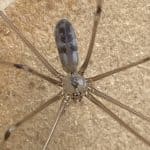
- Cellar spiders (Pholcus, often called daddy long legs): long-legged spiders that hang in loose webs and often hunt other spiders.
- Black house spiders (Badumna insignis, Australia and New Zealand): web builders around windows and brickwork. See what black house spiders eat.
What House Spiders Eat in the Wild
Indoors, house spiders live on whatever small insects wander through. Typical meals include:
- Houseflies, fruit flies and fungus gnats
- Mosquitoes
- Moths and small beetles
- Ants, silverfish and small crickets
- Other spiders, including smaller house spiders
Spiders can’t chew. They bite, inject digestive fluid and drink the liquefied insides, so they only take live or freshly caught prey. Our guide on how a spider eats a fly explains each step.
What to Feed a Pet House Spider
Good feeder insects for a captive spider are:
- Flightless fruit flies for spiderlings and small spiders
- Pinhead crickets or small house crickets for larger spiders
- Small flies such as houseflies, caught indoors or bought as feeders
- Small roaches from a feeder culture, such as dubia nymphs
Choose prey no larger than the spider’s body. Large prey can injure or stress a small spider. Feeder insects from a pet store are safer than wild-caught bugs, which may carry pesticides or parasites.
How to Feed a Web-Building Spider
- Drop or gently tap the insect into the web. Web builders feel the vibration and come to it.
- If the spider ignores it, leave it a few hours. Many house spiders feed mostly at night.
- Remove anything uneaten after about a day. Crickets can nibble a spider that is molting.
How Often to Feed
- Spiderlings: every one to two days
- Juveniles: every two to three days
- Adults: once or twice a week
Spiders can go weeks without eating, especially before a molt. A refused meal is normal. A spider that hides, stops eating and looks dull may be getting ready to molt, so leave it alone until it shows interest again.
Water
Spiders get most of their moisture from prey but also drink. Lightly mist one side of the enclosure every few days so droplets form on the web or wall, or offer a very shallow dish with a pebble in it. Keep the enclosure slightly damp, not wet.
What Not to Feed
- Insects from sprayed areas. Pesticide-covered bugs can poison a spider.
- Dead or dried insects, which most spiders ignore.
- Fruit, pollen or table scraps. House spiders are predators and don’t eat plant food.
- Prey much bigger than the spider.
- Fireflies. They contain chemicals that are toxic to many predators.
Should You Feed a Spider Living in Your House?
No. A wild house spider finds its own food and works as free pest control. If you want it gone, move it outside with a cup and a piece of paper. Lots of spiders usually means lots of insects, so fixing gaps, screens and damp spots does more than removing spiders.
House Spider Feeding FAQ
How long can a house spider go without food?
Healthy adults can often go several weeks, and sometimes longer, without a meal, especially in a cool room. Water matters more than food over short periods.
Do house spiders eat dead bugs?
Rarely. They find prey by movement and vibration in the web, so a dead insect usually goes untouched.
Can I feed a house spider ants?
Small ants are fine for larger spiders, but some ants bite or spray acid and can hurt a small spider. Fruit flies are safer.
Why is my spider not eating?
The most common reasons are an upcoming molt, a recent large meal, or prey that is too big. Try again in a few days with smaller prey.
Bottom Line
House spiders eat small live insects. Feed a pet spider flightless fruit flies or pinhead crickets no bigger than its body, every few days, drop the prey into the web, and keep a little moisture in the enclosure. Wild house spiders need no help from you.
Related reading: what pet spiders eat and what to feed tiny spiders.