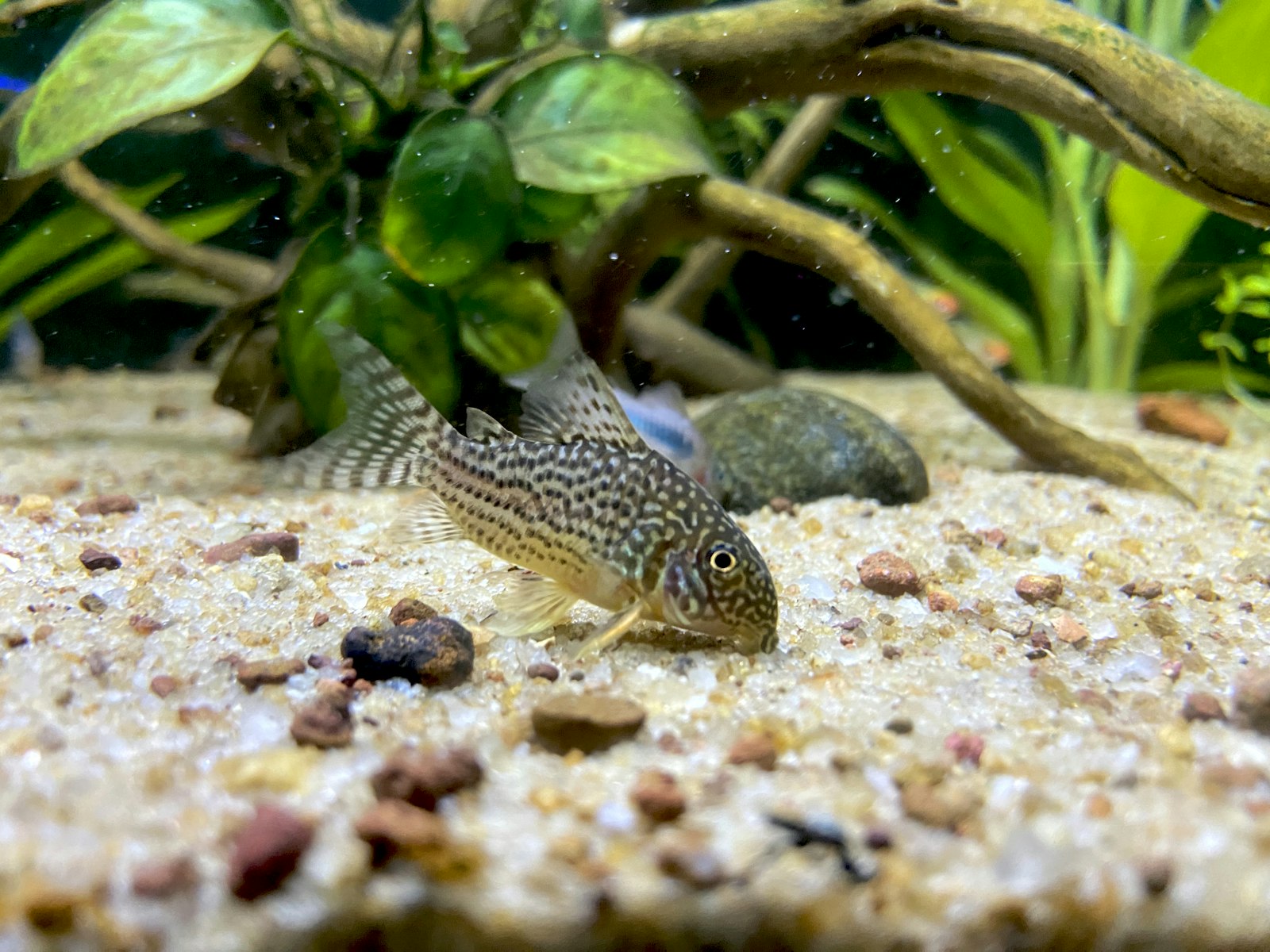
The four main types of sinking tropical fish food are sinking pellets and granules, wafers, tablets, and gel food. All four drop to the bottom of the tank, where bottom feeders such as corydoras, loaches, and plecos can reach them before the faster fish at the surface eat everything.

Which type you pick depends on who lives at the bottom of your tank and how they eat. Here is how each one works and when to use it.
Why Bottom Feeders Need Their Own Food
A common myth says bottom feeders live on leftovers and algae. In a busy community tank, flakes are usually gone within seconds, and very little reaches the gravel. Fish that feed at the bottom can slowly go hungry even while the rest of the tank looks well fed.
Sinking food solves that problem. It is dense enough to pass the surface feeders and land where bottom-feeding tropical fish actually look for food.
1. Sinking Pellets and Granules
Pellets and granules are small, dense pieces that sink quickly or slowly depending on the formula. They are the everyday choice for most bottom dwellers.
- Best for: corydoras, loaches, small catfish, and shrimp.
- Slow-sinking granules also suit mid-water fish such as tetras and rasboras, which grab food as it drifts down.
- Tip: scatter them across the tank so every fish gets a share, and pick a size that fits your smallest fish’s mouth.
2. Wafers
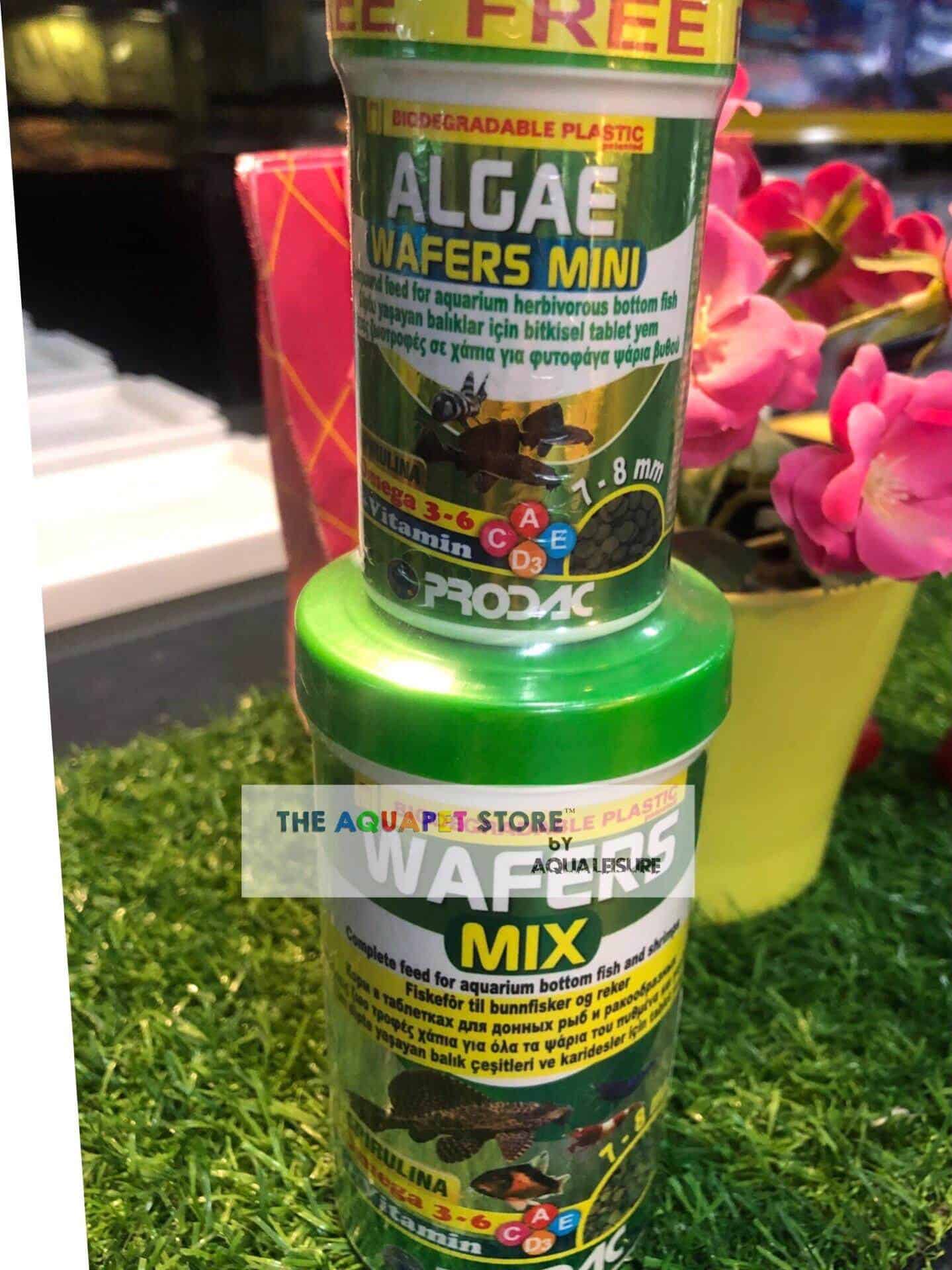
Wafers are flat discs that soften in water but hold their shape, so fish can rasp at them over time instead of swallowing them whole. There are two main kinds:
- Algae wafers: mostly plant-based, made for plecos, otocinclus, and other algae eaters.
- Sinking wafers: higher in protein, made for corydoras, loaches, and other omnivores. Hikari Sinking Wafers, for example, list fish meal, krill meal, silkworm pupae, seaweed, and spirulina, with at least 36% protein.
Wafers are a good pick for shy or slow eaters because the food stays in one piece. If you keep small algae eaters, see our look at Hikari Mini Algae Wafers.
3. Tablets
Tablets are compressed discs that sink fast and break down sooner than wafers. Some can be pressed against the inside of the glass, which lets you watch your fish feed.
- Best for: groups of small bottom fish, such as corydoras and small loaches, that feed together.
- Watch out for: crumbling. Tablets fall apart faster than wafers, so feed sparingly to keep bits from rotting in the gravel.
4. Gel Food
Gel food comes as a powder that you mix with hot water. It sets into a firm gel that you cut into cubes or strips. The gel sinks and stays together for hours, which makes it ideal for grazers.
- Best for: plecos, otocinclus, shrimp, snails, and other fish that graze slowly.
- Good to know: Repashy is the best-known brand, with separate formulas for plant eaters and omnivores.
- Storage: follow the package directions. Prepared gel needs to be kept in the fridge and can be frozen in portions.
Sinking Fish Food Types at a Glance
| Type | Best for | How long it holds together |
|---|---|---|
| Pellets and granules | Corydoras, loaches, shrimp, mid-water fish | Short: eaten quickly |
| Wafers | Plecos, otocinclus, corydoras, loaches | Long: softens but stays whole |
| Tablets | Groups of small bottom fish | Medium: crumbles as fish feed |
| Gel food | Grazers, shrimp, snails | Long: stays firm for hours |
How to Match the Food to Your Fish
- Corydoras and loaches: omnivores that need protein. Use sinking pellets, sinking wafers, or tablets. Frozen bloodworms or brine shrimp make a good occasional treat.
- Plecos and otocinclus: most are plant eaters. Use algae wafers, gel food, and blanched zucchini or cucumber. Diets vary by pleco species, so check what yours needs.
- Shrimp and snails: small pellets, pieces of wafer, or gel food.
- Tetras, rasboras, and other mid-water fish: slow-sinking granules. Neon tetras are mid-water feeders, not bottom feeders.
Not sure which fish you have at the bottom? Our guide to small bottom feeder tropical fish covers the common ones.
Feeding Tips for Sinking Food
- Feed at the right time. Many plecos and loaches are most active at night. Drop sinking food in just after the lights go out.
- Distract the surface feeders. Feed flakes at one end of the tank, then drop sinking food at the other end.
- Start small. Offer a little and see how much is eaten. Leftover food breaks down and pollutes the water.
- Remove leftovers. Take out uneaten wafers, gel, or vegetables before they foul the tank.
- Mix it up. Rotate two or three foods through the week for a more complete diet.
- Check their bellies. A healthy bottom feeder has a gently rounded belly, not a sunken one.
Bottom Line
Sinking pellets and granules are the daily staple for most bottom feeders. Wafers and gel food suit slow grazers like plecos, and tablets work well for groups of small catfish. Match the food to your fish’s natural diet, feed small amounts, and make sure the food actually reaches the bottom of the tank.