Quick answer: The best betta food for color is a high-protein betta pellet that includes natural pigment sources such as krill, shrimp, salmon or spirulina, backed up with frozen or live treats a few times a week. Food works best on reds, oranges and yellows. It can’t change your fish’s genetics, and it won’t help much if the tank is cold or dirty.

How Food Affects a Betta’s Color
Red, orange and yellow in fish come from pigments called carotenoids. Fish can’t make these pigments themselves. According to the University of Florida’s aquaculture extension program, they have to get them from what they eat.
The most effective carotenoid for red tones is astaxanthin. Good natural sources include:
- Krill and shrimp
- Salmon
- Algae such as spirulina and Haematococcus
- Marigold extract, which supports yellow tones
Blue, turquoise and metallic shine work differently. Those colors come from the structure of the scales and the way they reflect light, not from pigment in the diet. A blue betta won’t turn bluer because of a color food, although a healthy, well-fed fish will always look brighter than a stressed one.
Genetics set the limits. Food helps a betta reach the color it was born to show. It can’t turn a pale fish into a deep red one.
What to Look for on the Label
- Animal protein first. Bettas are carnivores. In the wild they eat insects, larvae and small crustaceans. The first ingredients should be things like whole fish, krill, shrimp or insect meal, not wheat or soy.
- Natural color sources. Look for krill, shrimp, salmon, spirulina or astaxanthin in the ingredient list.
- Betta-sized pellets. Small floating pellets are easiest for a betta to eat from the surface.
- Few fillers. Less starch means less waste in the water.
Good Betta Foods for Color
Omega One Betta Buffet Pellets
The first ingredients are salmon and whole herring, followed by whole shrimp and halibut. Salmon and shrimp are natural carotenoid sources, so the color support comes from the main ingredients, not from added dye.
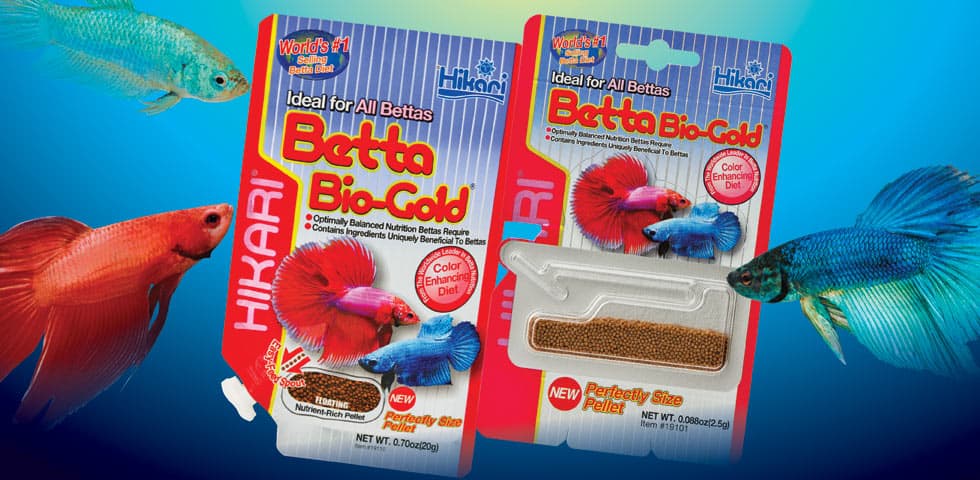
Hikari Betta Bio-Gold
A small floating pellet made for bettas, with color enhancers that include astaxanthin. The pellets are tiny, which makes it easy to control portions.
Fluval Bug Bites Betta Formula
This one is based on black soldier fly larvae, which is close to what bettas eat in nature. It is a good choice to rotate with a seafood-based pellet.
Frozen and freeze-dried foods
Brine shrimp, daphnia and bloodworms add variety and extra pigment. Use them as treats a few times a week, not as the whole diet. See our guide to feeding bloodworms to betta fish for portion tips.
Recipes change, so check the current ingredient list before you buy. For more options, read our roundup of the best betta fish food pellets.
How to Feed for Better Color
- Feed once or twice a day. Give only a few pellets at a time, as much as your betta finishes in a minute or two. Follow the amount on the label for your pellet size.
- Rotate foods. Use two or three different foods through the week so your fish gets a range of nutrients and pigments.
- Remove leftovers. Uneaten food rots and fouls the water.
- Don’t overfeed. Extra food doesn’t mean extra color. It leads to bloating and poor water quality.
- Be patient. Pigment builds up slowly. Give a new food several weeks before you judge it.
Our guide on how much to feed a betta fish goes into portions in more detail.
Color Isn’t Only About Food
If your betta looks washed out, check the basics before you change its diet:
- Temperature. Bettas are tropical fish and need a heater. Keep the water at 76 to 81 degrees Fahrenheit.
- Tank size. A tank of at least 2.5 gallons is the minimum, and 5 gallons or more is better.
- Water quality. Regular partial water changes matter more than any food. Poor water is one of the most common causes of stress and illness.
- Stress. A stressed betta can fade quickly and may show horizontal stripes along its body.
- Age. Older bettas often lose some color naturally.
Some bettas carry a “marble” gene that makes their color and pattern shift over time. That is normal and has nothing to do with diet.
When to Worry
A slow change in shade is usually harmless. Sudden paleness along with clamped fins, white spots, torn fins, a swollen belly, or a fish that stops eating points to a health or water problem. Test the water first. If the problem continues, contact a vet who treats fish.
Bottom Line
Pick a betta pellet with real fish, krill or insect protein near the top of the ingredient list and a natural pigment source such as krill, salmon or spirulina. Rotate in frozen brine shrimp, daphnia or bloodworms a few times a week. Then keep the tank warm and clean. Good food brings out the color your betta already has, and good water keeps it there.
This article is general information, not veterinary advice. If your fish seems unwell, contact an aquatic veterinarian.