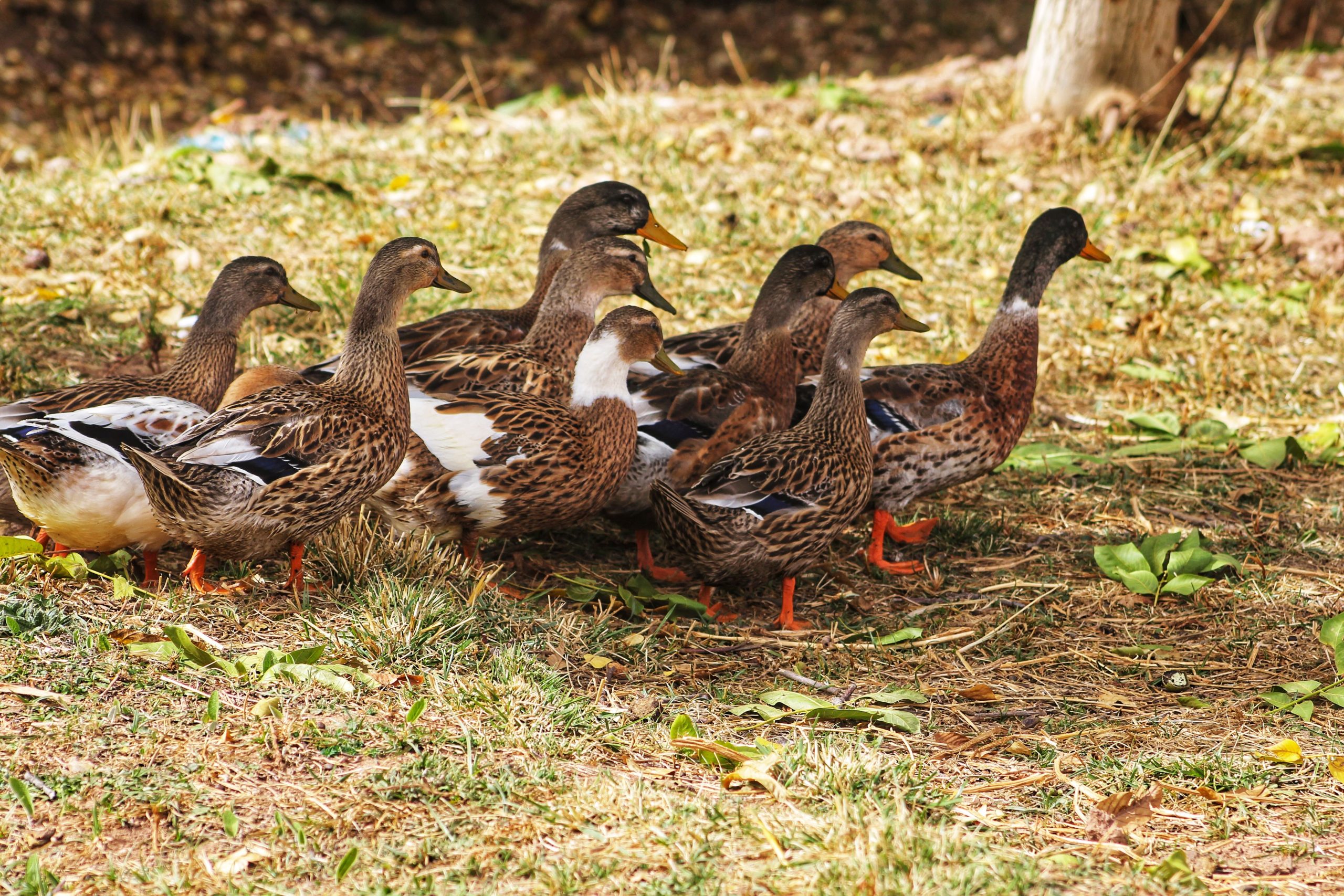
Khaki Campbell ducks do best on a complete, non-medicated waterfowl or all-flock feed, plus daily foraging, fresh greens and plenty of clean water. They are active, hungry birds and among the best egg layers of any duck breed, so feeding them well pays off.

The Basic Khaki Campbell Diet
- Complete feed (about 90 percent of the diet): Use a waterfowl, duck or all-flock feed in pellet or crumble form. Pellets waste less than loose mash.
- Foraging: Khaki Campbells are excellent foragers. They eat slugs, snails, insects, worms and tender weeds, which makes them good garden helpers.
- Treats (about 10 percent at most): Leafy greens, peas, chopped vegetables, oats and a few mealworms.
What to Feed at Each Age
Ducklings (first two weeks)
Feed a non-medicated starter crumble. Medicated chick starter is made for chickens, and ducklings eat and drink far more than chicks, so it is not recommended. Ducklings need niacin (vitamin B3) for strong legs, so use a waterfowl starter or follow your feed maker’s niacin guidance. Always keep water next to the feed, because ducks need to wet their food to swallow it.
Growers (two weeks to about four months)
Switch to a grower or all-flock feed with a moderate protein level. Check your feed’s label and ask your vet or feed supplier if you are unsure.
Adults and laying ducks
Khaki Campbell hens often lay well over 200 eggs a year, so they need a layer or all-flock feed. Offer crushed oyster shell in a separate dish so the hens can take the calcium they need for strong shells. Do not mix oyster shell into the feed for drakes and non-laying ducks.
Safe Treats
- Romaine, kale, chard and dandelion greens
- Peas, cucumber, zucchini and shredded carrot
- Oats and a little cracked corn in cool weather
- Mealworms, earthworms and other insects
- Berries and chopped melon in small amounts
Foods to Avoid
- Bread, crackers and chips, which fill ducks up with little nutrition
- Avocado, chocolate, onions, raw dry beans and anything moldy
- Salty or sugary human snacks
- Medicated chick feed
- Slug pellets or any slug bait. Many are poisonous to ducks and other animals. Let your ducks eat slugs naturally instead, and do not let them forage in areas treated with slug bait or pesticides.
Water and Grit
Ducks cannot eat comfortably without water. Provide a bucket or bowl deep enough for them to dunk their whole bill and rinse their nostrils and eyes. Change it daily, since ducks make it muddy quickly. If your ducks eat mostly pellets and have no access to soil, offer a small dish of poultry grit.
How Much Do They Eat?
An adult Khaki Campbell often eats around a quarter pound of feed a day, more while laying or in cold weather, and less if it forages a lot. Offer enough that the flock finishes in about 15 to 20 minutes, and remove leftovers so they do not attract rats.
Frequently Asked Questions
Can ducks eat chicken feed?
Non-medicated chicken layer or all-flock feed can work for adults, but ducklings need extra niacin. Check with your feed supplier.
Do Khaki Campbells need scratch grains?
Not as a main feed. Small amounts of cracked corn or oats make a nice winter treat.
How do I know if my ducks are getting enough to eat?
Healthy ducks are active, have bright eyes and keep a steady weight. Call your vet if a duck is thin, limping or stops laying.
Bottom Line
Feed Khaki Campbells a non-medicated waterfowl or all-flock feed, let them forage, give oyster shell to laying hens and keep deep, clean water available. Never use slug pellets where ducks roam. This article is general information, not veterinary advice.
Related reading: what to feed Indian Runner ducks and homemade duck feed.