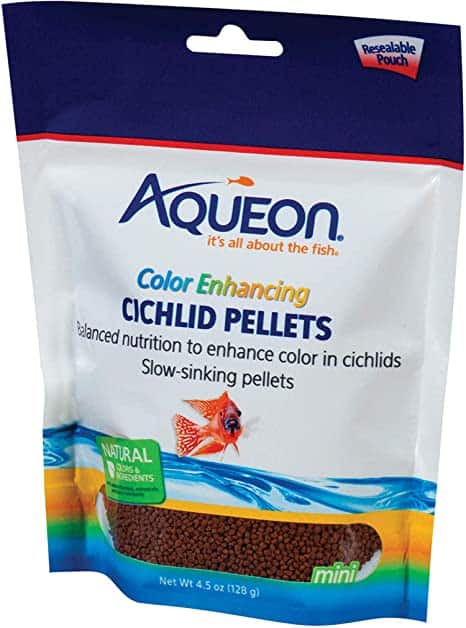
Color-enhancing cichlid food works by supplying carotenoids, the red, orange, and yellow pigments that fish cannot make on their own. A good one can deepen those colors over a few weeks. It cannot add colors your fish’s genetics did not provide, and it does little for blues.

Here is how these foods work, which ingredients to look for, and how to get the most from them.
How Color-Enhancing Food Works
According to the University of Florida’s IFAS Extension, fish cannot produce carotenoid pigments themselves. They have to get them from food. In the wild, that means algae, crustaceans, and the animals that eat them. In a tank, it means whatever you feed.
- Reds and deep oranges come mainly from astaxanthin and canthaxanthin.
- Yellows come mainly from lutein and zeaxanthin.
- Blues and metallic sheens work differently. They come from blue pigment cells and from cells that hold tiny reflective crystals and bounce light back. Diet pigments do not create them.
Color is also mostly genetic, and fish adjust how much of it they show through their nerves and hormones. That is why the same fish can look brilliant while courting and washed out an hour after being chased.
Ingredients That Add Color
| Ingredient on the label | Main pigment | Helps most with |
|---|---|---|
| Astaxanthin, Haematococcus algae, Phaffia yeast | Astaxanthin | Red, orange |
| Krill and shrimp meal | Astaxanthin | Red, orange |
| Salmon (including skins) | Astaxanthin | Red, orange |
| Spirulina | Mixed carotenoids | Overall color, good for grazers |
| Marigold petal extract | Lutein, zeaxanthin | Yellow |
| Kelp, seaweed, alfalfa meal | Lutein and related pigments | Yellow |
Paprika and other pepper extracts appear in some formulas as well. If a tub says “color enhancing” but lists none of these, the claim does not mean much.
What Color Food Cannot Do
- It cannot change genetics. A fish bred from dull stock will stay fairly dull.
- It cannot color up every fish. In many cichlid species, females, juveniles, and low-ranking males stay plain no matter what they eat.
- It does little for blue. Blue fish look their best when they are healthy and settled, not because of pigment in the food.
- It cannot fix stress or poor water. A stressed or sick fish goes pale whatever is in the bowl.
Color Foods to Compare
These foods all list pigment-rich ingredients. Details come from the manufacturers’ labels and can change, so check the package.
- Omega One Super Color Cichlid Pellets. A sinking pellet with salmon and whole herring listed first, plus shrimp and kelp. At least 42% protein. Omega One credits salmon skins for the color boost.
- NorthFin Cichlid Formula. Krill meal is the first ingredient, followed by herring and sardine meals, kelp, spirulina, and added astaxanthin. At least 40% protein, with no artificial pigments or hormones.
- Hikari Cichlid Gold. A long-established color pellet sold in floating and sinking versions and several pellet sizes.
- Hikari Cichlid Excel. A floating pellet for plant-eating cichlids, with spirulina, krill meal, and alfalfa. At least 35% protein.
- Fluval Bug Bites Cichlid Formula. Granules built around black soldier fly larvae, which suits insect-eating cichlids.
- Zoo Med Spirulina 20. A flake with 20% spirulina, made for algae-eating fish.
- Repashy Super Green. An algae-based powder you mix with hot water to make a gel food for herbivores.
Hikari Vibra Bites, which often come up in color discussions, are a general tropical fish food and not a cichlid-specific one.
Match the Food to the Cichlid
Color comes second. The right diet for the species comes first.
- Herbivores and grazers (mbuna, Tropheus): choose spirulina or vegetable-based foods. Rich, meaty color foods can upset their digestion.
- Omnivores (many Central and South American cichlids, peacocks): a balanced pellet with krill or salmon and some algae.
- Carnivores (oscars and other large predators): higher-protein pellets based on fish, krill, or insects.
For African species in particular, see our guides to the best African cichlid food for color and the best flake food for African cichlids.
How to Feed for Color
- Feed small meals once or twice a day. Offer only what is eaten in a minute or two.
- Give it time. Expect a gradual change over several weeks, not days.
- Keep food fresh. Pigments and vitamins break down with air, heat, and light. Seal the tub, store it somewhere cool and dark, and buy sizes you will finish within a few months.
- Add variety. Frozen krill, mysis, or brine shrimp suit meat-eaters. Fresh greens such as spinach or cucumber suit grazers.
- Watch pale areas. Some keepers find that heavy color diets tint white or pale patches. If you notice that, alternate with a plain staple food.
Other Things That Affect Color
- Water quality. Regular water changes and low waste levels matter as much as food.
- Stress and bullying. Crowding, constant chasing, or nowhere to hide will mute colors.
- Surroundings. Many fish show deeper color over a dark substrate and background than in a bare, bright tank.
- Age, sex, and rank. Mature, dominant males usually carry the strongest color.
The same pigment science applies to other fish. Our guide to the best betta food for color covers it for bettas.
When Color Loss Is a Warning Sign
A fish that suddenly turns pale or dark, stops eating, clamps its fins, or hides may be sick or stressed. Test the water first, since that is the most common cause. If the fish does not improve, contact an aquatic veterinarian or an experienced fish store.
This article is general information, not veterinary advice.
Bottom Line
Color-enhancing cichlid food is worth using when it lists real pigment sources such as astaxanthin, krill, salmon, spirulina, or marigold, and when it suits the way your cichlid eats in the wild. It will bring out reds, oranges, and yellows over a few weeks. Clean water, low stress, and good genetics do the rest.


