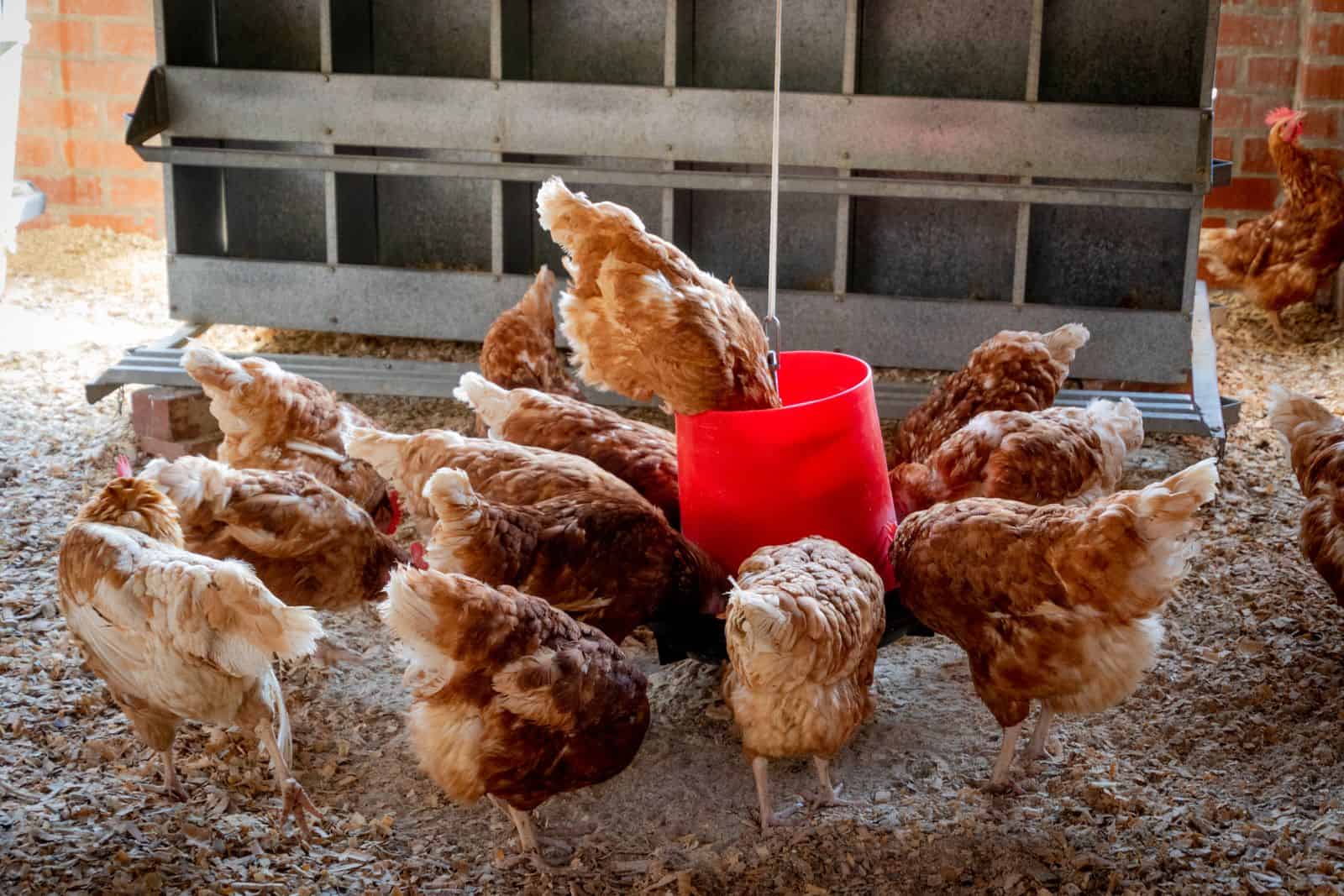
Commercial chicken feed is a balanced blend of grains (usually corn), protein meals (usually soybean meal), added calcium and phosphorus, vitamins and minerals. The exact recipe depends on the bird’s age and purpose, which is why feeds are labeled starter, grower, layer or all-flock.

What is in chicken feed
- Grains. Corn, wheat, oats, barley or sorghum supply energy (carbohydrates). Corn is the most common.
- Protein meals. Soybean meal is the usual protein source. Others include canola meal, sunflower meal, fish meal, meat and bone meal (in some conventional feeds) and peas.
- Fats and oils. A small amount adds energy and helps the bird absorb fat-soluble vitamins.
- Calcium. Ground limestone or oyster shell, especially in layer feed for strong eggshells.
- Phosphorus. Often from dicalcium phosphate, for bones and egg production.
- Salt and amino acids. Salt, plus added methionine and lysine to balance protein.
- Vitamin and mineral premix. Vitamins A, D3, E, K, B vitamins (riboflavin, niacin, pantothenic acid, B12), plus trace minerals such as manganese, zinc, iron, copper and selenium.
- Additives. Some feeds contain enzymes, probiotics, or a coccidiostat in starter feed. Medicated starter should be fed only to chicks that have not been vaccinated for coccidiosis.
Feed types
| Feed | Age | Protein | Notes |
|---|---|---|---|
| Starter | 0 to 8 weeks | About 18 to 20% | High protein for growth |
| Grower | 8 to 18 weeks | About 15 to 16% | Lower protein and calcium |
| Layer | Laying hens (about 18 weeks and up) | About 16% | About 3.5 to 4% calcium |
| All-flock | Mixed flocks | About 16 to 18% | Offer oyster shell separately for layers |
Do not feed layer feed to chicks or roosters, because the extra calcium can damage young kidneys.
How to read the tag
- Check the crude protein minimum for the age of your birds.
- Look at the calcium range, especially for layers.
- Read the ingredient list. Ingredients are listed by weight, so the first few make up most of the feed.
- Look for the “complete feed” statement, which means it needs no vitamin supplements.
- Check the date and choose fresh feed.
Pellets, crumbles or mash?
All have the same nutrition. Mash is finely ground, crumbles are broken pellets, and pellets are compressed. Pellets waste less, while mash suits small chicks and can be moistened. Fermenting feed is an option some keepers use, but it is not required.
Soy, GMO and organic questions
Most conventional feeds use soybean meal and corn that may be genetically modified. Those feeds are safe for chickens, and many people choose organic or non-GMO feeds for personal reasons. They cost more. Whatever you choose, the key is that the feed is complete and fresh.
Storage and feeding tips
- Store feed in a sealed metal or heavy plastic bin to keep out rodents, moisture and mold.
- Do not feed moldy or wet feed.
- Treats and scraps should be no more than about 10 percent of the diet.
- Provide grit if the birds do not free-range, and fresh water at all times.
For more on feeding, see chicken feed at Tractor Supply and adding supplements to chicken feed.
Bottom Line
A good commercial chicken feed is a complete ration of grains, protein, calcium, vitamins and minerals. Match the feed to your birds’ age, keep it fresh and dry, and keep treats small.