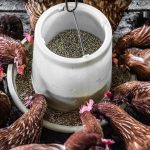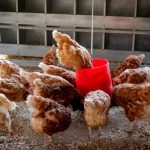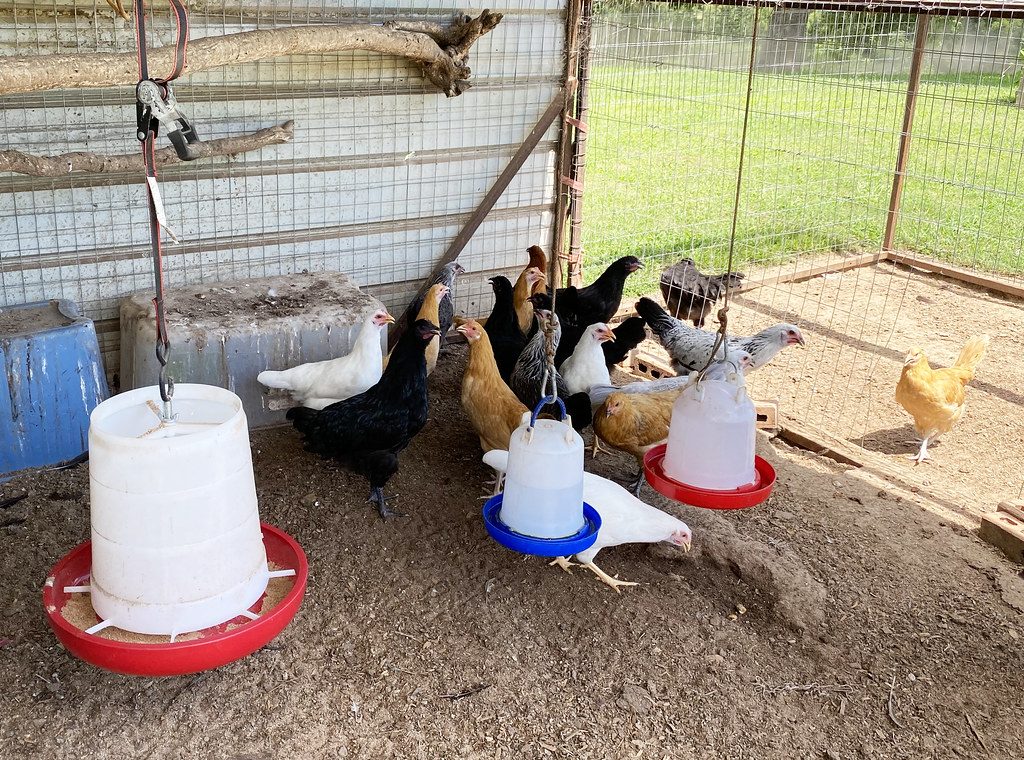
A full-size laying hen eats about a quarter pound (4 ounces, or roughly 115 grams) of complete feed a day. That works out to about 7 to 8 pounds per hen per month. Bigger hens, birds in cold weather and free-rangers that run around all day can eat closer to a third of a pound, while bantams eat less.

Daily Feed by Type of Chicken
These are typical amounts of a complete commercial feed. Your birds will not read the chart, so use it as a starting point and adjust to what your flock actually clears.
| Bird | Typical feed per bird | Notes |
|---|---|---|
| Laying hen, standard size | About 1/4 lb (4 oz) per day | Mississippi State Extension gives 1/4 to 1/3 lb depending on weather, size and laying rate |
| Light layer (Leghorn type, about 4 lb) | About 0.2 lb per day | Smaller, white-egg hens eat less than brown-egg and dual-purpose breeds |
| Heavy or dual-purpose hen (5.5 to 6.5 lb) | About 0.25 to 0.28 lb per day | Larger body, larger appetite |
| Bantam or dwarf hen (about 3 lb) | About 0.17 lb (under 3 oz) per day | Bantams eat noticeably less than their standard-size versions |
| Growing pullet, 2 to 20 weeks | About 0.6 lb per week at 2 weeks, rising to about 2.2 to 2.4 lb per week at 20 weeks | Roughly 16 to 18 lb of feed per bird from hatch to 20 weeks |
| Broiler (meat bird) | About 2.4 lb per week by week 6 | Roughly 7.7 lb total to 6 weeks and 13 lb total to 8 weeks |
The hen figures for light, heavy and dwarf birds come from feed-per-year guides published by Colorado State University Extension, divided by 365. The pullet and broiler figures come from the University of Kentucky’s feed tables, which assume a standard-energy commercial feed. If your feed is lower in energy, birds eat more of it.
How Much Feed for a Whole Flock?
The easy math: multiply the number of hens by 1/4 pound to get pounds per day, then multiply by 30 for a month.
| Laying hens | Per day | Per month (30 days) | About how many 50-lb bags a month |
|---|---|---|---|
| 3 | 0.75 lb | 22.5 lb | About half a bag |
| 6 | 1.5 lb | 45 lb | About 1 bag |
| 10 | 2.5 lb | 75 lb | About 1.5 bags |
| 25 | 6.25 lb | About 190 lb | 3 to 4.5 bags (University of Kentucky) |
The University of Kentucky’s cheat sheet puts 25 hens at 3 to 3.5 bags a month for white-egg layers, 3 to 4 bags for brown-egg layers and 4 to 4.5 bags for dual-purpose breeds. Add some extra for spilled feed and for winter, and buy only what you can use while it is fresh. Alabama Extension advises storing feed no longer than about one month in summer or two months in winter.
Planning for meat birds? Kentucky estimates about 10 to 11 fifty-pound bags to raise 50 commercial broilers to 5 pounds. Slow-growing breeds take longer to reach the same weight, so they eat more.
What Changes How Much a Chicken Eats
Size and breed
Larger birds eat more. Standard-size chickens need more feed than bantams, and brown-egg breeds, which tend to be heavier, eat more than white-egg Leghorns.
Egg production
Hens in lay need more energy, protein and calcium than hens that are resting or molting. Colorado State’s figures suggest it takes roughly 3.3 to 5.9 pounds of feed to produce a dozen eggs, depending on the size of the hen and how well she lays. Small, productive hens are the most efficient.
Weather
Chickens eat to meet their energy needs, so temperature matters a lot:
- Cold weather: birds eat more to stay warm. Alabama Extension notes that a hen may take in about 340 kilocalories a day in winter compared with about 260 in summer, close to a third more.
- Hot weather: intake drops, especially above about 86°F, according to the University of Kentucky. Hens eat less, may lose weight and often lay smaller eggs.
Activity and free-ranging
Free-range and pastured birds move around more and often eat more feed, not less. Foraging adds variety, but range alone cannot supply a complete diet, so keep complete feed available.
Water
Chickens drink about twice as much water as feed by weight. A hen eating 1/4 pound of feed drinks about 1/2 pound of water (roughly a cup), and more in hot weather. If water runs short, birds eat less too. A sudden drop in feed intake is often a watering problem.
Should You Measure Feed or Leave It Out?
Most backyard keepers feed laying hens free choice, meaning feed is always available in the daytime. Mississippi State Extension says constant access to feed gives the best egg production and that hens restricted from eating as much as they want usually stop laying. Meat birds are also normally fed free choice.
Measuring is still useful as a check. Fill the feeder at the same time each day for a week and note how much the flock eats. If the feeder is always empty early, give more. If feed is going stale or ending up on the floor, look at waste first.
How to Cut Feed Waste
- Raise the feeder so the trough lip is about level with the birds’ backs.
- Fill troughs no more than half full. Alabama and Maine Extension both give this tip.
- Choose pellets for adult birds. Pelleted feed spills less, and hens cannot pick out their favorite bits. See our guide to pellet vs. crumble chicken feed.
- Give enough feeder space so every bird can eat at the same time. Otherwise smaller or timid birds go short.
- Keep feed dry. Wet feed molds and has to be thrown away.
Treats, Scratch and Calcium
Complete layer feed is balanced on its own. Scratch grains and kitchen scraps dilute that balance, so keep them small. Alabama Extension advises never giving more scratch than birds finish in 1 to 3 hours, and on range, only what they clean up in 20 to 30 minutes. Too much grain can cut egg production.
Layer feed should contain about 2.5 to 3.5% calcium. Many keepers also offer crushed oyster shell in a separate dish so hens can take extra. Do not give layer feed or extra calcium to growing pullets. Our guide to chicken feed for 3-month-old chicks covers what young birds need instead, and what is in commercial chicken feed explains how to read the feed tag.
If a hen suddenly eats much less than usual, check water first. Then watch her closely. Illness lowers both feed and water intake, so a bird that stays off feed should be seen by a vet or checked with your county extension office.
Bottom Line
Plan on about 1/4 pound of feed per laying hen per day, or 7 to 8 pounds a month. Six hens go through about one 50-pound bag a month. Expect bantams to eat less, big breeds and winter birds to eat more, and hens in a heat wave to eat less. Keep feed and clean water available all day, cut waste with half-full troughs and pellets, and keep treats small.
FAQ
How much feed does a chicken eat per year?
A standard laying hen eating 1/4 pound a day goes through about 90 pounds of feed a year. Colorado State’s figures range from about 63 pounds a year for a 3-pound dwarf hen to about 100 pounds for a 6.5-pound heavy hen.
Do chickens eat more in winter?
Yes. They burn more energy keeping warm, so expect feed use to rise in cold months and to fall in hot weather.
How much do roosters eat?
Plan on about a hen’s share. Roosters that are not breeding have lower nutrient needs than hens in lay, but they are often bigger, and bigger birds eat more. An all-flock feed with oyster shell on the side suits a mixed flock.
Can chickens overeat?
Hens on a complete feed tend to eat to meet their energy needs. The bigger risk is too much scratch, corn or treats. Mississippi State Extension notes that high-energy feeding can lead to fatty liver problems in productive hens.
How many grams of feed does a chicken eat a day?
About 115 grams for a standard laying hen, roughly 75 to 80 grams for a bantam, and up to about 125 to 150 grams for a large hen in cold weather.
Sources
- University of Kentucky Cooperative Extension: How Much Will My Chickens Eat? (ASC-191)
- Colorado State University Extension: Practical Feeding Methods for Small Poultry Flocks
- Alabama Cooperative Extension System: Nutrition for Backyard Chicken Flocks (ANR-1317)
- University of Maine Cooperative Extension: Nutrition for Backyard Chicken Flocks in Maine
- Mississippi State University Extension: Feeds and Nutrition
This article is general information, not veterinary advice. If your chickens stop eating, lose weight or seem unwell, contact a poultry veterinarian or your local extension office.