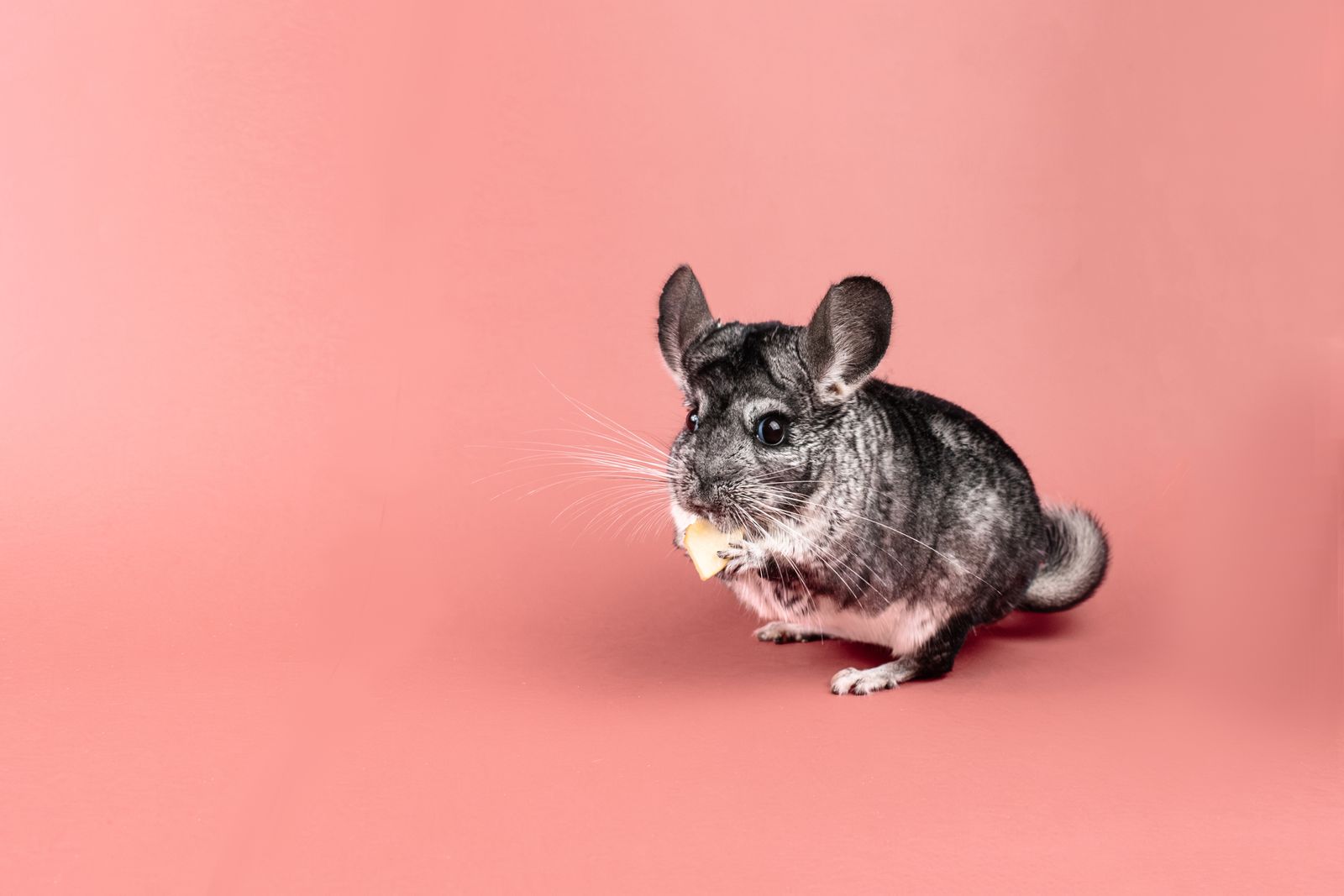
Short answer: not as a regular diet. A chinchilla that nibbles a few guinea pig pellets in a pinch will usually be fine, but guinea pig food is not made for chinchillas and shouldn’t replace chinchilla pellets and hay.

Why Guinea Pig Pellets Aren’t a Good Match
Guinea pigs and chinchillas are both plant-eating rodents, which is why people assume their food is interchangeable. It isn’t, for a few reasons:
- Added vitamin C. Guinea pigs can’t make their own vitamin C, so their pellets are fortified with it. Chinchillas make their own, so they don’t need the extra.
- Different formulas. Guinea pig pellets are often alfalfa-based and may be richer in protein and calcium than an adult chinchilla needs. Many “guinea pig mixes” also include seeds, nuts, dried fruit, or colorful bits.
- Sensitive digestion. Chinchillas have delicate guts. Sugary, fatty, or rich foods can lead to gas, bloat, and loose stools.
What a Chinchilla Should Eat Every Day
- Unlimited grass hay. Timothy, orchard grass, or meadow hay should always be available. Hay keeps the gut moving and wears down teeth that never stop growing. See our guide to orchard grass hay for chinchillas.
- Plain chinchilla pellets. Look for a uniform, high-fiber pellet made for chinchillas with no seeds, nuts, or dried fruit. A common guideline is about 1 to 2 tablespoons per day, but check the feeding directions on your brand. Our Oxbow chinchilla food review is a good starting point.
- Fresh water. Offer clean water at all times, changed daily.
Treats: Keep Them Rare and Tiny
Chinchillas have a big sweet tooth and a small tolerance for sugar. If you offer a treat, make it a small piece of plain dried rose hip or a pinch of plain rolled oats, no more than once in a while. Avoid raisins, nuts, seeds, yogurt drops, and fresh fruit as regular treats. Wondering what else is off limits? Read what not to feed chinchillas.
What If My Chinchilla Already Ate Guinea Pig Food?
A small amount once or twice is rarely an emergency. Switch back to chinchilla pellets and hay right away, and watch for soft or small droppings, a swollen belly, or less eating. A chinchilla that stops eating needs a vet quickly, because gut slowdown can become serious fast. See critical care food for chinchillas for what vets sometimes use in these cases.
If You Have Both Pets
Keep the two species in separate cages with separate food bowls. Their diets and housing needs differ, and a chinchilla can easily overeat guinea pig pellets left within reach.
Bottom Line
Guinea pig food isn’t toxic to chinchillas, but it isn’t built for them either. Stick with unlimited grass hay, plain chinchilla pellets, and fresh water, and save guinea pig food for your guinea pig.
This article is general information, not veterinary advice. If your chinchilla stops eating, has diarrhea, or seems bloated, call an exotics-experienced vet right away.


