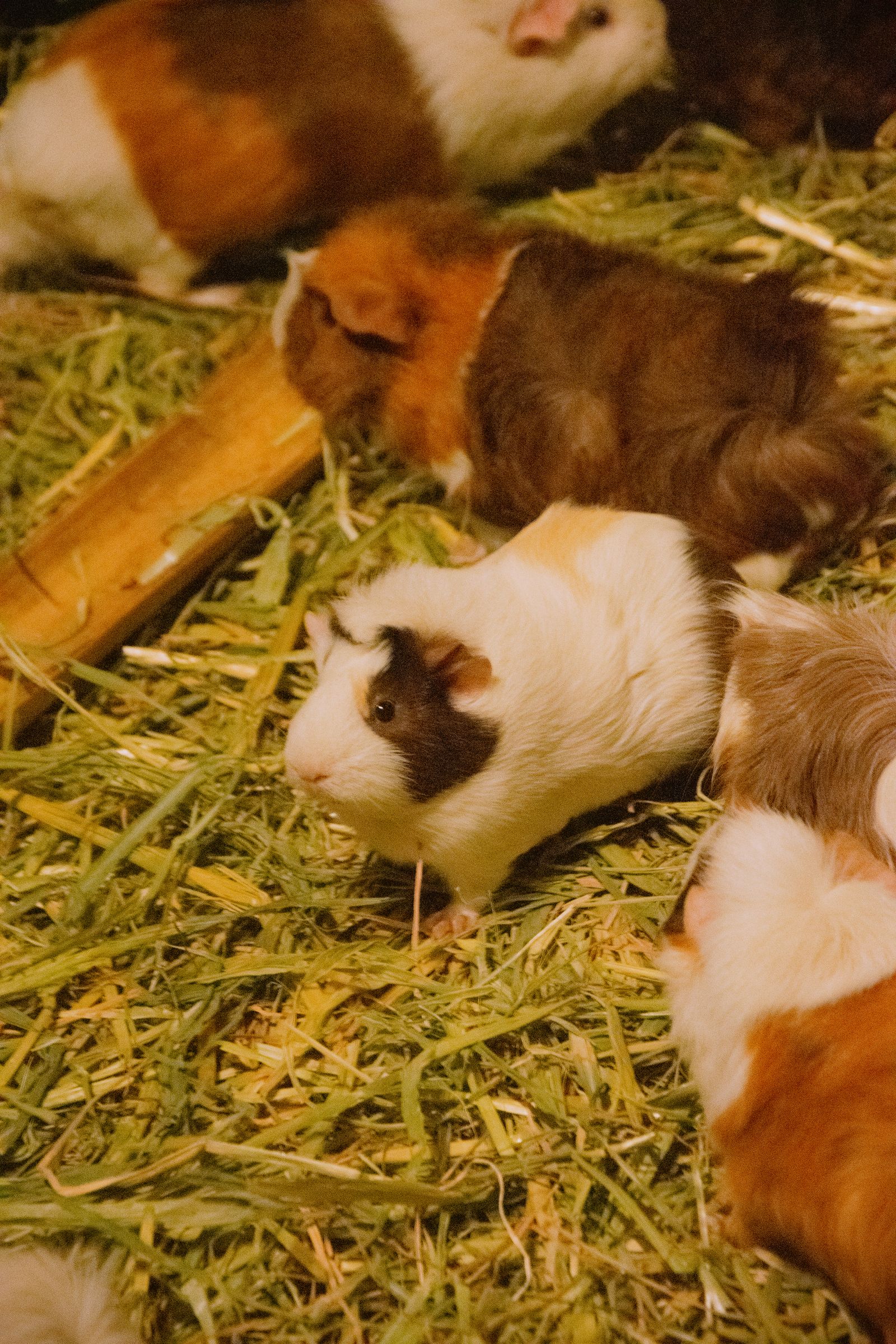
Timothy hay and timothy-based pellets are the best foundation for most adult guinea pigs. Hay should make up the bulk of the diet, with a small portion of pellets and fresh vegetables on top.

Why timothy?
Timothy is a grass hay that is high in fiber and lower in calcium and protein than alfalfa. Fiber keeps the gut moving, and the constant chewing wears down teeth that never stop growing. Alfalfa is better saved for pups and pregnant or nursing sows. See our guide to alfalfa hay for the difference.
How to choose hay
- Look for green, fresh-smelling hay with no dust, mold, or dampness.
- Second cut is leafier and softer, which picky eaters often prefer. First cut is stemmier and more abrasive.
- Organic hay is a personal choice. Fresh, clean hay matters more than the label.
- Store in a dry, ventilated container.
We could not verify specifics for the Graz’n organic line from the sources we checked, so read its package for ingredients and feeding directions.
How to choose pellets
- Pick a plain, uniform timothy-based pellet rather than a seed-and-fruit mix.
- Make sure it contains added vitamin C, since guinea pigs cannot make their own.
- Check the milling date and use within a few months, as vitamin C breaks down.
Daily feeding routine
- Unlimited hay, topped up at least once a day.
- A small measured portion of pellets, per the package.
- Fresh vegetables daily. See healthy vegetables for guinea pigs and hay for guinea pigs.
- Fresh water, always.
Bottom Line
Unlimited timothy hay plus a modest portion of plain timothy pellets and daily vegetables covers the basics. If your guinea pig stops eating hay or pellets, see a vet quickly. If it won’t eat, read why a guinea pig stops eating.
General information only, not veterinary advice.