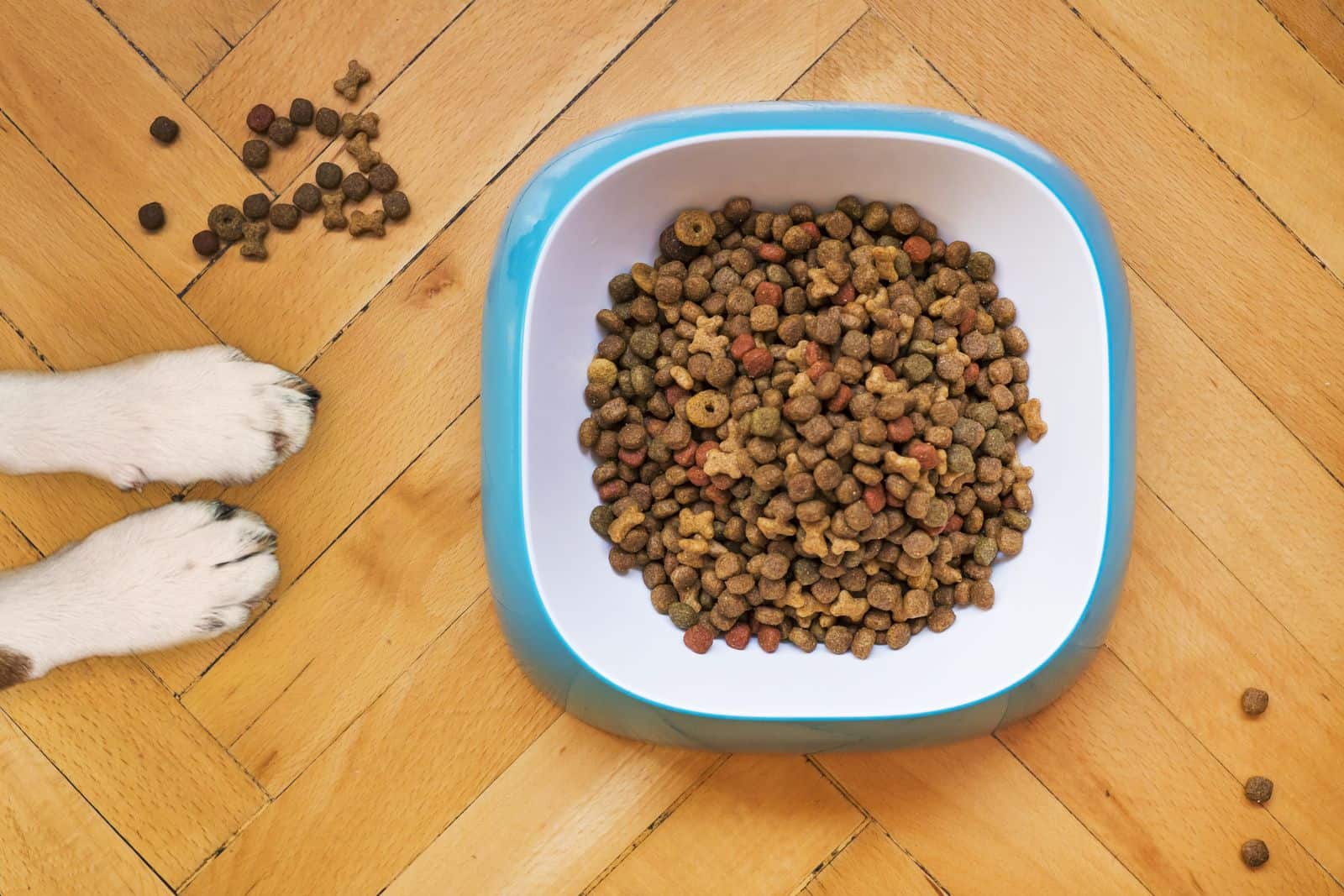
One pound of dry dog food is roughly one quart, or about 4 cups. The exact number depends on the kibble, because small, dense pieces pack tighter than large, airy ones. Most dry foods fall between about 3.5 and 4.5 cups per pound.

Quick conversions for dry dog food
- 1 pound is about 4 cups (about 1 quart)
- 1 quart is about 1 pound
- 1 gallon is about 4 pounds
- 5-pound bag is about 20 cups
- 15-pound bag is about 60 cups
- 30-pound bag is about 120 cups
- 40-pound bag is about 160 cups
These are estimates. Your bag’s feeding guide and calorie information (kcal per cup) are more accurate than any general conversion.
Quarts measure volume, pounds measure weight
A quart is a measure of volume, and a pound is a measure of weight, so there is no single exact conversion. A US quart equals 4 cups, or a quarter of a gallon. How much a quart weighs depends on what it holds. A quart of water weighs a little over 2 pounds, but a quart of kibble weighs closer to 1 pound because the pieces leave air gaps.
Why measuring by weight is better
Scooping by cup can be off by 10 to 25 percent depending on how you pack the scoop. If you are managing a dog’s weight, a kitchen scale is the most accurate method.
- Place your dog’s bowl on the scale and zero it.
- Weigh out the daily amount from the feeding guide.
- Note how many scoops that is, then use the scoop on busy days.
How big a storage bin do you need?
Because a gallon holds about 4 pounds of kibble, a 10-gallon container holds roughly 40 pounds. A 40-pound bag fits a bin of about 10 to 12 gallons, depending on the kibble. Our guide to the Vittles Vault covers sizes and storage.
Wet food and other forms
Canned and fresh foods are measured by weight or can size, not by the cup. Check the label, for example in our Cesar wet dog food feeding chart.
Bottom Line
Plan on about 4 cups, or 1 quart, per pound of dry dog food. For precise feeding, weigh the portions and follow the label or your vet’s advice. If you are comparing foods, see our Hill’s digestive care review.
Ask your vet how much your dog should eat, since needs vary by age, size and activity.