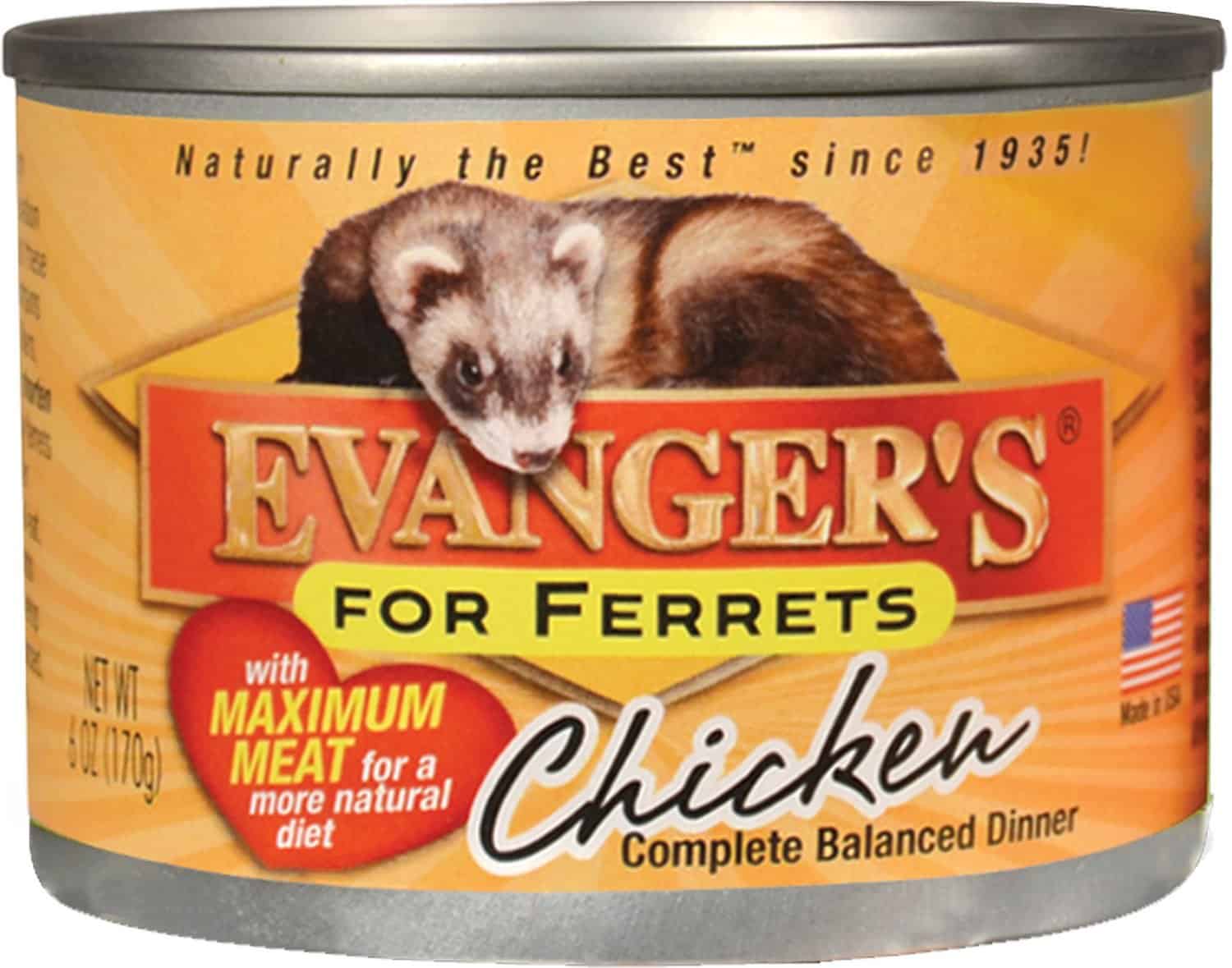
Wet food can be part of a healthy ferret diet, but it rarely works as the whole diet. Most ferrets do best with a high-protein ferret kibble that is always available, plus meat-based wet food as a topper, a treat, or a help for ferrets that struggle with dry food.

Below is what wet ferret food can and can’t do, and how to pick one that fits a ferret’s unusual needs.
What Ferrets Need From Any Food
Ferrets are obligate carnivores with a very short digestive tract. Food passes through in about three to four hours, so they eat many small meals a day and get little out of plant ingredients. Veterinary and animal welfare sources generally agree on these targets for an adult ferret’s diet:
- Protein: roughly 30% to 40%, from animal sources
- Fat: roughly 15% to 20%
- Fiber: very low, around 3% or less
- Carbohydrates and sugar: as little as possible
- Taurine: included in the recipe
For a fuller rundown of everyday feeding, see our guide on what to feed ferrets.
How to Read a Wet Food Label
Wet food is mostly water, so the protein number on the can looks low next to kibble. To compare fairly, convert it to a dry matter figure:
- Subtract the moisture percentage from 100.
- Divide the protein percentage by that number.
For example, a can with 10% protein and 78% moisture has 22% dry matter. Ten divided by 22 is about 45% protein on a dry matter basis, which is in the right range for a ferret. Do the same math for fat.
Pros and Cons of Wet Food for Ferrets
Where wet food helps
- It adds moisture to the diet.
- It is easier to eat for young kits, seniors, and ferrets with sore mouths or missing teeth.
- The smell and texture can tempt a picky eater.
- Meat-based pâtés are often lower in starch than dry food.
Where it falls short
- It spoils quickly, and ferrets need food available through the day.
- Ferrets like to stash food. Hidden wet food goes bad fast.
- Very few canned foods are made specifically for ferrets.
- It costs more per meal than kibble.
- Soft food does nothing to clean teeth, so regular dental checks still matter.
Types of Wet Food You Can Use
Canned ferret food
Canned food made for ferrets exists but is hard to find in most stores. If you find one, check the label against the targets above before you buy.
Canned kitten or cat food
A high-meat, grain-free pâté made for kittens or cats can work as a small treat or a short-term stopgap for a few days if you run out of ferret food. It is not a long-term replacement. Regular cat food is often too low in protein and too high in carbohydrates for a ferret, and dog food is never suitable.
Moistened ferret kibble
The simplest “wet food” is your ferret’s regular kibble soaked in warm water until soft. The nutrition stays the same, and it is a gentle option for kits and older ferrets. Make a fresh batch for each meal.
Raw and whole prey diets
Vets do not all agree here. Some exotic animal vets recommend whole prey or balanced frozen raw diets. Others warn that raw meat can carry Salmonella and E. coli, which can sicken both the ferret and people in the home. Talk to your vet before going this route.
Wet Ferret Food Checklist
- Named meat, poultry, or organ meat as the first few ingredients
- No corn, wheat, rice, peas, potatoes, fruit, or added sugars and syrups
- Labeled “complete and balanced” if it will be more than a treat
- Protein of 30% or more and fat around 15% to 20% on a dry matter basis
- Made for ferrets, kittens, or cats, never dogs
Our guide on what to look for in ferret food covers dry food labels in more detail.
How to Feed Wet Food Safely
- Keep kibble out at all times. Offer wet food as a side, not the only food in the cage.
- Serve small portions. Pick up leftovers within an hour or two and check favorite hiding spots.
- Switch slowly. Mix a little of the new food into the old and increase it over one to two weeks.
- Limit treats. Treats, including bits of cooked chicken, turkey, or egg, should stay under about 10% of daily calories.
- Store it right. Cover and refrigerate opened cans and follow the storage directions on the label.
- Provide fresh water every day in a bottle or heavy bowl.
Foods to Keep Out of the Bowl
Ferrets cannot process plant-heavy or sugary foods well. Skip fruit, vegetables, grains, cereal, dairy, nuts, chocolate, sweet treats, and dog food. Nuts are a particular worry because they can cause intestinal blockages.
When to Call Your Vet
A ferret that stops eating or eats much less than usual needs a vet visit soon. Ferrets are prone to low blood sugar, and a poor appetite can be a sign of illness. If your ferret is sick or recovering, ask your vet which recovery food to use and how to feed it rather than mixing your own. Our tips on how to get a ferret to eat may help with ordinary pickiness.
This article is general information, not veterinary advice. Check with your vet before making major changes to your ferret’s diet.
Bottom Line
Wet food is a useful extra for ferrets, especially picky, young, or older ones, but it works best alongside a quality ferret kibble rather than in place of it. Choose a meat-first, low-carb recipe, check the protein and fat on a dry matter basis, serve small portions, and clear leftovers before they spoil.


