Feedlot cattle eat a carefully balanced ration, mostly grain such as corn, plus some roughage, a protein supplement and added vitamins and minerals. The mix is designed to help cattle gain weight efficiently while keeping their rumens healthy.

What is in a typical feedlot diet
- Grain (the main energy source). Steam-flaked or dry-rolled corn is the most common in the United States. Barley, wheat and sorghum are used in some regions. In a finishing diet grain often makes up the largest share of the ration.
- Roughage. Corn silage, hay or other forage supplies fiber, which helps cattle chew, produce saliva and keep rumen pH steady.
- Byproduct feeds. Distillers grains, corn gluten feed and similar coproducts from ethanol or food processing add protein and energy and are often cheaper than corn.
- Protein supplements. Soybean meal or urea-based supplements make sure the diet meets protein needs.
- Vitamins and minerals. Salt, calcium, phosphorus, trace minerals and vitamins A, D and E are added to the ration.
- Feed additives. Some operations use additives approved for cattle, such as ionophores, under veterinary and regulatory guidelines.
Exact recipes vary by farm, region, cattle weight and feed prices. Nutritionists usually formulate the ration.
How the diet changes as cattle grow
- Arrival and receiving. New cattle get high-forage diets and are brought up on feed gradually.
- Step-up. The amount of grain is increased in stages over about two to three weeks so the rumen microbes can adapt.
- Finishing. Cattle reach the final high-grain ration until they reach market weight.
Moving too quickly to a high-grain diet can cause acidosis, bloat and founder, so a slow transition is the standard practice. Learn more in feeding cattle a feed rich in starch.
Feeding schedule and bunk management
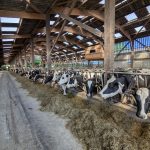
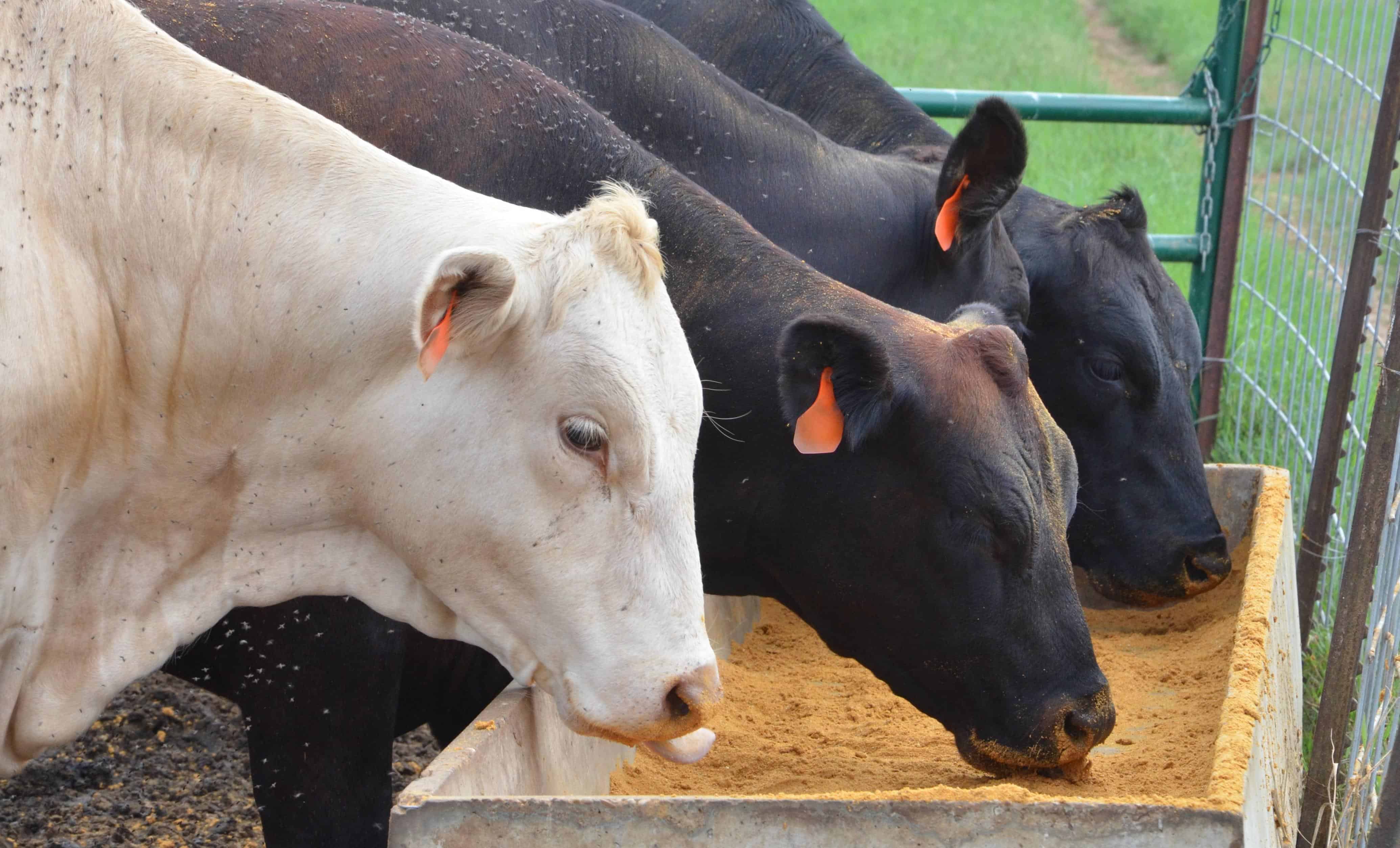
Feedlot cattle are fed in bunks once or several times a day. Managers check what is left in the bunk each morning and adjust the next feeding to keep intake steady. Clean, fresh water is always available. For design and sizing, see how to calculate your cattle feed bunk design.
Common questions
Do feedlot cattle eat only corn? No. A ration includes forage, protein, minerals and vitamins, not just grain.
Why grain? Grain is a dense source of energy, so cattle put on weight and marbling faster than on forage alone.
Is grain natural for cattle? Cattle evolved to eat forage. Grain works when it is introduced gradually and balanced with fiber, but it is why careful management matters. Grass-finished beef uses forage only, and takes longer.
Bottom line
A feedlot ration is a balance of grain, roughage, protein and minerals, adjusted over time. Good bunk management and slow diet changes keep cattle healthy. To compare finishing options, see the best cattle finisher feed.
This is general information. Work with a livestock nutritionist or veterinarian for your herd.