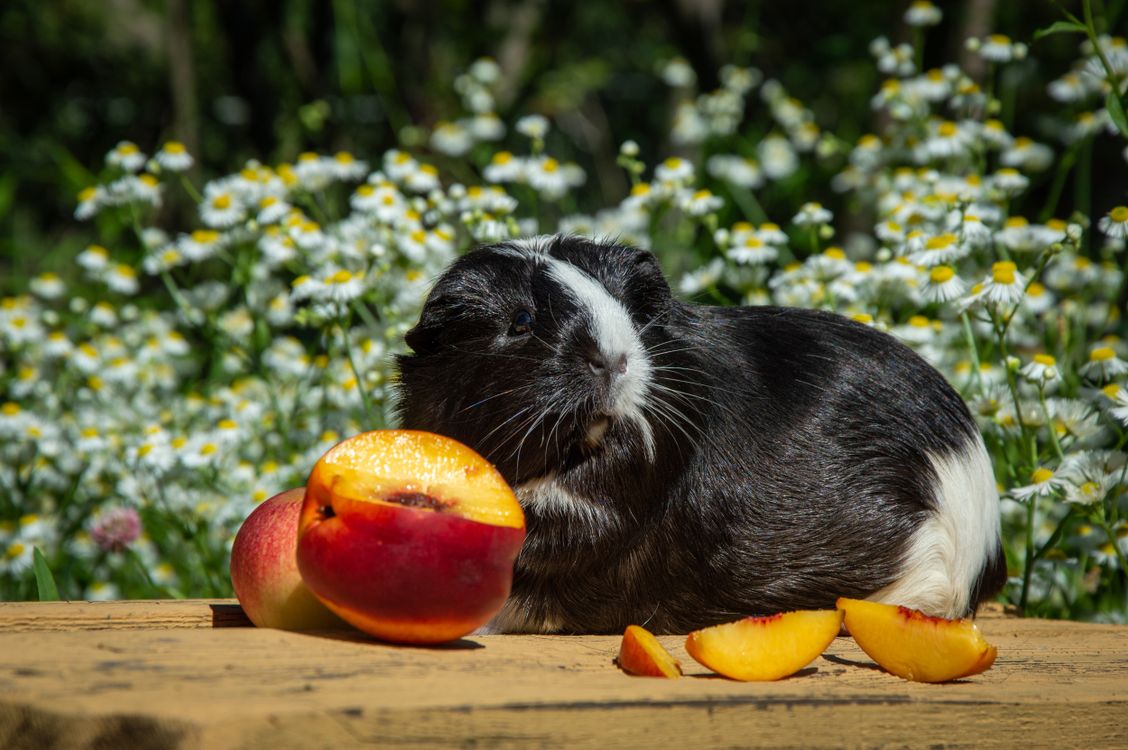
Guinea pigs can eat a small amount of ripe mango flesh as an occasional treat. The skin and pit should be left out, and because mango is very sweet it should be served only now and then.

Is mango good for guinea pigs?
Ripe mango contains vitamin C and fiber, which are useful to guinea pigs. The trade-off is sugar. A little is fine, but regular large portions can cause soft droppings and weight gain.
How much and how often
- Portion: one or two small cubes, about the size of a thumb tip.
- Frequency: once a week or less, as a treat rather than a daily food.
- First time: start with a tiny piece and watch for loose droppings.
What about the skin?
It is best to peel mango before serving. The skin can carry pesticide residue and is tough to digest, and it contains compounds that irritate some people’s skin, so handling it is not ideal either. A peeled piece of ripe flesh is the safest option.
The pit and unripe mango
- Never give the pit. It is hard and a choking hazard.
- Avoid unripe mango. It is firm and more acidic, which can irritate the mouth.
- Skip dried mango. It is concentrated sugar and often sweetened.
Better daily choices
Guinea pigs need vitamin C every day, and vegetables like bell peppers give it with less sugar than tropical fruit. See vitamin C foods for guinea pigs and fruits and vegetables for guinea pigs. Another sweet treat to compare is cantaloupe.
Bottom Line
Peeled, ripe mango is fine for guinea pigs once a week or less, in one or two small cubes. Skip the skin, the pit, and any dried or sweetened mango.
General information only, not veterinary advice. If your guinea pig has diarrhea or stops eating, contact an exotics-savvy vet.